.png%253Falt%253Dmedia%2526token%253D78c23398-5711-460d-b21c-4a7177094ae4%22%7D%2C%7B%22operation%22%3A%22resize%22%2C%22width%22%3A48%7D%2C%7B%22operation%22%3A%22output%22%2C%22format%22%3A%22webp%22%2C%22quality%22%3A75%7D%5D)
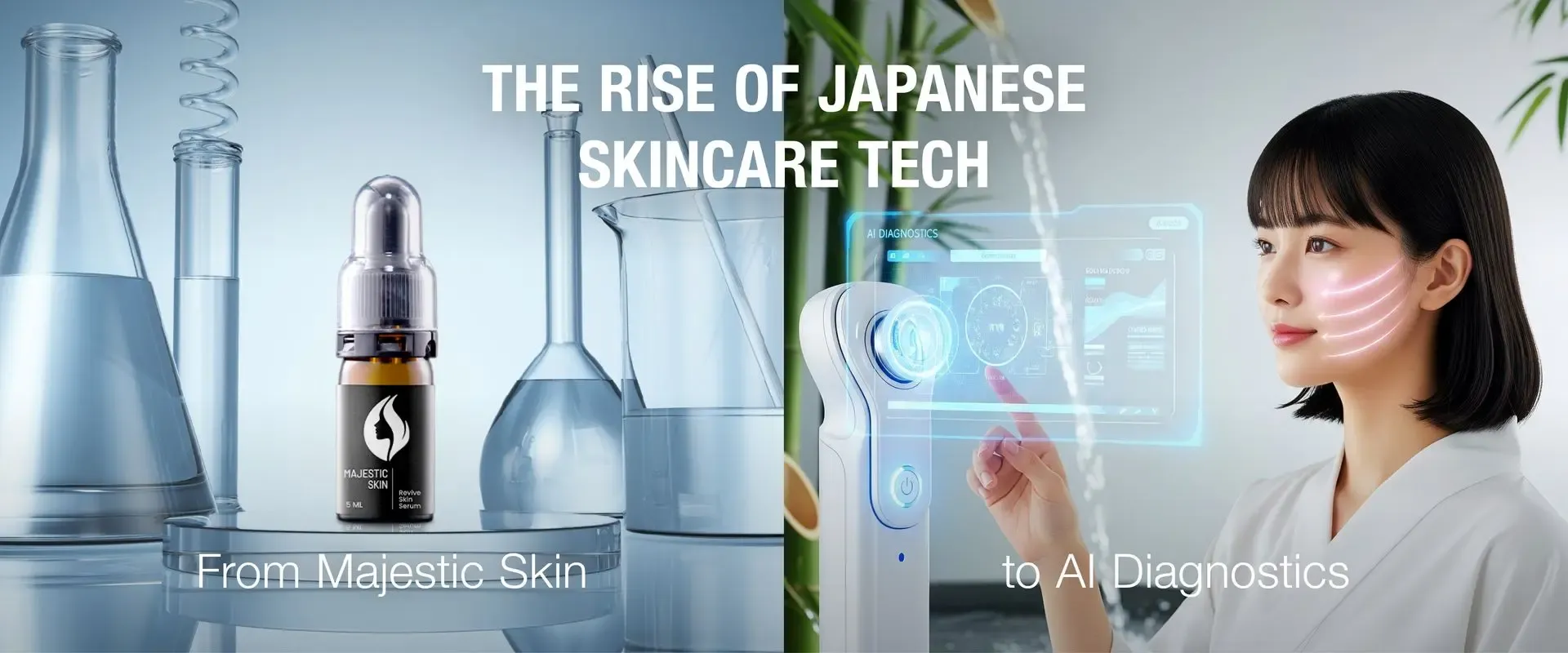
The Paradigm Shift in J-Beauty: Harnessing High-Potency Plant Secretomes and AI Diagnostics
Clinical Guide
- The Science Behind Japanese Stem Cell Innovation
- How Stem Cell Technology Works on Skin Biology
- Optimal Usage and Skincare Routine Integration
- Understanding Stem Cell Therapy Options in Japan
- Japan's Regulatory Framework and Clinical Evidence
- Beyond the Genes: Epigenetics and Skin Aging
- NAD+ and Growth Factor Synergy
- Ethical Sourcing and Sustainability
- Dermatological FAQ and Research Parameters
Japan has long been at the forefront of skincare innovation, but recent advances in Japanese stem cell technology have transformed the beauty industry in unprecedented ways. From cutting-edge laboratories in Tokyo to AI-powered diagnostic tools, researchers are revolutionizing how we approach anti-aging and skin health. This technological revolution incorporates clinical-level skin treatment methodologies that were once exclusive to medical facilities, bringing laboratory-grade innovations directly to consumers via modern Japanese anti-aging serum systems.
The Science Behind Japanese Stem Cell Innovation
Rather than applying superficial ingredients that merely mask structural decline, high-purity plant-derived stem cell extracts penetrate deep into the skin's architecture. Cultivated under strict laboratory environments to preserve the active integrity of growth factors and signaling molecules, these bioactive complexes trigger targeted structural regeneration across multiple dermal boundaries:
- Fibroblast Activation & Collagen Synthesis: Delivers essential proteins directly to fibroblasts, counteracting the natural 1% annual collagen decline post-25 to improve elasticity and minimize line depth.
- Optimized Cellular Turnover: Upregulates the natural skin cell renewal cycle (which slows significantly past young adulthood), replacing aged or compromised cells with fresh, vibrant tissue.
- Dual-Phase Antioxidant Defense: Employs water-soluble and lipid-soluble antioxidants to neutralize environmental free radicals across all skin layers, preventing premature photoaging.
How Stem Cell Technology Works on Skin Biology
The strategic superiority of advanced Japanese biotechnology relies on coordinating targeted intercellular signaling and extracellular matrix (ECM) remodeling:
| Biological Channel | Target Mechanism & Dermal Outcome |
|---|---|
| Growth Factor Cascades | EGF stimulates rapid epidermal renewal; PDGF optimizes localized nutrient delivery; TGF-β regulates structural collagen deposition. |
| ECM Reconstruction | Carefully modulates matrix metalloproteinases (MMPs) and their inhibitors to smoothly clear away degraded proteins while building fresh hyaluronic acid, collagen, and elastin. |
| Bioavailability Delivery | Deploys nanoliposomal encapsulation and specialized peptide carriers to safely ferry bioactive molecules past the skin barrier without losing structural integrity. |
Dermatological Evolution: The line separating in-office procedures from home care has blurred. By pairing high active concentrations with advanced penetration enhancers, modern systems alter cell behavior at the genetic level safely from home.
Optimal Usage and Skincare Routine Integration
To correctly present these cell-signaling compounds to target receptors, implement the following layering sequence:
Application Timing and Spacing
Apply your stem cell serum to clean, slightly damp skin during your evening routine, as natural tissue repair loops peak overnight. Dispense 2–3 drops, pressing gently across the face and neck matrix to minimize friction. If applying in the morning, always follow with a broad-spectrum sunscreen to defend newly regenerating cell populations.
Synergistic Product Pairings
Pairing growth factor secretomes with pure hyaluronic acid ensures a highly hydrated environment for cellular signaling, while Vitamin C provides excellent complementary antioxidant defense. Avoid mixing active growth factors with high-potency peeling acids or raw retinols in the same layer to protect the formulation's delicate molecular architecture.
Understanding Stem Cell Therapy Options in Japan
The strict Japanese regulatory framework ensures that stem cell applications meet uncompromising safety and efficacy parameters. Depending on individual anti-aging targets and budget thresholds, consumers can choose from several verified intervention paths:
- Topical Biologics: High-performance home serums and sterile masks typically range from $100 to $500 per treatment series, presenting an accessible, highly effective entry point into advanced skincare technology.
- In-Office Modalities: Clinical procedures like microneedling or targeted injections performed at leading Tokyo-based treatment centers range from $800 to $3,000 per session.
- AI-Powered Diagnostics: Machine learning algorithms utilize high-resolution imaging and spectroscopic analysis to map individual collagen density and tissue turnover, tailoring precise cell-free protocols.
Why Japan's Regulatory Framework Matters for Clinical Results
Japan has operated under a dedicated Regenerative Medicine Act since 2014, a regulatory framework with no direct equivalent in most Western markets. This shows up in concrete formulation differences:
| Factor | Japan | Typical Western Market |
|---|---|---|
| Regulatory framework | Dedicated regenerative medicine act since 2014 | No direct equivalent framework |
| Manufacturing standard | Pharmaceutical GMP mandatory | Cosmetic GMP, varies widely |
| Clinical research depth | Two decades, peer-reviewed | Emerging, less consistent |
| ADSC-CM concentration achievable | Up to 20% | Typically 1% to 5% |
This regulatory depth is reflected in controlled study data: a 2025 trial recorded 94% of subjects reporting measurable improvement in skin firmness after 12 weeks of ADSC-CM use, with dermal collagen density increasing by an average of 27%. For context, prescription retinoids typically produce collagen density improvements in the 10% to 15% range over the same period. It's worth noting that stem cell-derived growth factors sit within the same broad field of regenerative medicine responsible for major reconstructive treatments (such as gene-corrected epidermal stem cell grafts used to treat severe genetic skin conditions) — a completely different clinical application and scale from a cosmetic serum, but the same underlying cell-signaling science that decades of research has been refining.
Beyond the Genes: How Epigenetics Factors Into Skin Aging
Your DNA is the genetic blueprint you inherit, but it isn't the only factor in how your skin ages. Epigenetics describes how environmental and lifestyle factors influence which genes are actively expressed, or "switched on," without altering the underlying DNA sequence itself. Think of DNA as a library of genes, and epigenetic marks as bookmarks and highlighting that determine which chapters get read and how often.
In skin, these marks influence genes responsible for collagen production, cell turnover, inflammation response, and antioxidant defense. As skin ages, these marks can become disorganized: genes that support youthful function get silenced, while genes contributing to visible aging become more active. Growth factor signaling from human stem cell-derived serums works partly by influencing this epigenetic landscape, helping keep collagen- and barrier-supporting genes active rather than simply treating the visible symptoms of their decline.
The Cellular Energy Side of Aging: NAD+ and Growth Factor Synergy
Skin cells need more than a signal to renew — they need the energy to act on it. NAD+ (Nicotinamide Adenine Dinucleotide) is a coenzyme central to cellular energy production, DNA repair, and gene expression, and its levels decline by as much as 50% by middle age. That decline correlates directly with reduced collagen production and weaker barrier function, independent of whatever growth factor signals a cell is receiving.
This is why pairing NAD+ support with growth factor delivery is more effective than either alone. Restored NAD+ activates sirtuins, proteins that act as master regulators of cellular maintenance, which in turn increases a cell's sensitivity to growth factor signals arriving through receptor pathways like MAPK/ERK and PI3K/AKT. In practice, this means a cell that is energy-depleted responds more weakly to collagen-stimulating signals than one with adequate NAD+ availability, which is part of why formulations that address only signaling (and not cellular energy) can produce inconsistent results.
Ethical Sourcing and Sustainability in Stem Cell Skincare
Responsible sourcing is an increasingly relevant consideration for anyone evaluating stem cell skincare. Reputable manufacturers of human-derived conditioned media obtain source material through fully informed donor consent processes, with donors understanding exactly how their contribution will be used. Synthetic biology, using genetically modified microorganisms to produce human growth factors in controlled lab environments, is a parallel approach some manufacturers use to eliminate the need for donor tissue entirely while maintaining consistent purity.
Sustainability extends to the production process itself: energy-efficient cultivation facilities, water recycling in cell culture processes, and a shift toward recyclable or refillable packaging are becoming meaningful differentiators between manufacturers. Formulation concentration plays a role here too — a highly concentrated serum that requires only a few drops per application reduces overall packaging and shipping waste compared to diluted formulas that require larger volumes to achieve the same effect.
Dermatological FAQ and Research Parameters
How long does it take to see visible results from Japanese stem cell technology?
Is Japanese stem cell technology safe and suitable for highly sensitive skin profiles?
The convergence of biotechnology, artificial intelligence, and traditional beauty wisdom creates an uncompromised foundation for long-term cell health. To discover how growth factor secretomes optimize tissue rejuvenation and reduce line visibility over time, explore our clinical guide here: Stem Cell Science Wrinkle Reduction Guide.
Participate in the Skincare Revolution
Deploy high-potency, laboratory-grade plant secretome matrices to rebuild and protect your skin scaffolding safely at home.
Discover Majestic Skin
.jpg%253Falt%253Dmedia%2526token%253Dab1a42a1-288f-4887-93c1-b2f9c85cc882%22%7D%2C%7B%22operation%22%3A%22resize%22%2C%22width%22%3A1920%7D%2C%7B%22operation%22%3A%22output%22%2C%22format%22%3A%22webp%22%2C%22quality%22%3A75%7D%5D)