.png%253Falt%253Dmedia%2526token%253D78c23398-5711-460d-b21c-4a7177094ae4%22%7D%2C%7B%22operation%22%3A%22resize%22%2C%22width%22%3A48%7D%2C%7B%22operation%22%3A%22output%22%2C%22format%22%3A%22webp%22%2C%22quality%22%3A75%7D%5D)
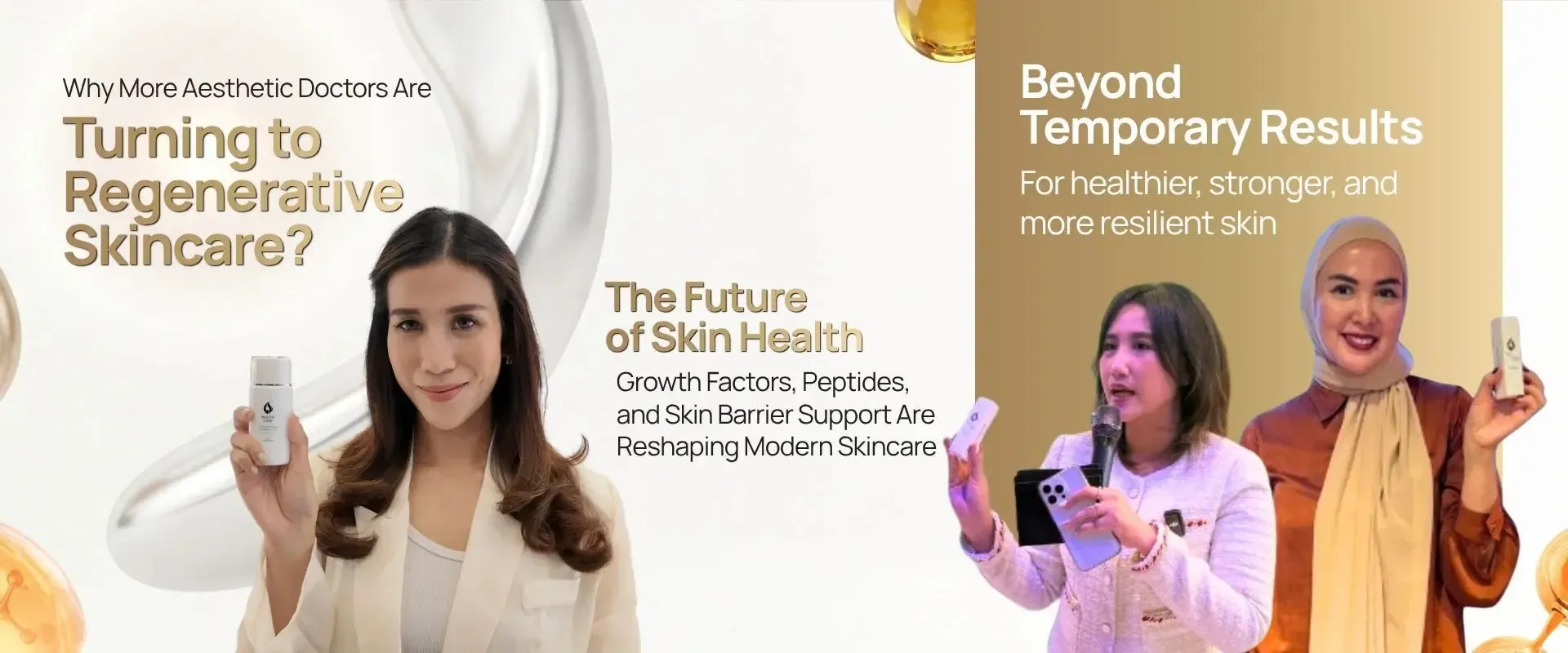
Why Aesthetic Doctors Choose Regenerative Skincare
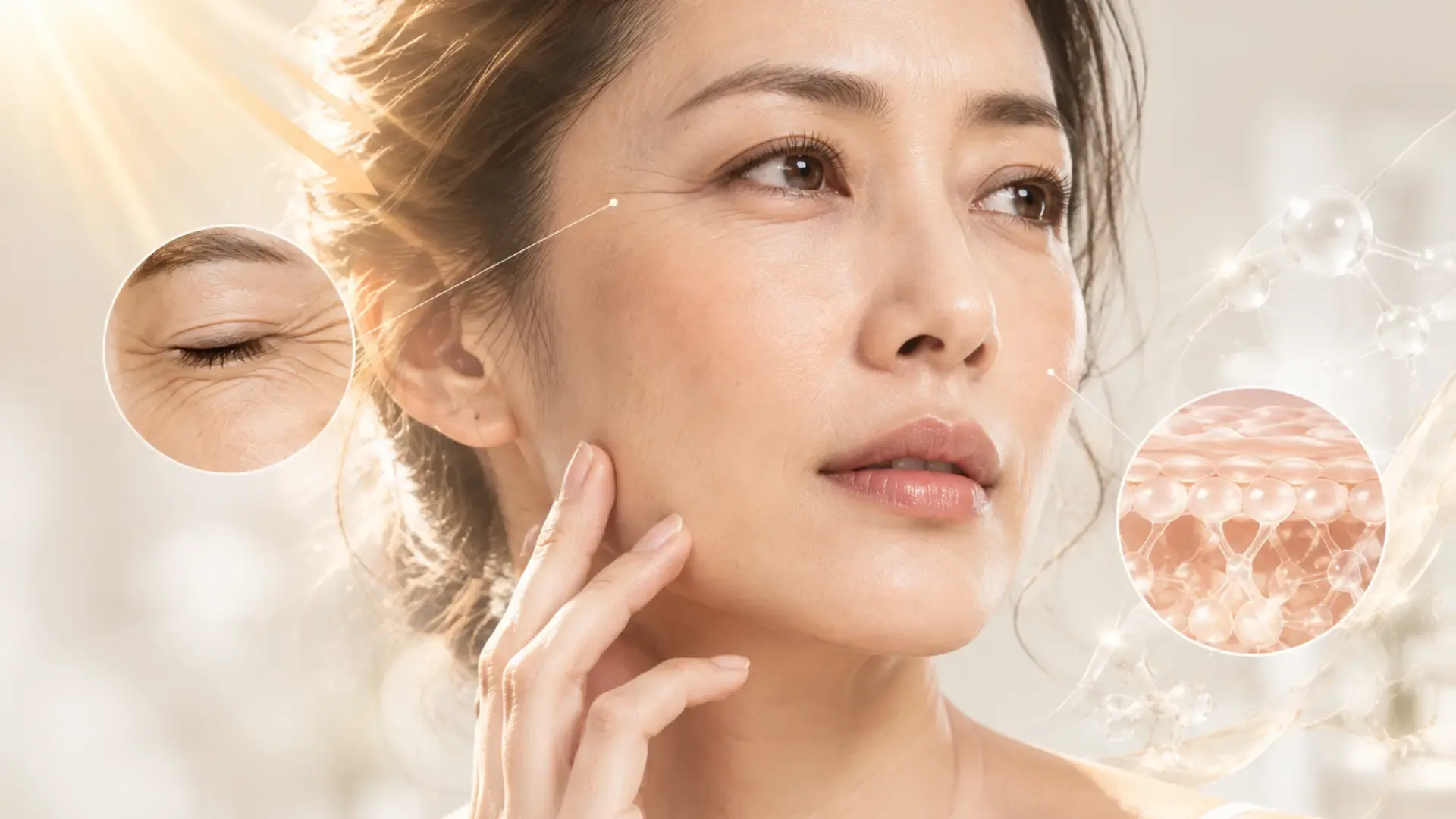
Regenerative skincare refers to formulations that stimulate the skin's own biological repair mechanisms rather than masking visible aging. It works at the cellular level, using growth factors, peptides, and advanced delivery systems to reactivate fibroblast activity, rebuild collagen and elastin, and restore barrier function from within.
Aesthetic & Anti-Aging Medicine
Dipl CIBTAC. AAAM
Aesthetic Medicine
Aesthetic medicine is undergoing a quiet but meaningful transformation. For decades, the field was defined largely by procedures: injectables that relaxed muscles, fillers that restored lost volume, lasers that resurfaced damaged skin. These remain valuable tools. But a growing number of aesthetic doctors are asking a different question: rather than correcting what aging has already done, can we support the biological processes that slow aging in the first place?
Technologies built around growth factors, human-derived conditioned media, peptide signaling, and advanced barrier support are earning serious clinical attention because they address skin aging at its source rather than its surface. For skin professionals who work daily with patients seeking not just improvement but sustainable, long-term skin health, these technologies represent a genuinely different category of intervention.
This article explores why aesthetic doctors are paying attention to regenerative skincare, what the science behind it actually involves, and how advanced Japanese skincare technology has positioned itself at the forefront of this evolving clinical conversation.
Why Regenerative Skincare Is Changing the Beauty Industry
The shift toward regenerative skincare reflects a broader change in how both professionals and consumers think about skin health. The dominant model of anti-aging skincare for much of the past century was corrective: address visible problems after they appear. Retinoids accelerate turnover. Vitamin C brightens pigmentation. Peptides signal collagen production indirectly. These approaches work, and they continue to be the backbone of evidence-based skincare routines worldwide.
What regenerative skincare adds is a biological depth that corrective approaches do not reach. The visible signs of aging, the wrinkles, the sagging, the dullness, are downstream consequences of cellular changes that begin years or decades earlier. Fibroblasts slow their collagen output. The epidermal renewal cycle extends. Growth factor concentrations in the skin decline. Surface-level treatments can address the visible consequences of these changes; regenerative technologies address the changes themselves.
Why this matters clinically
Aesthetic doctors who work with patients over multi-year relationships observe a consistent pattern: surface corrections require ongoing maintenance, while biological improvement compounds. A patient whose fibroblast activity has been meaningfully supported over two years of consistent regenerative skincare use shows a different skin trajectory than one whose wrinkles have been periodically treated without addressing underlying cellular health.
Japan has been central to this shift. The country's advanced regulatory environment, pharmaceutical-grade manufacturing infrastructure, and research investment in regenerative medicine have produced formulations that meet clinical standards most consumer skincare cannot approach. Japanese skincare technology is gaining recognition globally not because of marketing, but because it performs differently in clinical observation.
What Doctors Look For in Modern Skincare Formulations
.jpg?alt=media&token=5d5924f8-279c-4f7b-b9c4-c4c1c344b868)
Aesthetic doctors evaluate skincare formulations through a different lens than consumers. The questions they ask are specific: what is the mechanism of action? Is there published evidence for this specific ingredient at this concentration? How is the active ingredient delivered past the skin barrier? What manufacturing standards govern the production process.
"Clinical recommendations should be grounded in science. That's why I pay close attention to growth factors and formulation quality."
For aesthetic doctors, the three most important criteria for a regenerative skincare formulation are biological plausibility (the mechanism is grounded in established cellular science), concentration adequacy (the active ingredient is present at a level sufficient to produce the claimed effect), and delivery efficacy (the active ingredient can reach its cellular target). Most consumer skincare products fail on at least one of these three counts.
- A growth factor serum manufactured with heat may list active proteins that are biologically denatured by the time of application.
- A product with 1% ADSC-CM cannot deliver the signal density required to produce measurable fibroblast activation.
- A barrier cream with no penetration-enhancing delivery system cannot reach the dermal fibroblasts it claims to support.
Products that address all three criteria simultaneously are rare. Japanese pharmaceutical-grade manufacturing, specifically the combination of Cold Process formulation and Liposome Technology used in Majestic Cosme's formulations, represents one of the most complete engineering responses to these clinical requirements available in consumer skincare.
The Science Behind Growth Factors and Peptides
Growth factors and peptides are often discussed as if they are variations of the same concept. They are not. Understanding the difference is important for any clinician evaluating regenerative skincare technologies.
Growth Factors (ADSC-CM)
Full-length proteins (6,000 to 25,000 Da) that bind directly to specific receptor tyrosine kinases on fibroblast and keratinocyte surfaces. They trigger intracellular signaling cascades that activate gene transcription for collagen, elastin, and hyaluronan. Cannot be synthesised as short peptides without losing receptor specificity.
Synthetic Signal Peptides
Short amino acid chains (typically 3 to 10 residues) designed to mimic specific signal sequences. They activate collagen synthesis pathways but through indirect signaling routes. Smaller molecular weight improves skin penetration but reduces the specificity and complexity of the biological instruction delivered.
Ceramides & Lipid Actives
Structural lipids that form the intercellular matrix of the stratum corneum. They do not signal fibroblasts but are essential for maintaining the barrier integrity that allows regenerative actives to be retained and effective. Complementary rather than equivalent to growth factor technology.
"The real difference isn't just visible improvement. Well-formulated growth factor technology can help support healthier skin function over time."
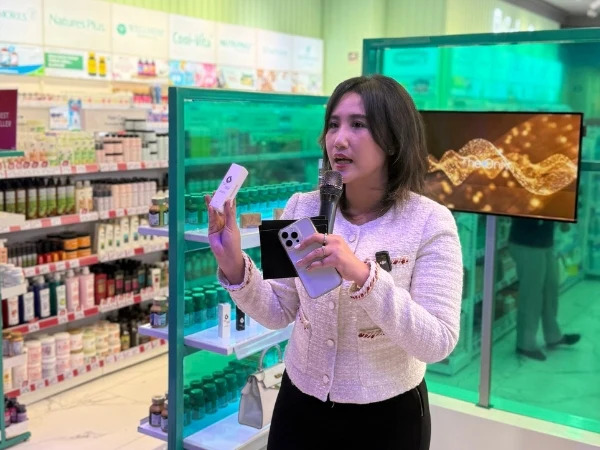
The 150+ growth factors in Majestic Cosme's ADSC-CM preparation, including EGF, FGF, TGF-beta, VEGF, and IGF-1, work in coordinated parallel through multiple independent signaling pathways. This multi-pathway activation produces outcomes that no single-molecule peptide can replicate, because the biological complexity of the stimulus matches the biological complexity of the response.
Why Skin Barrier Health Matters More Than Ever
The skin barrier is not simply the outermost layer of skin. It is an active biological system that determines what enters and what is retained, regulates transepidermal water loss, modulates inflammatory response, and provides the structural foundation on which every topical active depends for its efficacy.
Aesthetic doctors are increasingly attentive to skin barrier health because the prevalence of compromised barriers has grown alongside the proliferation of active skincare products. Patients who layer exfoliating acids, retinoids, vitamin C, and multiple actives simultaneously often arrive in consultation with disrupted barriers that reduce the efficacy of every product they apply and increase their sensitivity to both topical treatments and clinic procedures.
Barrier integrity as an efficacy threshold
A disrupted barrier is not just a comfort problem. It is an efficacy problem. No regenerative active, regardless of its concentration or delivery technology, can perform as intended on skin that cannot retain what it receives. Barrier restoration is often the prerequisite for everything else.
The TGF-beta component of ADSC-CM has documented anti-inflammatory activity that supports barrier recovery alongside its collagen regulatory role. For patients presenting with barrier compromise, whether from over-exfoliation, post-procedure sensitivity, or environmental stress, the anti-inflammatory and barrier-supportive properties of growth factor serums make them particularly appropriate for clinical recommendation.
Post-acne recovery presents a distinct barrier challenge. Adult acne leaves behind not only visible scarring and pigmentation irregularities but disrupted lipid pathways and compromised tight junction proteins that require targeted biological support rather than simple moisturisation. The Majestic Active Repair Essence was developed specifically for this clinical profile, addressing the post-inflammatory skin environment that standard anti-aging and hydration products are not formulated to manage.
Expert Perspectives From Leading Aesthetic Doctors
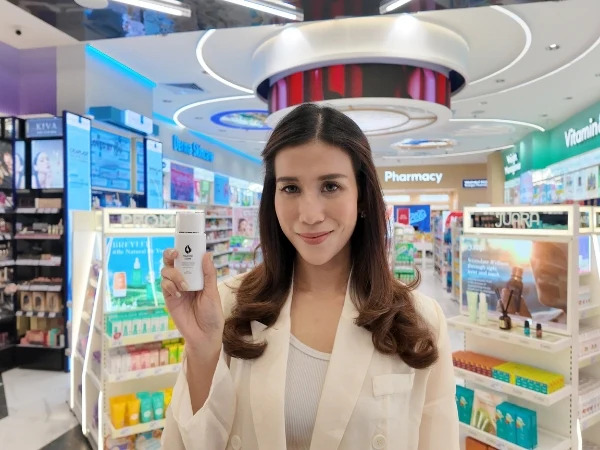
"Patients today are increasingly interested in ingredients like growth factors, peptides, and advanced delivery systems. They want more than temporary results. They want healthier, stronger skin over time."
Aconsistent theme across the perspectives of aesthetic doctors familiar with regenerative skincare is the distinction between maintenance and biological improvement. Maintenance keeps a patient's skin at its current level through continued intervention. Biological improvement changes the underlying trajectory of how the skin ages, producing compounding benefits that require less intensive maintenance over time.
This distinction has practical implications for how doctors recommend skincare alongside their clinical procedures. A patient who maintains fibroblast activity through consistent growth factor serum use between laser or microneedling sessions heals faster, produces more collagen during the wound-healing response, and sustains results for longer than a patient whose baseline cellular activity has not been supported between visits.
How Japanese Skincare Technology Supports Long-Term Results
Japan's pharmaceutical and cosmetic manufacturing standards are among the strictest globally, and this regulatory context has directly shaped the quality of regenerative skincare products developed there. The Act on the Safety of Regenerative Medicine, Japan's framework for biological materials, provides regulatory oversight that most Western cosmetic markets do not have equivalent structures for.
Majestic Cosme's manufacturing approach reflects this standard. Cold Process formulation, which eliminates heat from every production stage to preserve the native protein folding of all 150+ growth factors, requires pharmaceutical-grade engineering that conventional cosmetic manufacturing does not attempt. Liposome Technology, which encapsulates growth factors in phospholipid vesicles to enable dermal delivery past the skin's molecular weight barrier, represents the application of pharmaceutical drug delivery science to consumer skincare.
Why manufacturing standards matter
A growth factor serum produced without Cold Process manufacturing may list ADSC-CM on its label while delivering denatured proteins with no receptor-binding activity. JCIA registration, which Majestic Skin holds, requires documented concentration disclosure and batch-level biological activity testing. This is what makes the 20% claim independently verifiable rather than purely a marketing assertion.
The JCIA registration held by Majestic Skin, combined with BPOM approval in Indonesia and ongoing FDA review, reflects a multi-market accountability approach that distinguishes it from most products in the growth factor serum category. For aesthetic doctors recommending products to patients, this regulatory foundation provides an important layer of clinical confidence.
The Future of Regenerative Skincare
The growing interest among aesthetic doctors in regenerative skincare reflects a trajectory that is unlikely to reverse. The biological case for growth factor technology is well-established in the peer-reviewed literature. The delivery engineering is advancing rapidly. And the patient demand for non-invasive, biologically meaningful skin health support continues to grow.
The most significant development on the near horizon is the integration of regenerative skincare more formally into clinical protocols. Aesthetic doctors are increasingly documenting outcomes from regenerative serum use alongside standard procedures, building the evidence base that will allow more specific clinical recommendations across patient profiles, skin types, and treatment goals.
Japanese skincare technology is positioned to lead this evolution. The pharmaceutical-grade manufacturing infrastructure, the regulatory framework, and the research investment that characterise the best Japanese formulations create the conditions for continued innovation at a depth that consumer-facing brands in most other markets cannot sustain.
Article Summary: Regenerative Skincare at a Glance
| Core Vector | Operational Framework Matrix |
|---|---|
| What it is | Skincare that activates the skin's own biological repair systems through growth factors, peptides, and advanced delivery technology |
| Why doctors are interested | It addresses the cellular source of aging rather than surface symptoms, producing compounding biological improvement rather than maintenance |
| Key ingredients | ADSC-CM (150+ growth factors), EGF, FGF, TGF-beta, VEGF, IGF-1, ceramides, signal peptides |
| Key technologies | Cold Process manufacturing (protein integrity) + Liposome Technology (dermal delivery) |
| Expected benefits | Collagen density, wrinkle reduction, barrier restoration, accelerated skin renewal, improved skin firmness |
| Japanese standard | JCIA registered, BPOM approved, pharmaceutical-grade GMP manufacturing in Japan |
Discover Majestic Cosme's Regenerative Skincare Portfolio. Learn more about the science of Majestic Skin.
Explore Majestic Cosme ScienceSources
- Shin, H., et al. (2021). Human adipose tissue-derived mesenchymal stem cells and their secretome exert anti-aging properties in human skin. Biomolecules, 11(11), 1684.
- Kober, M., & Berto, G. (2022). Adipose-derived stem cell conditioned medium in the treatment of facial skin aging. Journal of Cosmetic Dermatology, 21(4), 1421-1431.
- Li, L., et al. (2019). Conditioned medium from human adipose-derived mesenchymal stem cell culture prevents UVB-induced skin aging. International Journal of Molecular Sciences, 21(1), 49.
- Kim, W. S., et al. (2009). Wound healing effect of adipose-derived stem cells: A critical role of secretory factors on fibroblast collagen synthesis. Journal of Dermatological Science, 55(3), 187-197.
- Alquraisy, A., et al. (2024). A comprehensive review of stem cell conditioned media role for anti-aging on skin. Stem Cells and Cloning: Advances and Applications, 17, 5-19.
.jpg%253Falt%253Dmedia%2526token%253D9c197589-0521-4e7f-a0f8-918c2a7528f1%22%7D%2C%7B%22operation%22%3A%22resize%22%2C%22width%22%3A1920%7D%2C%7B%22operation%22%3A%22output%22%2C%22format%22%3A%22webp%22%2C%22quality%22%3A75%7D%5D)