.png?alt=media&token=78c23398-5711-460d-b21c-4a7177094ae4)
The Cellular Architecture of Skin Longevity: Modulating Bio-Signaling and Matrix Remodeling
Clinical Guide
- Skin Longevity: Beyond Chronological Aging
- Scientific Foundation: Matrix Architecture and Senescence
- Comprehensive Problem Analysis in Modern Skincare
- Detailed Solution Comparison: Actives and Devices
- The Majestic Skin Advantage: Japanese Stem Cell Precision
- Application Protocol and Guidelines
Longevity is not only about living longer years. In dermatology, longevity describes how well skin preserves its function, resilience, and appearance as time passes. Healthy aging is therefore a goal that combines aesthetic benefits, barrier competence, wound healing capacity, and comfort. This article explores how scientific insights into cellular signaling, extracellular matrix renewal, and barrier optimization can be translated into daily care. The focus is on sustainable improvements that accumulate over months and years, not quick fixes that fade in a week.
Healthy skin is a living organ with layered architecture and dynamic communication between cells. The epidermis renews itself through keratinocyte proliferation and differentiation, the dermis anchors a collagen and elastin network that gives firmness and elasticity, and a matrix of glycosaminoglycans retains water. Aging disrupts these systems in multiple ways. Intrinsic aging includes slower turnover, mitochondrial inefficiency, and senescent cells that release proinflammatory signals. Extrinsic drivers like ultraviolet exposure, pollution, and glycation accelerate matrix breakdown and dull the surface. The result is predictable: loss of elasticity, uneven tone, dehydration, and visible lines.
For many people, the challenge is not lack of effort. It is choosing interventions that speak the same biochemical language as the skin itself. Historically, topical care has relied on ingredients that push the epidermis to renew or protect against oxidative stress. Those strategies still matter. Yet the most durable changes typically involve signaling pathways that govern fibroblast behavior and matrix synthesis. When the skin receives a balanced set of growth cues, it tends to repair more efficiently and build stronger tissue with fewer by-products like excessive inflammation.
Scientific Foundation: Matrix Architecture and Senescence
The skin’s longevity depends on coordinated communication among epidermal keratinocytes, dermal fibroblasts, endothelial cells, immune cells, and the surrounding matrix. The extracellular matrix is not simply scaffolding. It is an information system where bound cytokines, latent growth factors, and matrix fragments all modulate cellular behavior. Collagen I and III provide tensile strength, elastin fibers allow recoil, and proteoglycans like decorin regulate fibril spacing. Glycosaminoglycans such as hyaluronic acid maintain hydration and viscoelasticity. A youthful matrix is tightly organized and constantly remodeled in a controlled way. With age, matrix deposition slows, crosslinking increases, and degradation by matrix metalloproteinases outpaces synthesis. This imbalance is a hallmark of photoaging.
Cellular senescence further distorts the environment. Senescent cells stop dividing and secrete inflammatory mediators and proteases known collectively as the senescence-associated secretory phenotype. While short bursts of inflammation can trigger healing, chronic low-grade inflammation erodes structural proteins and interferes with the clean resolution of repair. Mitochondrial stress, telomere attrition, and oxidative damage all contribute to cells entering a senescent state. The visible effects include slower wound closure, fragile vessels, and a surface that loses bounce and clarity.
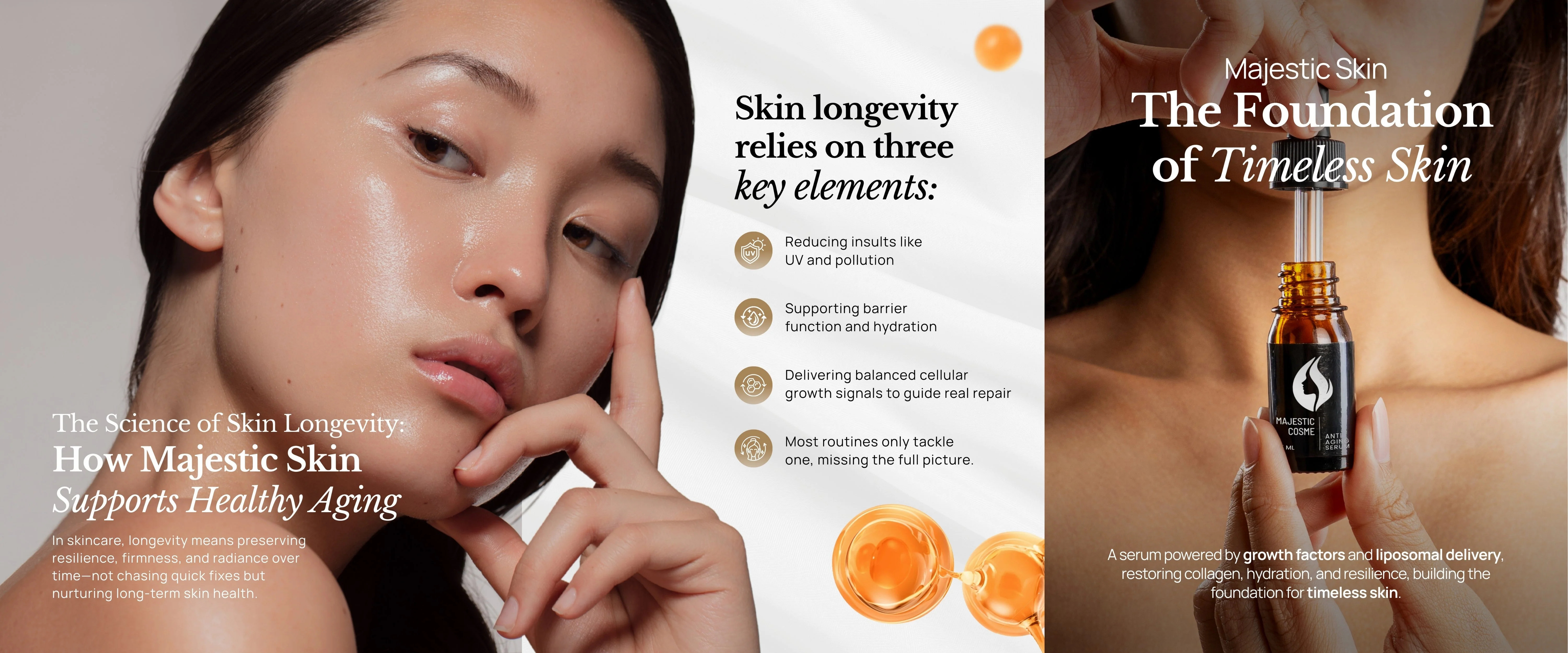
Interventions that support longevity typically act through three coordinated strategies: first, they reduce insults such as UV radiation and pollution; second, they optimize the barrier and water-binding capacity; third, they calibrate growth signals that help fibroblasts produce a healthy matrix. For the third strategy, an emerging pillar is the delivery of a physiologic blend of growth factors, cytokines, and extracellular vesicles that mirror the complexity of healing signals. When provided in balanced amounts, these cues can upregulate collagen synthesis, normalize fibroblast phenotype, and stimulate the epidermis to renew efficiently without unnecessary irritation. Japan has long specialized in precision bioprocessing and quality control, which are fundamental for preparing biologically active media. In this context, Japanese stem cell technology has become a practical route to deliver consistent growth factor profiles with rigorous safety and purity testing.
Comprehensive Problem Analysis in Modern Skincare
Consumers face three recurring obstacles when pursuing healthy aging. The first is signal mismatch. Many products stimulate turnover or exfoliation but do little to guide dermal remodeling. Excessive stimulation at the surface can create a cycle of transient glow followed by dryness or sensitivity. Without supportive guidance in the dermis, the deeper structure that holds shape and firmness changes slowly or not at all.
The second obstacle is delivery. Large or fragile molecules rarely reach meaningful targets if they are not protected and escorted. Proteins and vesicles can lose activity if they are exposed to heat during manufacturing, or if preservatives and pH swings destabilize them. Even small actives suffer from poor penetration when applied onto a compromised barrier. Stability and delivery therefore drive real-world outcomes more than marketing language.
The third obstacle is adherence. Longevity is a marathon measured in consistent weeks and months. It is easy to overuse actives, pair incompatible products, or abandon a plan before changes accumulate. For example, high concentrations of retinoids can be effective yet cause visible flaking, which leads some people to stop treatment just as collagen remodeling would have started. Others layer so many products that irritation builds quietly and barrier lipids are depleted.
Beyond these personal factors, there are market issues. Labels often conflate short-term optical effects with actual tissue change. Silicones and film formers instantly make the surface look smoother, which can be pleasant, yet they do not rebuild the matrix. Some formulas mention trendy molecules that are used at trace levels or in forms that are unlikely to survive the jar and the skin. Independent testing and transparent disclosures help, but they are not consistently provided. The result is confusion about which claims signal genuine progress.
Detailed Solution Comparison: Actives and Devices
This table contrasts common approaches for longevity with attention to mechanism, strengths, and practical limits. Use it to decide where each option fits and how they complement one another in a complete routine.
| Approach | Primary Mechanism | Key Strengths & Clinical Limitations |
|---|---|---|
| Retinoids | Binds nuclear receptors to increase epidermal cell turnover. | Robust history for fine lines and texture. However, it presents an irritation risk and requires gradual barrier adaptation. |
| Vitamin C Matrix | Antioxidant cascade protector and required synthesis cofactor. | Excellent daytime protection. However, many raw configurations are highly unstable and can cause background stinging. |
| Hyaluronic Acid | Binds water in stratum corneum to improve viscoelasticity. | Immediate comfort and plumping vectors. However, the effect remains entirely superficial without cellular instructions. |
| Conditioned Media | Supplies pure growth factors and exosomes to reprogram cellular aging loops. | Triggers deep constructive remodeling natively with a low irritation risk. Requires advanced liposomal delivery systems. |
Dermatological Reality: A resilient routine requires harmony rather than intensity. Biologically rich serums eliminate the need for aggressive chemical peeling by teaching fibroblasts to restore the underlying matrix structure gracefully.
The Majestic Skin Advantage: Japanese Stem Cell Precision
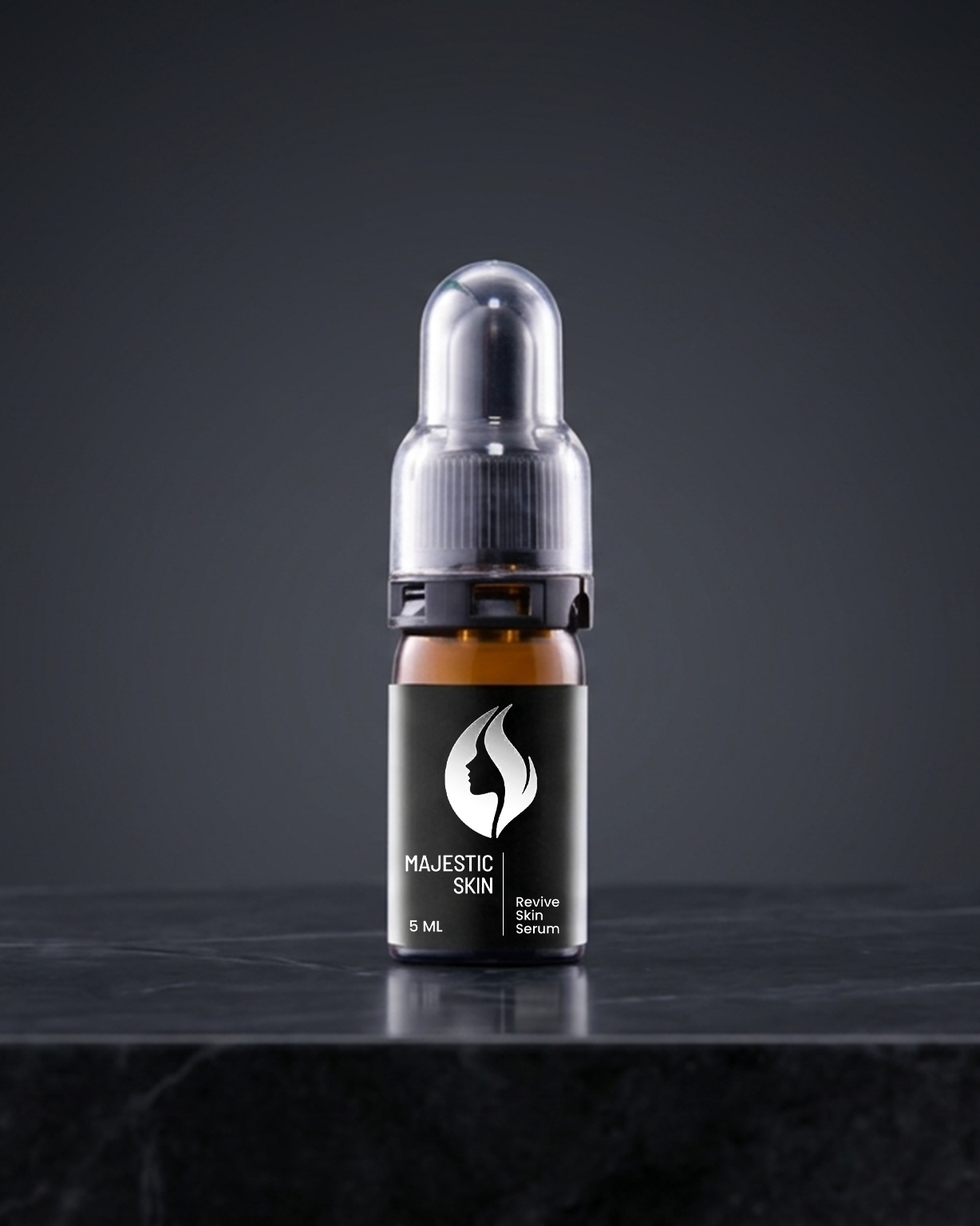
Majestic Skin is designed to bring the discipline of laboratory protocols to everyday care. The formula centers on a biologically rich medium derived from cultured cells that contains a physiologic spectrum of growth factors, cytokines, and extracellular vesicles. This medium is purified and blended under cold-process conditions to protect fragile proteins and lipids. The delivery architecture uses liposomal carriers and a supportive base of humectants and emollients so that signals reach target cells while the barrier stays comfortable.
Three ideas guide the design. First, balance beats brute force. Rather than chasing a single pathway, the formula provides multiple growth cues in proportions similar to those seen in healthy repair. This helps fibroblasts shift toward a constructive phenotype that produces organized collagen and elastin while limiting excessive inflammation. Second, clarity of sourcing matters. All inputs are screened for purity, viral safety, and consistent growth factor profiles. Finally, the base is engineered to play nicely with other actives. People can still use retinoids or vitamin C, but they do not need to overuse them to compensate for a lack of dermal guidance. Because consistency is key, the serum is structured to fit morning and night without stinging or heavy residue. The texture layers well under sunscreen during the day and under richer creams at night.
How does a biologically rich serum change the conversation inside the skin? The growth factors bind to fibroblast receptors and trigger signaling pathways such as SMAD, MAPK, and PI3K-AKT. Transforming growth factor beta encourages collagen I and III synthesis and reduces matrix metalloproteinase expression when provided in physiologic balance. Basic fibroblast growth factor supports fibroblast proliferation and angiogenesis, while epidermal growth factor primarily influences keratinocyte migration. Extracellular vesicles, including exosomes, act as tiny envelopes carrying microRNAs and proteins that reprogram target cells toward a more youthful phenotype. Readers who want a deeper primer on the science behind conditioned media can review our in-depth explainer here: a detailed overview of stem cell derived skincare science.
Application Protocol and Guidelines
Longevity care works best when it follows a structured routine that respects both biology and busy schedules. Follow this system for progressive tissue enhancement:
Morning Protocol
Cleanse with a gentle, low-foam product that leaves a hydrated finish. Apply 1 to 2 pumps of the serum to the face and neck, pressing into the skin rather than rubbing vigorously. Follow with a light moisturizer if you are dry or in a cold climate, and finish with high-quality sunscreen to prevent daily photo-damage.
Nighttime Protocol
Perform a gentle cleanse to remove daily impurities and sunscreen layers. Apply the human stem cell serum onto clean tissue. On alternate nights, layer your preferred retinoid after the serum has fully absorbed. Seal the full routine with a ceramide-rich moisturizer to restrict trans-epidermal water loss completely overnight.
Advanced Application Tips
Limit aggressive exfoliation protocols to one or two brief sessions per week to protect lipid stability. For an enhanced effect, integrate simple manual facial massage parameters during your nightly application; light tapping movements help speed local microcirculation loops and optimize secretome reception. For curated sets that keep choices simple, explore our complete selection here: a streamlined lineup for long-term skin health.
Prioritize True Cellular Longevity
Deploy a naturalistic mixture of human growth factors in balanced amounts to nudge your skin toward matrix equilibrium and long-term vitality.
Discover Majestic SkinFrequently Asked Questions
Is this serum safe for sensitive skin or immediately after clinic procedures?
How does human conditioned media compare to traditional retinoids?
What timeline metrics govern visible modifications in firmness and elasticity?
Does the formula contain living human stem cells?
Sources
- Fisher GJ, Kang S, Varani J, et al. Mechanisms of photoaging and chronological skin aging. Arch Dermatol. 2002;138(11):1462-1470.
- Papakonstantinou E, Roth M, Karakiulakis G. Hyaluronic acid: A key molecule in skin aging. Dermatoendocrinology. 2012;4(3):253-258.
- Mukherjee S, Date A, Patravale V, et al. Retinoids in the treatment of skin aging: An overview. Clin Interv Aging. 2006;1(4):327-348.
- Quan T, Fisher GJ. Role of matrix metalloproteinases in photoaging and chronological aging of skin. J Investig Dermatol Symp Proc. 2009;14(1):20-24.
- Kim WS, Park BS, Sung JH. The role of adipose-derived stem cells and their secretory factors in skin aging. Arch Plast Surg. 2012;39(6):540-546.