.png%253Falt%253Dmedia%2526token%253D78c23398-5711-460d-b21c-4a7177094ae4%22%7D%2C%7B%22operation%22%3A%22resize%22%2C%22width%22%3A48%7D%2C%7B%22operation%22%3A%22output%22%2C%22format%22%3A%22webp%22%2C%22quality%22%3A75%7D%5D)
Photocellular Shielding: DNA Repair Mechanisms and Upstream Black Spot Prevention
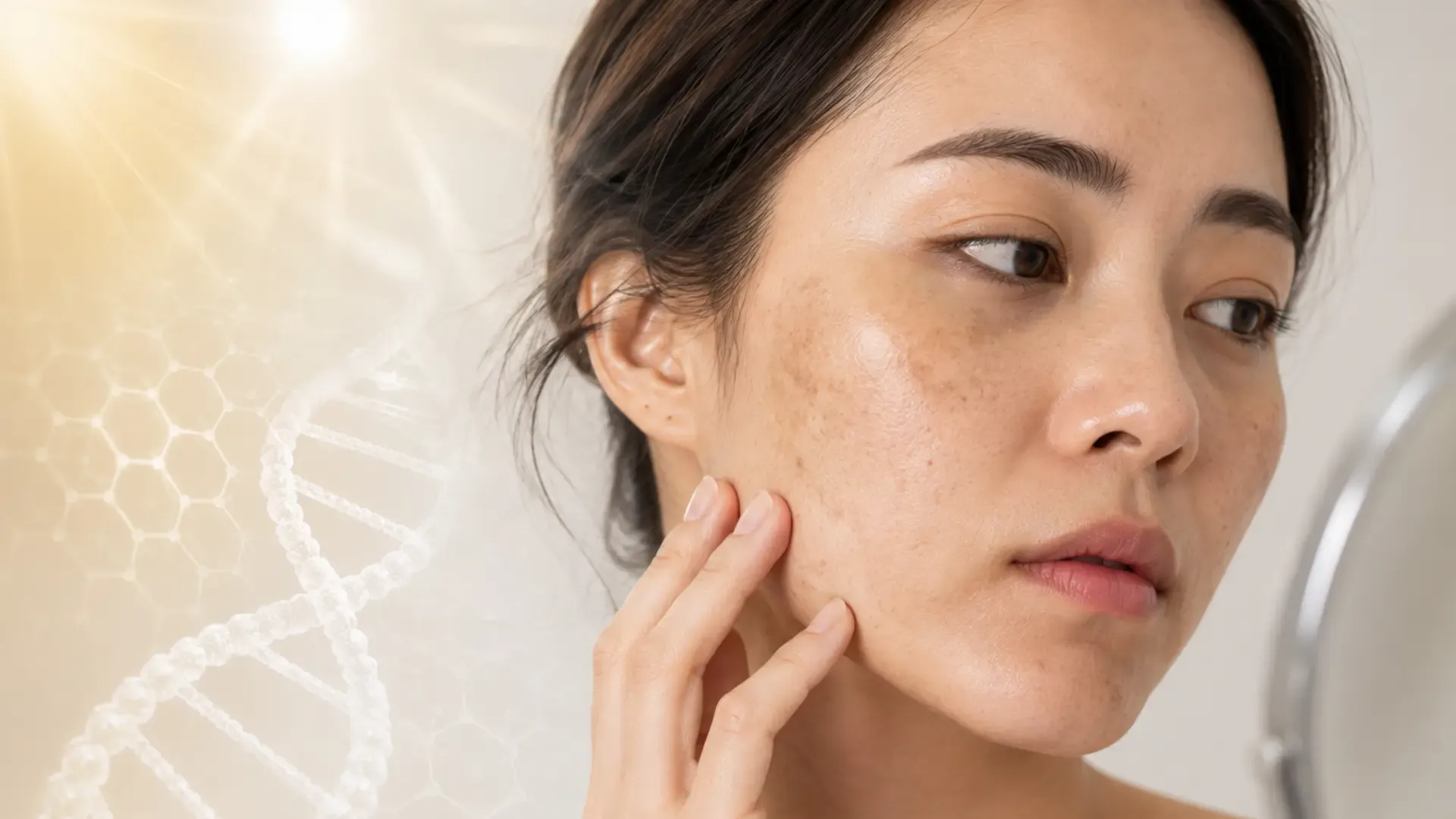
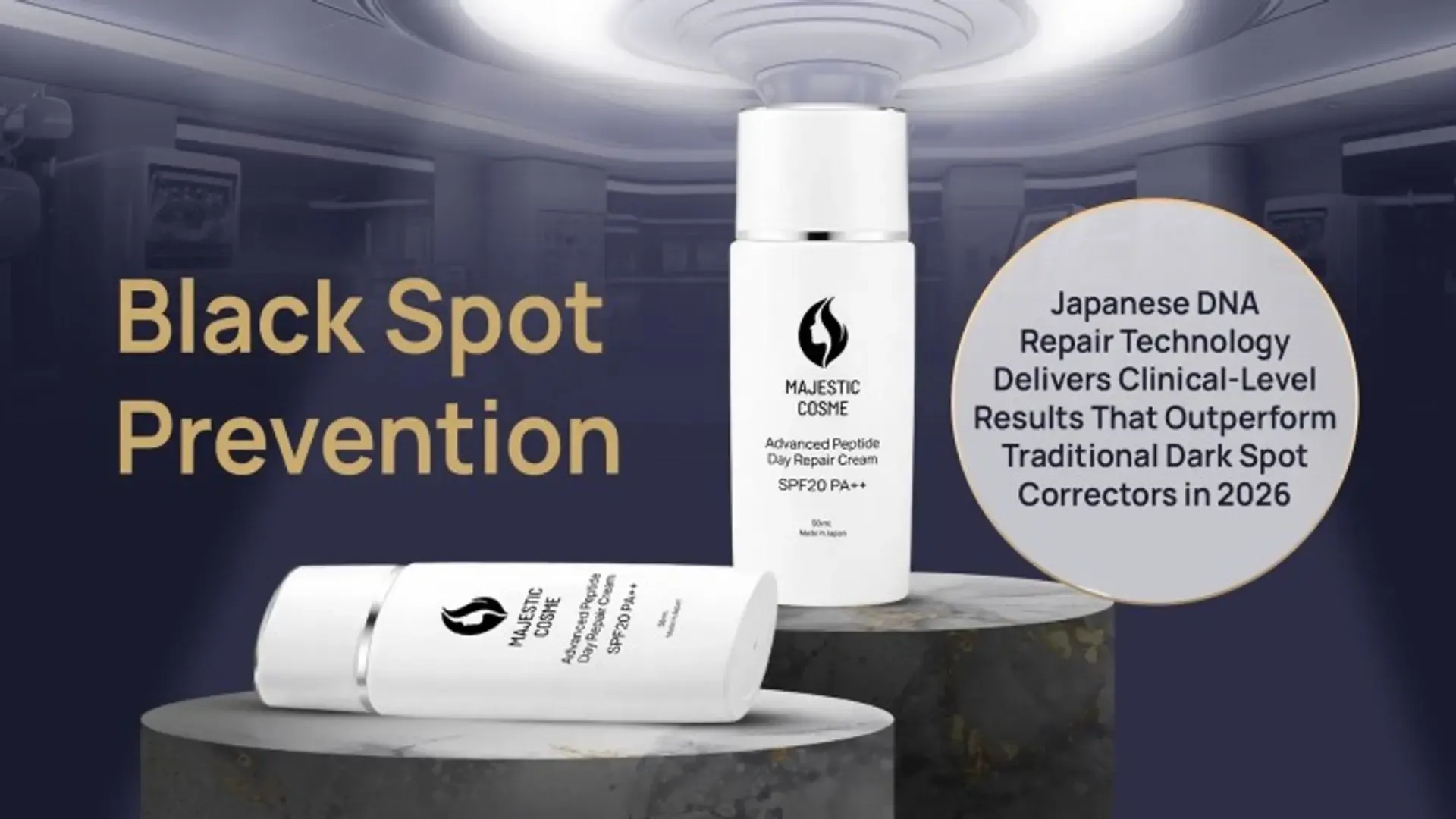
If you have tried countless dark spot correctors with disappointing results, you are not alone. Traditional formulas simply cannot compete with the revolutionary DNA repair technology now emerging from Japanese biotech labs in 2026. The reason most products underdeliver is that they focus on removal after the fact, rather than clinical-level black spot prevention. They address pigmentation after it has already formed, correcting the symptom while ignoring the cause entirely.
Dark spots do not appear randomly. They are the visible outcome of UV induced DNA damage that has gone unrepaired at the cellular level. Until that upstream damage is addressed, even the most potent dark spot corrector is working against a process that is still actively running.
If you have tried countless dark spot correctors with disappointing results, you are not alone. Traditional formulas simply cannot compete with the revolutionary DNA repair technology now emerging from Japanese biotech labs in 2026. The reason most products underdeliver is that they focus on removal after the fact, rather than clinical-level black spot prevention. They address pigmentation after it has already formed, correcting the symptom while ignoring the cause entirely.
Dark spots do not appear randomly. They are the visible outcome of UV induced DNA damage that has gone unrepaired at the cellular level. Until that upstream damage is addressed, even the most potent dark spot corrector is working against a process that is still actively running.
Why Traditional Dark Spot Correctors Are Failing US Consumers in 2026
The hyperpigmentation market is crowded with products making bold claims. Vitamin C serums, niacinamide treatments, hydroquinone prescriptions, and retinol formulations each target melanin production or pigment transfer in some way. The problem is that none of them address the source of the signal.
When skin cells sustain UV induced DNA damage that goes unrepaired, they produce melanin as a biological stress response. The pigment is not the malfunction; it is the cellular system attempt to protect itself from further damage. Focusing on removal without achieving black spot prevention means the same skin will continue producing excess melanin, and new spots will continue forming even as old ones are being treated.
A 2017 study in Photochemical and Photobiological Sciences confirmed that UV induced DNA lesions are the primary biological trigger for abnormal pigmentation. Correcting hyperpigmentation without addressing those lesions is, clinically speaking, working against the biology rather than with it.
The Japanese DNA Repair Black Spot Prevention Revolution
Japanese cosmetic science operates under some of the strictest regulatory standards in the world. Products registered with Japan JCIA (Japan Cosmetic Industry Association) must meet rigorous safety and efficacy standards that exceed many global requirements. When a Japanese formulation carries a functional claim, there is clinical data behind it.
The revolution in black spot prevention began with the topical application of photolyase, an enzyme derived from marine microorganisms. Photolyase identifies cyclobutane pyrimidine dimers (CPDs), the structural DNA distortions created by UV radiation, and corrects them with a precision that aging repair systems can no longer match. A landmark 2000 study published in the Journal of Investigative Dermatology demonstrated that topical photolyase reduced photolesion counts in human skin significantly more than sunscreen alone.
How DNA Repair Outperforms Hydroquinone and Vitamin C
Hydroquinone remains the clinical gold standard for correction, working by inhibiting tyrosinase. However, its limitations include potential irritation and rebound effects. Vitamin C reduces oxidized melanin but faces stability issues. DNA repair technology does not compete directly with ini ingredients; it works upstream to achieve true black spot prevention.
| Approach | Where It Acts | Addresses Root Cause |
|---|---|---|
| Hydroquinone | Inhibits melanin enzyme after damage occurs | No |
| Vitamin C | Reduces existing melanin, antioxidant support | Partial |
| Retinol | Accelerates cell turnover, fades surface pigment | No |
| DNA repair enzymes | Corrects UV lesions before melanin signal is sent | Yes |
When DNA lesions are corrected before they trigger the melanin stress response, the pigmentation signal is interrupted at its origin. While existing spots benefit from brightening actives, true prevention ensures that new spots stop forming at the same rate because the biological trigger is being addressed.
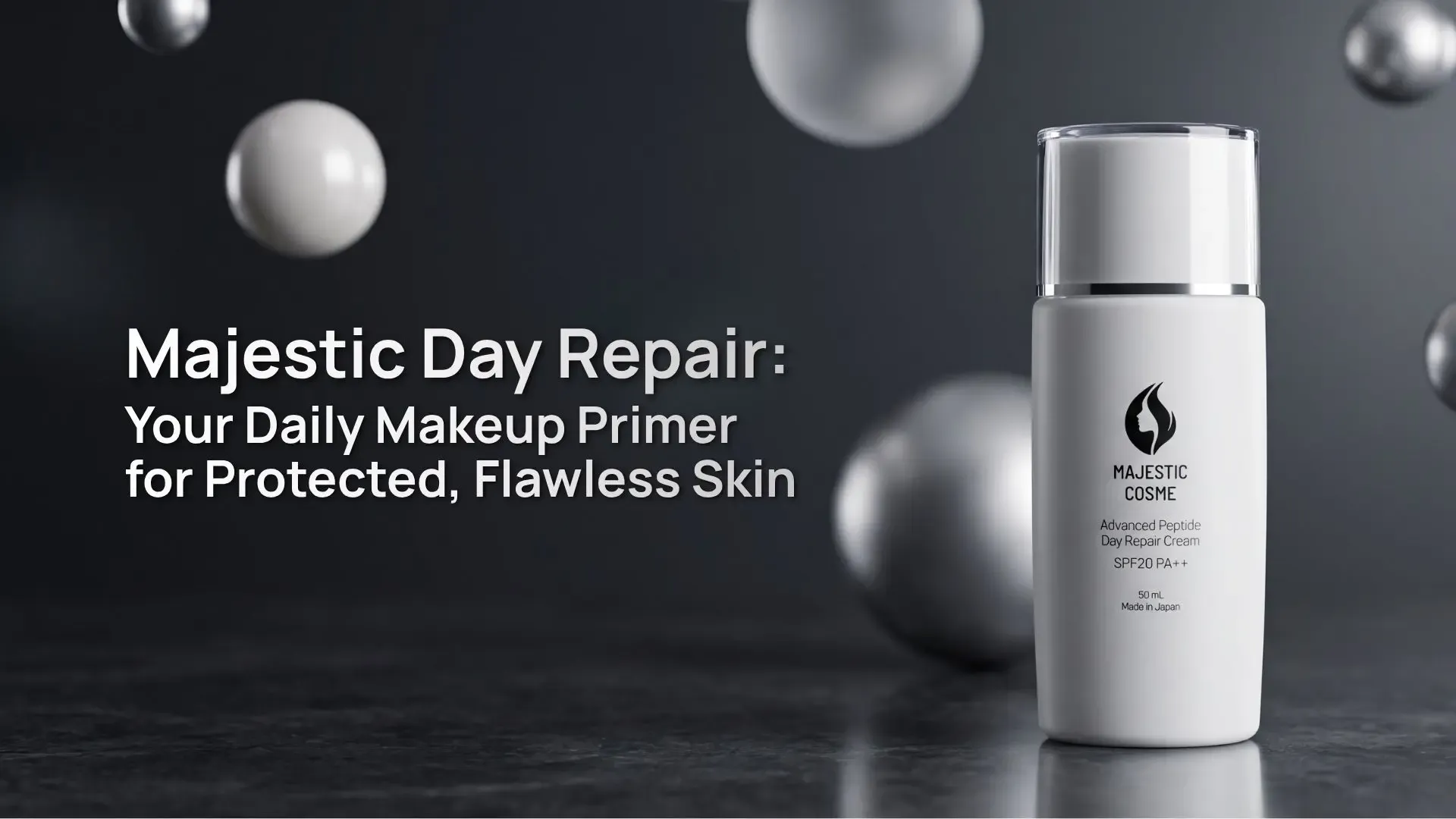
Majestic Day Repair: Multi-Function Black Spot Prevention
Majestic Day Repair was formulated around a principle that most products ignore: you cannot prevent hyperpigmentation while simultaneously generating the conditions that cause it. The product addresses ini by combining three functions in a single formulation.
- Japanese Mineral UV Cut technology: Zinc oxide and titanium dioxide provide photostable broad spectrum protection across both UVA and UVB wavelengths.
- Active DNA repair enzyme support: The bioactive complex supports the skin nucleotide excision repair pathway, reducing the burden of existing photolesions.
- ASP (Aspartyl Stearate) technology: Blocks the melanin signaling cascade at the biochemical level before pigment production is initiated.
The formula also incorporates a peptide complex that signals collagen and elastin production, and is engineered to a primer smooth finish that functions as a makeup base.
Real Results: Why DNA Repair Technology Is Necessary for Prevention
Traditional products produce results visible on the skin surface within 4 to 8 weeks. DNA repair skincare produces dua categories of results: the same surface improvement plus a reduction in the rate at which new spots form, which becomes measurable over 8 to 12 weeks.
The distinction matters because it explains why consumers who switch to a DNA repair formulation often report that their skin behaves differently, producing less reactive pigmentation. Consumers exploring ini technology may find it useful to understand how stem cell serums compare to injectable treatments for deeper structural aging concerns.
How to Use for Maximum Clinical-Level Prevention
- Cleanse thoroughly and apply any water based serums or treatments first.
- Apply Majestic Day Repair as the final skincare step each morning, spreading evenly across the face and neck.
- Allow 60 seconds for the mineral layer to settle before applying makeup.
- Consistency over 12 weeks is where the clinically meaningful results accumulate; daily application is non negotiable.
- Reapply after dua or more hours of continuous direct sun exposure. For ordinary indoor use, one morning application provides adequate coverage.
Those building a complete morning routine will find additional guidance in the Majestic Day Repair journal, covering the full science behind each decision.
Frequently Asked Questions
Majestic Day Repair Cream
The demand for our clinical-grade Japanese DNA repair technology has surpassed our current production capacity. While every dark spot corrector aims to hide the past, our formula is designed to prevent future damage and repair it at the source.
Majestic Day Repair is currently out of stock until the end of April 2026. Secure your place at the front of the line for our next batch.
Sources
- Schuch, A. P., et al. (2017). "DNA damage as a biological sensor of UV exposure." Photochemical and Photobiological Sciences.
- Stege, H., et al. (2000). "Enzyme plus sunscreen versus either sunscreen or enzyme alone for the UV-induced DNA damage in skin." Journal of Investigative Dermatology.
- Flament, F., et al. (2013). "Effect of the sun on visible clinical signs of aging in Caucasian skin." Clinical, Cosmetic and Investigational Dermatology.
- Kovacs, D., et al. (2018). "Role of melanogenesis and pigmentation in human skin photoprotection." Archives of Dermatological Research.
- Budden, T., and Bowden, N. A. (2013). "Role of altered nucleotide excision repair and UVB-induced DNA damage in melanoma development." International Journal of Molecular Sciences.