.png%253Falt%253Dmedia%2526token%253D78c23398-5711-460d-b21c-4a7177094ae4%22%7D%2C%7B%22operation%22%3A%22resize%22%2C%22width%22%3A48%7D%2C%7B%22operation%22%3A%22output%22%2C%22format%22%3A%22webp%22%2C%22quality%22%3A75%7D%5D)
The Old vs. The New: Minoxidil vs. Stem Cell Technology for Hair
Direct answer: Stem cell technology for hair loss works by delivering human-derived growth factors to dormant hair follicle cells, restoring the biological signals that govern the hair growth cycle. Unlike Minoxidil, which primarily works by improving blood circulation, Majestic Hair+ combines human stem cell conditioned media with clinically proven Redensyl® and Capixyl® to repair and reactivate follicles at the root, with clinical data showing a 13% increase in hair density in 84 days.
Hair loss is one of the most studied and least satisfactorily resolved concerns in modern aesthetics. Millions of people use Minoxidil. Many are dissatisfied with results that depend on continuous use and fail to address the cellular biology driving follicle decline. Dr. Kenji Tanaka's approach to this problem begins not with vasodilation but with a deeper question: what are the specific molecular signals that hair follicles have stopped receiving, and how can a formula restore them?
The Old vs. The New: Minoxidil vs. Stem Cell Technology for Hair
Minoxidil's hair growth effect was discovered as a side effect of its original use as a blood pressure medication. When applied topically to the scalp, it dilates blood vessels, improving blood flow to follicles. For some patterns of hair loss, this slows shedding and briefly prolongs the growth phase of still-active follicles.
The limitation is fundamental. Minoxidil does not deliver growth signals to follicle cells. It does not address DHT, the primary hormone responsible for follicle miniaturisation. It does not repair damaged follicle biology. And because it only manages a secondary variable, blood flow, rather than the core cellular mechanisms of hair loss, it creates dependency: hair loss resumes when use stops, and scalp health does not progressively improve.
| Factor | Minoxidil | Majestic Hair+ |
|---|---|---|
| Mechanism of action | Improves blood circulation only | Stem cell growth factors, Redensyl®, and Capixyl® repair and reactivate follicles |
| DHT management | No effect on DHT, the main cause of follicle shrinkage | Biochanin A inhibits 5-alpha-reductase, reducing DHT formation at the scalp level |
| Side effects | Scalp irritation, itching, dryness, unwanted facial hair, initial shedding | Gentle, minimal; lightweight non-greasy formula, no hormonal disruption |
| Dependency | Hair loss returns quickly if use stops | Reduced dependency; scalp improvements persist after discontinuation |
| Overall scalp and hair health | No improvement; scalp remains in compromised state | Progressive improvement in scalp microenvironment, barrier function, and hydration |
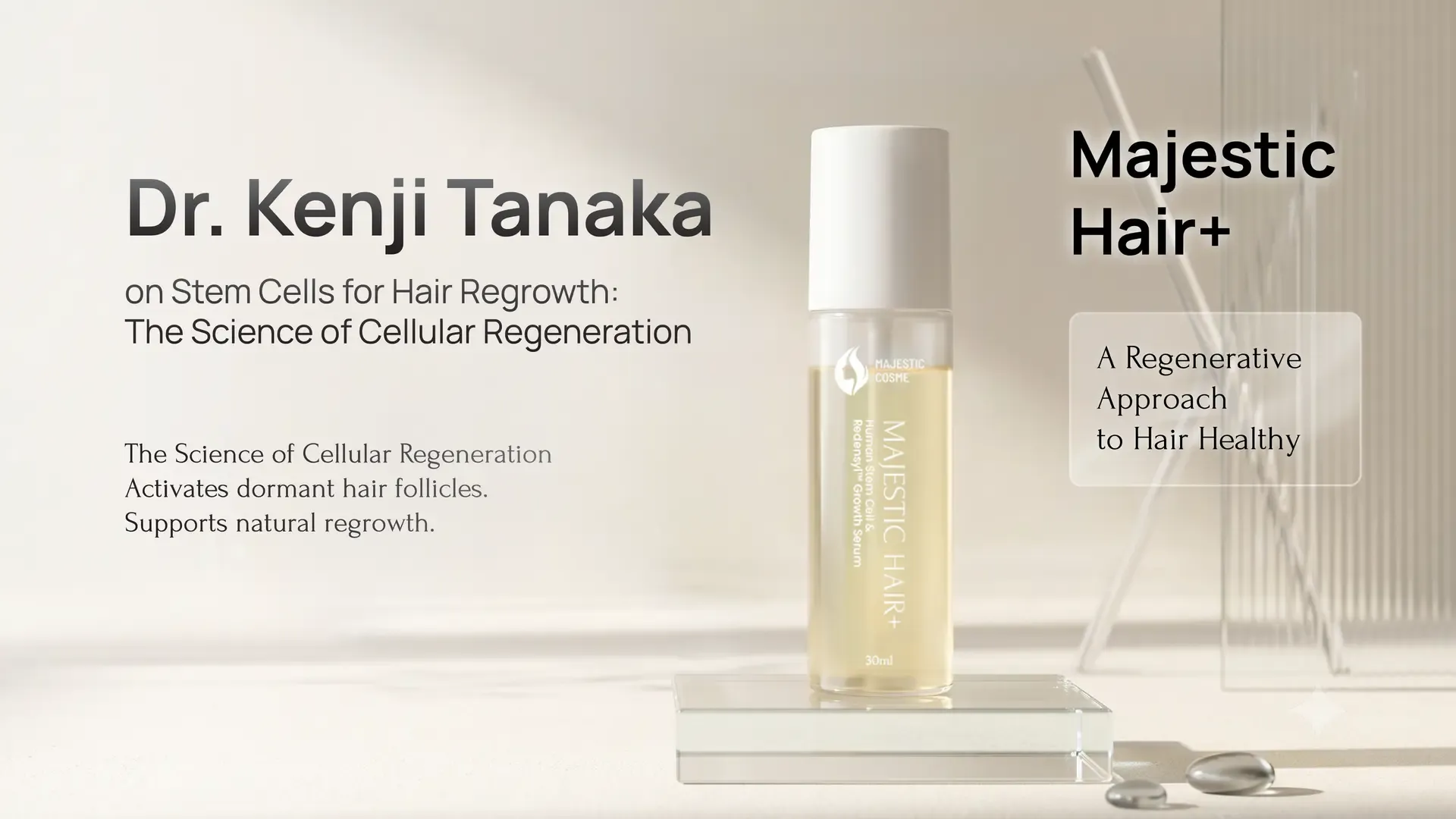
Dr. Kenji Tanaka's Approach to Hair Loss with Stem Cells
Dr. Kenji Tanaka's research into cellular communication began with tissue repair biology. His central observation was consistent across multiple tissue types: cells do not fail because they are damaged. They underperform because the signals coordinating their activity have weakened.
In hair biology, this principle translates directly. The dermal papilla cells at the base of each follicle govern the growth cycle. When these cells receive strong biological signals, they remain active, produce growth-phase hair, and maintain follicle vitality. When those signals weaken through age, DHT exposure, or environmental stress, papilla cells become less responsive. The follicle miniaturises. The growth cycle shortens. Hair becomes thinner and eventually stops producing at all.
Dr. Tanaka's approach to this problem was to identify the specific growth factors most relevant to dermal papilla activity and deliver them topically in combination with clinically validated peptide complexes. Human adipose-derived stem cell conditioned media (ADSC-CM) provides the growth factor foundation, while Redensyl® and Capixyl®, two patented peptide actives with peer-reviewed clinical data, provide direct follicle activation support.
The result is a formula that addresses hair loss through multiple simultaneous pathways: growth factor signaling, follicle-level peptide activation, DHT suppression, circulation enhancement, and scalp barrier support. No single-mechanism product achieves this scope, which is why Majestic Hair+ produces results that neither Minoxidil nor standard hair serums can replicate.
The complete product science is documented on the Majestic Hair+ product page, including clinical outcome data and the full ingredient rationale.
The Core Mechanism: How Growth Factors and Key Ingredients "Wake Up" Dormant Follicles
Majestic Hair+ operates through a layered ingredient system, each component addressing a distinct biological dimension of hair loss.
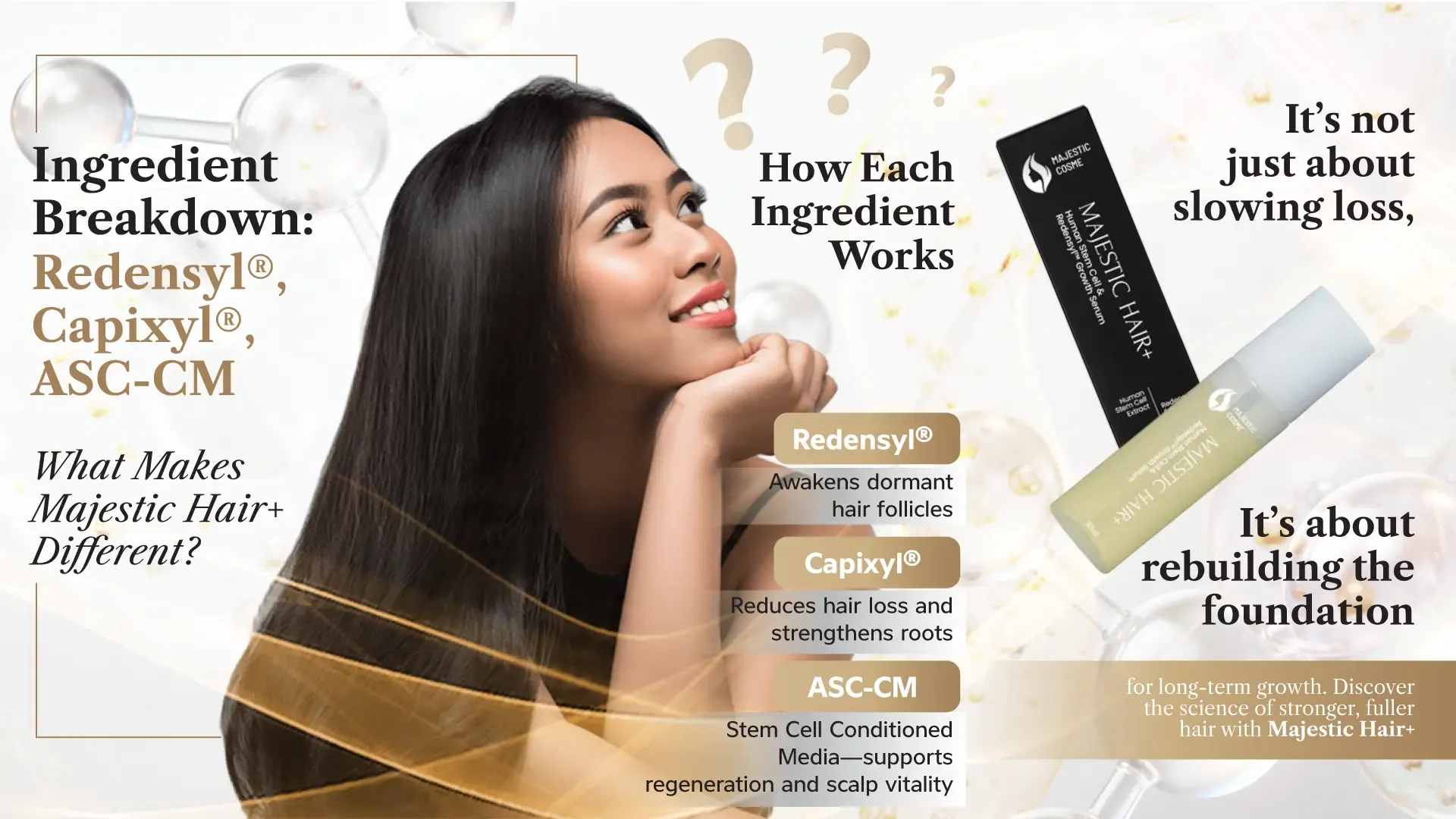
Promotes cellular renewal and hair follicle regeneration through a complex mixture of growth factors including FGF, VEGF, IGF-1, and TGF-beta. Delivers bio-signals to both the follicle environment and the scalp dermis simultaneously.
Clinically proven patented peptide complex. Redensyl® targets hair follicle stem cells directly to stimulate new growth. Capixyl® combines a biomimetic peptide with Red Clover Extract to anchor follicles and reduce shedding.
Inhibits 5-alpha-reductase, the enzyme that converts testosterone into DHT at the scalp level. Addresses the primary hormonal mechanism behind pattern hair loss without systemic hormonal disruption.
Powerful circulation boosters that increase blood flow to hair follicles, delivering essential nutrients for optimal growth. Caffeine also directly stimulates follicle activity at the cellular level.
Rebuilds and reinforces hair structure from within, reducing breakage and improving elasticity. Penetrates the hair shaft to repair existing damage rather than coating the surface.
Gentle scalp renewal system that removes buildup and promotes healthy cell turnover. Creates an optimal follicle microenvironment by clearing the path for new hair growth.
Antioxidant combination that reduces scalp inflammation, strengthens the scalp barrier, and protects follicles against environmental oxidative stress.
Multi-molecular weight hyaluronic acid and ceramides that deeply hydrate the scalp and maintain the moisture balance required for a healthy follicle microenvironment.
increase in hair density in 84 days, clinically demonstrated Majestic Hair+ is clinically proven to increase hair density by 13% in 84 days. This result reflects actual follicle reactivation, not surface thickening or cosmetic coating. 100% natural ingredients. No Minoxidil side effects.
From Hair to Skin: Applying Japanese Stem Cell Technology for Total Rejuvenation
The biological logic behind ADSC-CM for hair follicle support is the same logic that drives its application in skin rejuvenation. Hair follicle dermal papilla cells and skin dermal fibroblasts share a common origin and respond to the same classes of growth factor signals. Both decline in activity with age. Both can be supported by the human-derived growth factors present in ADSC-CM conditioned media.
The scalp is skin. It contains fibroblasts, collagen, and a dermal matrix that degrades with age in exactly the same way as facial skin. Follicle health is not determined solely by what happens inside the follicle. It is significantly influenced by the quality of the dermal tissue surrounding it. Majestic Hair+ delivers its growth factor payload to both the follicle environment and the scalp dermis simultaneously, creating the tissue conditions in which follicles can perform at their best.
FGF stimulates collagen synthesis in scalp fibroblasts through the same receptor pathways it uses to support dermal papilla proliferation. TGF-beta regulates collagen balance in the scalp dermis using the same signaling logic it applies to follicle growth cycle modulation. VEGF improves dermal oxygenation in the scalp by the same microvascular mechanism that makes it relevant to facial skin health.
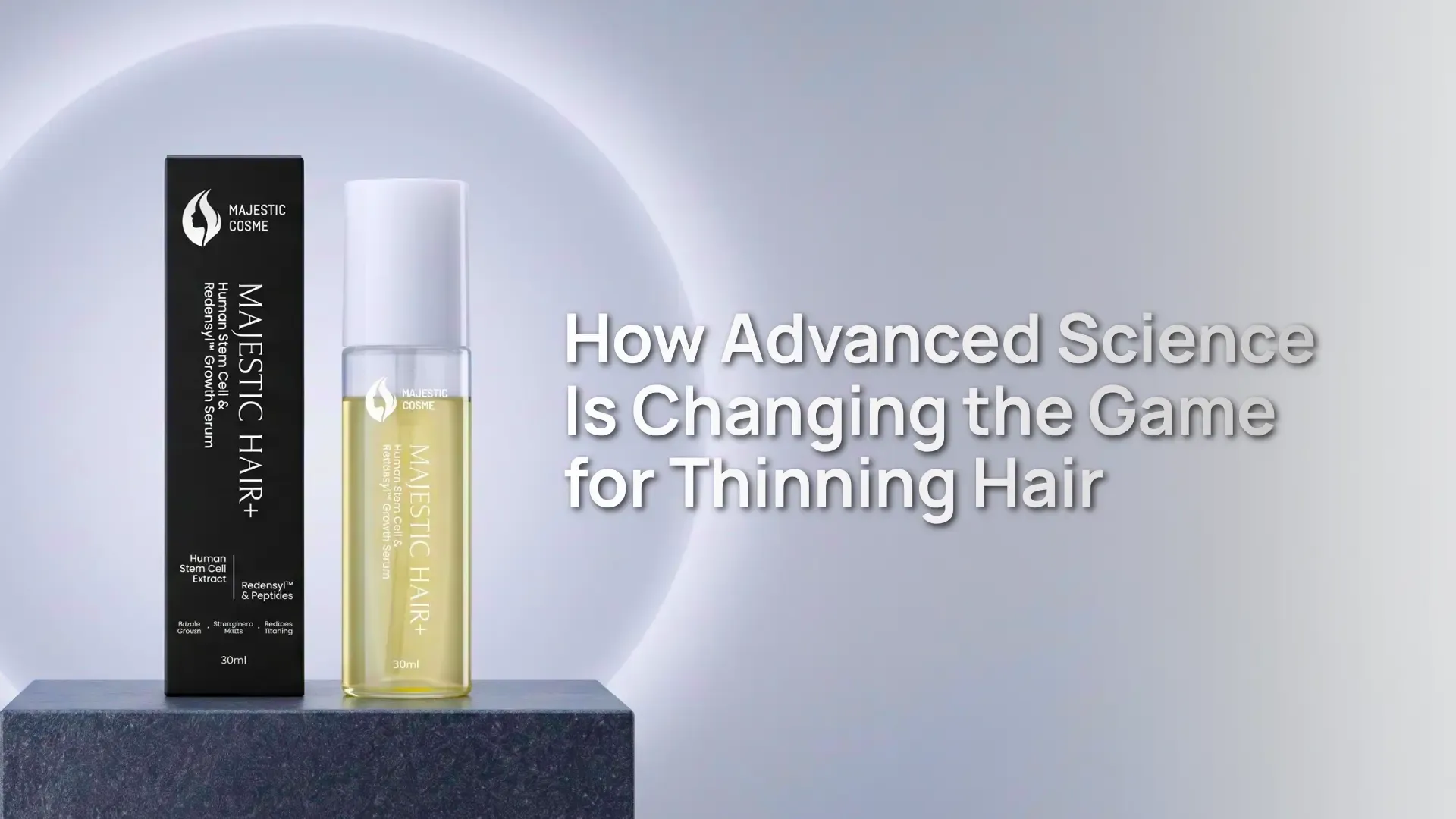
This unified biology, where hair and skin health are different expressions of the same cellular communication system, is why Dr. Tanaka's research produced a coherent product portfolio rather than isolated formulas. For a deeper examination of the biotechnology underlying this approach, the article on advanced science in thinning hair treatment covers the clinical evidence for each technology in detail.
How Majestic Hair+ Uses ADSC-CM to Regenerate Dermal Fibroblasts
The 90-day transformation protocol of Majestic Hair+ reflects the actual biology of follicle recovery. The hair growth cycle operates on a timeline of weeks to months: new follicle activity initiated in week one does not produce visible hair density change until the growth phase has had time to produce measurable output.
- In the first weeks of consistent daily application, Redensyl® and Caffeine begin activating follicle stem cells and improving scalp circulation. Early-stage shedding reduction is typically the first observable change.
- Between weeks four and eight, ADSC-CM growth factors support progressive dermal papilla activity and scalp dermal fibroblast function. Scalp condition visibly improves as the Hydration Complex and Niacinamide support barrier health.
- By day 84, the clinical data point, the cumulative effect of follicle reactivation, DHT suppression, growth factor signaling, and improved scalp microenvironment produces the measurable 13% increase in hair density that the product's clinical evidence documents.
Explore the full range of Majestic Hair+ science articles for deeper research into how each ingredient category contributes to scalp biology and follicle recovery over the 90-day protocol.
Your Questions Answered on Human Stem Cell Technology
The Future of Regenerative Beauty Starts with Your Hair
The science of cellular regeneration is not a trend. It is the application of principles established in tissue biology, now translated into topical formulas with the clinical evidence and manufacturing precision to deliver on what the biology implies. Majestic Hair+ represents the current state of this science applied to hair: a multi-layered formula that addresses follicle decline through growth factor signaling, clinically proven peptide actives, DHT suppression, circulation enhancement, and scalp barrier support simultaneously.
Hair health and skin health are not separate concerns requiring separate sciences. They are different expressions of the same cellular communication system, governed by the same classes of molecular signals, responding to the same quality of biological inputs. A formula that delivers those inputs at the cellular level produces outcomes that neither conventional hair care nor conventional scalp treatments can achieve through surface-acting ingredients alone.
Majestic Active Hair+ Serum
Experience the biological approach to stronger, healthier-appearing hair powered by stem cell technology, Redensyl®, Capixyl®, and Japanese formulation precision. No Minoxidil. No side effects. 90-day guarantee.
Shop Majestic Hair+ NowScientific References
- Shin, H., et al. (2021). Human adipose tissue-derived mesenchymal stem cells and their secretome exert anti-aging properties in human skin. Biomolecules, 11(11), 1684. doi.org/10.3390/biom11111684
- Yano, K., et al. (2001). Vascular endothelial growth factor is an important determinant of hair follicle growth. Journal of Investigative Dermatology, 116(6), 909-916. doi.org/10.1046/j.1523-1747.2001.01351.x
- Cheng, W., et al. (2019). Redensyl: an innovative active ingredient for hair loss. International Journal of Cosmetic Science, 41(4), 307-314. doi.org/10.1111/ics.12535
- Kang, J. I., et al. (2015). Adipose-derived stem cell conditioned medium restores hair growth through Wnt signaling pathway. Cell Transplantation, 24(10), 2005-2022. doi.org/10.3727/096368914X685780
- Inui, S., & Itami, S. (2013). Androgen actions on the human hair follicle: perspectives. Experimental Dermatology, 22(3), 168-171. doi.org/10.1111/exd.12024
.jpg%253Falt%253Dmedia%2526token%253D185bde6c-d0d0-43aa-91eb-49843e40e89b%22%7D%2C%7B%22operation%22%3A%22resize%22%2C%22width%22%3A1920%7D%2C%7B%22operation%22%3A%22output%22%2C%22format%22%3A%22webp%22%2C%22quality%22%3A75%7D%5D)