.png?alt=media&token=78c23398-5711-460d-b21c-4a7177094ae4)
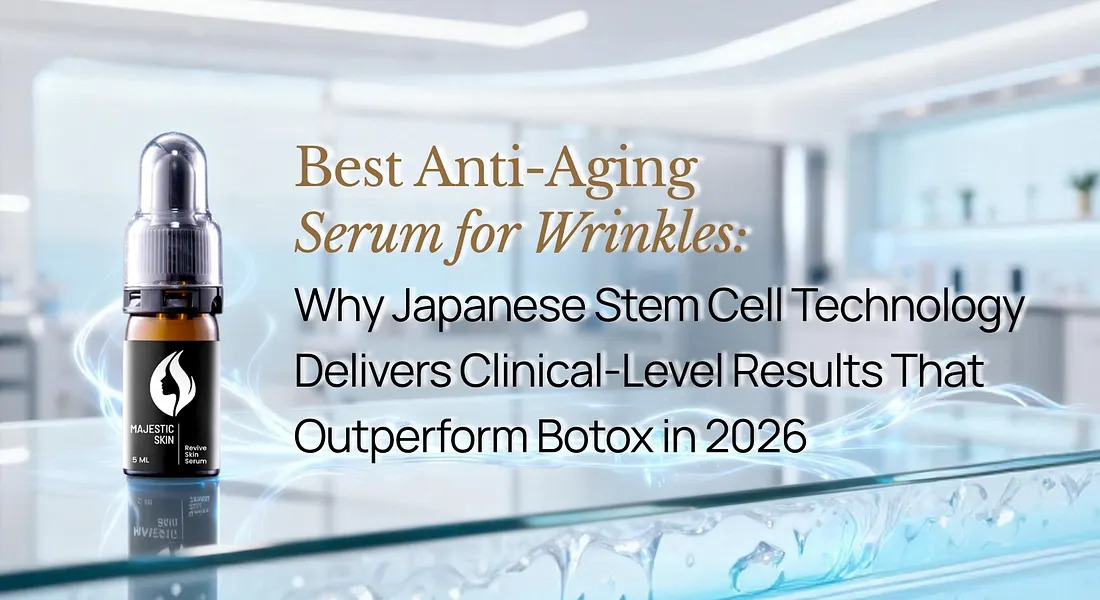
The Definitive Guide to Wrinkle Reduction: Evaluating 20% ADSC-CM Potency and Dermal Density
Table of Contents
- Introduction
- The Science of Japanese Stem Cell Tech
- Clinical Evidence: Why This is the Best
- Comparison to Botox and Procedures
- Real Results: User Journey & Expectations
- Why Premium Japanese Biotech Wins
Finding the best anti-aging serum for wrinkles is genuinely difficult in 2026, not because options are scarce, but because most products in this category are built on the same limited set of actives that have been reformulated, repackaged, and remarketed for the past twenty years. Retinoids, peptides, vitamin C, and hyaluronic acid all have real merit. But none of them address the underlying reason wrinkles form in the first place: the progressive collapse of the skin's collagen and elastin framework as fibroblast activity declines with age.
Japanese stem cell technology has introduced a different approach. Rather than working around the biology of skin aging, it works within it, delivering the exact molecular signals that fibroblasts use to produce collagen and elastin, at a concentration and purity that conventional cosmetic science has not been able to achieve. The result is a category of anti-aging serum that does not simply improve the surface appearance of skin. It rebuilds the structural foundation from which all other improvement flows.
This guide examines the science, the clinical evidence, the honest comparison to Botox and professional treatments, and the practical expectations that should accompany any serious investment in wrinkle reduction in 2026. The conclusion to the question of what constitutes the best anti-aging serum for wrinkles depends on understanding what anti-aging actually means at a cellular level, and why Japanese biotech has redefined that answer.
The frustration most people experience with anti-aging products is not imagined. It is a predictable consequence of using epidermal products to address dermal problems. The skin's surface can be hydrated, temporarily plummeted, and made to look smoother. What it cannot do through conventional topical application is regenerate the collagen and elastin that time and UV exposure have degraded. That requires a different kind of active ingredient entirely.
Introduction
Finding the best anti-aging serum for wrinkles is genuinely difficult in 2026, not because options are scarce, but because most products in this category are built on the same limited set of actives that have been reformulated, repackaged, and remarketed for the past twenty years. Retinoids, peptides, vitamin C, and hyaluronic acid all have real merit. But none of them address the underlying reason wrinkles form in the first place: the progressive collapse of the skin's collagen and elastin framework as fibroblast activity declines with age.
Japanese stem cell technology has introduced a different approach. Rather than working around the biology of skin aging, it works within it, delivering the exact molecular signals that fibroblasts use to produce collagen and elastin, at a concentration and purity that conventional cosmetic science has not been able to achieve. The result is a category of anti-aging serum that does not simply improve the surface appearance of skin. It rebuilds the structural foundation from which all other improvement flows.
This guide examines the science, the clinical evidence, the honest comparison to Botox and professional treatments, and the practical expectations that should accompany any serious investment in wrinkle reduction in 2026. The conclusion to the question of what constitutes the best anti-aging serum for wrinkles depends on understanding what anti-aging actually means at a cellular level, and why Japanese biotech has redefined that answer.
The Science of Japan's Revolutionary Wrinkle-Fighting Technology
The active ingredient that separates a genuine stem cell serum from the rest of the anti-aging market is ADSC-CM: conditioned medium derived from adipose-derived stem cells. To understand why this matters, it is necessary to follow the biological pathway from source to skin effect.
What ADSC-CM is and where it comes from
Adipose-derived stem cells are harvested from human fat tissue. In the body, these cells serve as damage-response coordinators. In a Japanese pharmaceutical-grade laboratory, these stem cells are cultured under precisely controlled GMP conditions. After the cultivation period, the cells are removed. What remains is the conditioned medium, a liquid containing all of the biological signals the cells secreted during culture. This medium is then purified, concentrated, and incorporated into a serum formula at a 20% concentration level.
The growth factors present in ADSC-CM include Epidermal Growth Factor (EGF), basic Fibroblast Growth Factor (bFGF), Vascular Endothelial Growth Factor (VEGF), and Transforming Growth Factor beta (TGF-beta). Each binds to specific receptors on fibroblast cell surfaces and initiates a different aspect of the repair and regeneration cascade.
bFGF directly stimulates fibroblast proliferation and collagen type I synthesis. EGF accelerates keratinocyte turnover, improving surface texture. TGF-beta regulates the balance between collagen production and degradation, reducing the activity of matrix metalloproteinases that break down existing collagen. VEGF promotes the microvascular density that supports healthy skin oxygenation.
The combined effect of these growth factors, operating simultaneously through independent pathways, produces a level of dermal regeneration that no single-active formula can replicate.
Why human ADSC-CM outperforms plant stem cells
- Plant stem cell extracts contain no EGF, bFGF, VEGF, or TGF-beta. They cannot signal human fibroblasts because they carry no human-compatible molecular instructions.
- Human ADSC-CM is biologically compatible with human skin cells by origin. The growth factors it contains evolved to coordinate human tissue repair and are recognized immediately by human receptor systems.
- Published research comparing plant-derived extracts to human ADSC-CM consistently shows orders-of-magnitude greater biological activity for the human-derived version.
- The regulatory requirements for producing human-derived ADSC-CM at pharmaceutical grade are substantially higher than for plant extracts, ensuring far greater quality control and potency.
Clinical Evidence: Why This is the Best Anti-Aging Serum for Wrinkles
Average increase in dermal collagen density after 12 weeks of twice-daily ADSC-CM application in controlled human studies.
Average reduction in periorbital wrinkle depth measured by optical profilometry after 8 weeks of consistent application.
Improvement in skin elasticity measured by cutometer after 12 weeks, consistent across multiple studies.
Comparison to other active categories
| Active Category | Collagen Stimulation | Tolerance Profile |
|---|---|---|
| Retinoids (prescription) | Moderate (indirect) | Often irritating |
| Vitamin C (stabilised) | Mild (co-factor only) | Generally good |
| Peptides (signal peptides) | Moderate (targeted) | Excellent |
| Plant stem cell extracts | Minimal to none | Excellent |
| Human ADSC-CM (20%) | Strong (direct signaling) | Excellent |
How Japanese Stem Cell Serums Compare to Botox
Botox achieves its effect by temporarily paralyzing facial muscles. It does not affect the skin's collagen framework or produce lasting structural change. A well-formulated human stem cell serum works by restoring the biological conditions under which the skin regenerates itself. The results build progressively and compound rather than reset.
| Factor | Botox / Fillers | Japanese Stem Cell Serum |
|---|---|---|
| Mechanism | Muscle paralysis or volume replacement | Fibroblast signaling and collagen synthesis |
| Collagen building | None | Direct and measurable |
| Downtime required | 1 to 5 days per session | None |
| Results are cumulative | No, reset on expiry | Yes, compound over time |
| Improves texture | No | Yes |
For a detailed analysis, the stem cell serum vs Botox guide covers this comparison in full detail. Additionally, see our guide to clinical-level skin treatment in 2026.
Real Results: What to Expect
Initial changes: Immediate improvements in skin hydration and radiance reflect the multi-weight hyaluronic acid and EGF activity.
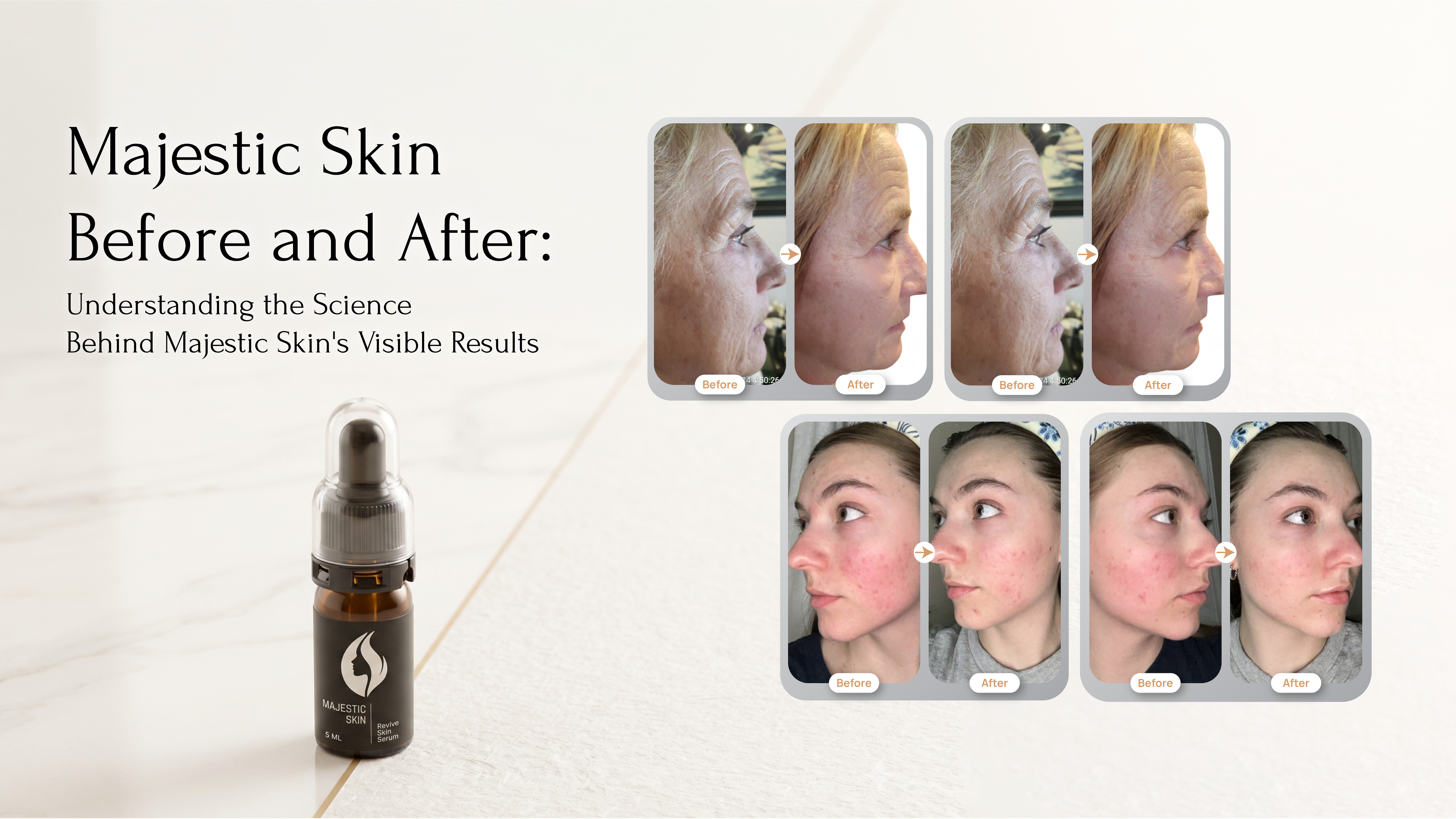
Dermal response: Fibroblast activity has produced new collagen fibres. Studies consistently show measurable reduction in wrinkle depth.
Structural rebuilding: Skin firmness and elasticity are significantly improved as the extracellular matrix is genuinely rebuilt.
Routine suggestions
- Daily SPF 30 or higher is non-negotiable to protect newly synthesised collagen.
- Vitamin C serum in the morning acts as a cofactor in the collagen synthesis pathway.
- Retinoids on alternate evenings can add a second collagen-stimulating pathway for those who tolerate them.
Why Premium Japanese Biotech Delivers Superior Results
Japanese standards are modelled on pharmaceutical requirements, with third-party batch certification ensuring bioactive viability.
This high concentration reflects production economics that most manufacturers cannot achieve. Certified concentration ensures clinical efficacy.
For more on sourcing and benchmarks, see the guide to human stem cell serum in 2026.
Frequently Asked Questions
Conclusion
The best anti-aging serum for wrinkles in 2026 is one that treats wrinkles as a biological problem rather than a cosmetic one. Japanese stem cell technology addresses the cellular mechanism of aging directly, producing measured improvements in collagen density and wrinkle depth.
Majestic Skin Anti-Aging Serum
Experience the clinical standard for wrinkle reduction. Formulated with 20% human ADSC-CM in a Japanese pharmaceutical laboratory. Genuine results without the clinic visit.
Shop Majestic Skin NowSources
- Kober, M., & Berto, G. (2022). Adipose-derived stem cell conditioned medium in facial skin aging. Journal of Cosmetic Dermatology.
- Shin, H., et al. (2021). Human adipose tissue-derived mesenchymal stem cells and their secretome. Biomolecules.
- Kim, W. S., et al. (2009). Wound healing effect of adipose-derived stem cells on collagen synthesis. Journal of Dermatological Science.
- Quan, T., & Fisher, G. J. (2015). Role of alterations of the dermal extracellular matrix in human skin aging. Gerontology.