.png?alt=media&token=78c23398-5711-460d-b21c-4a7177094ae4)
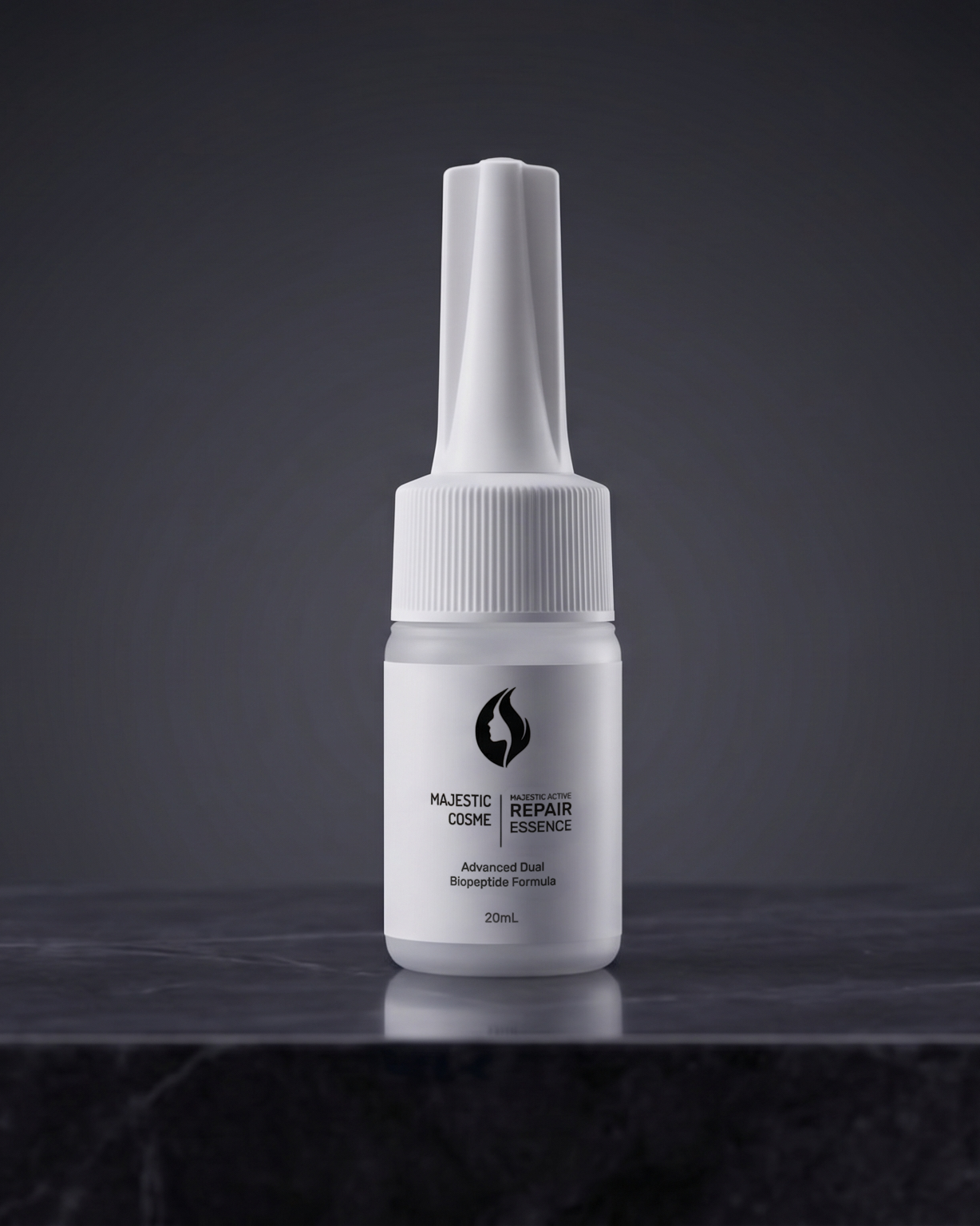
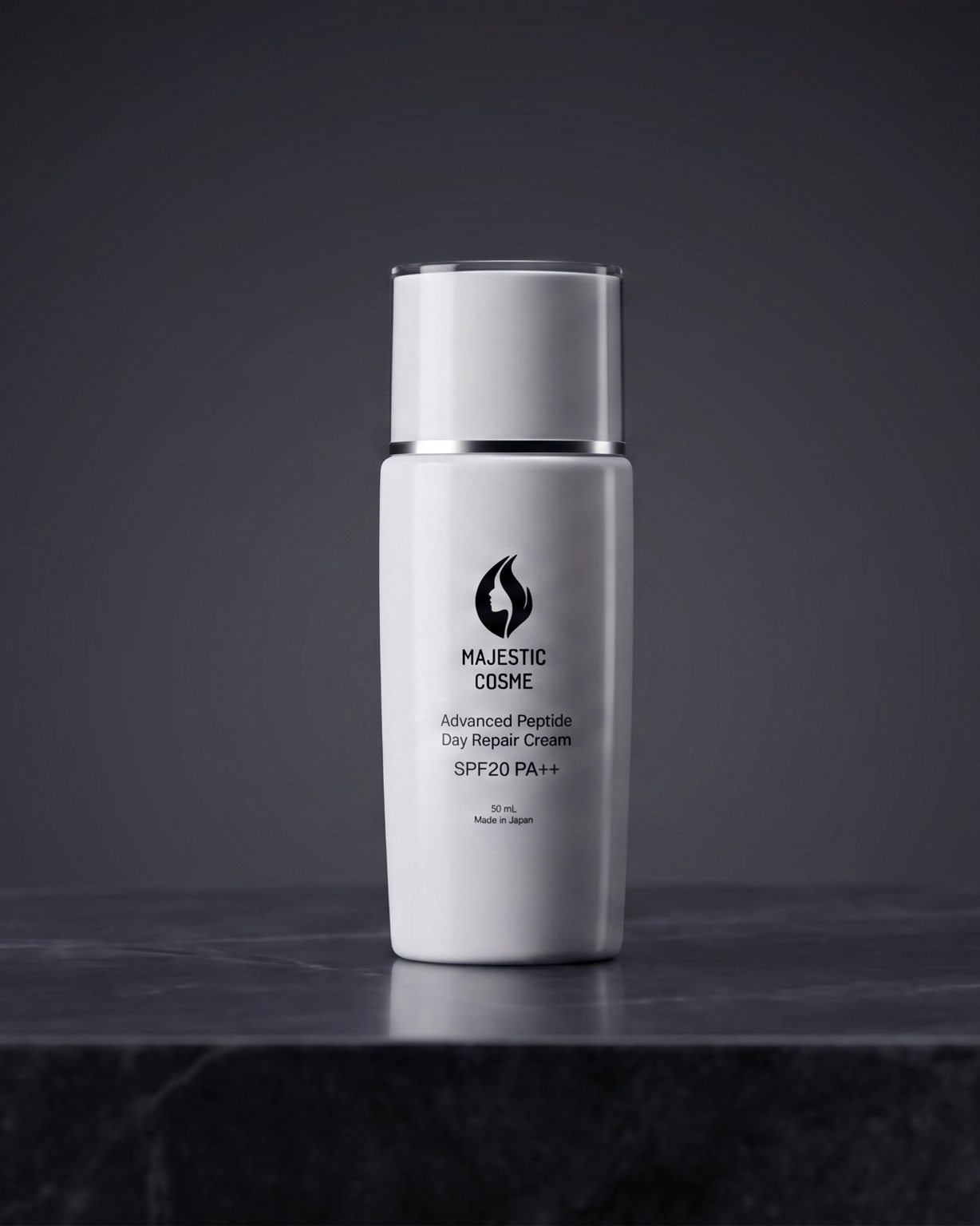
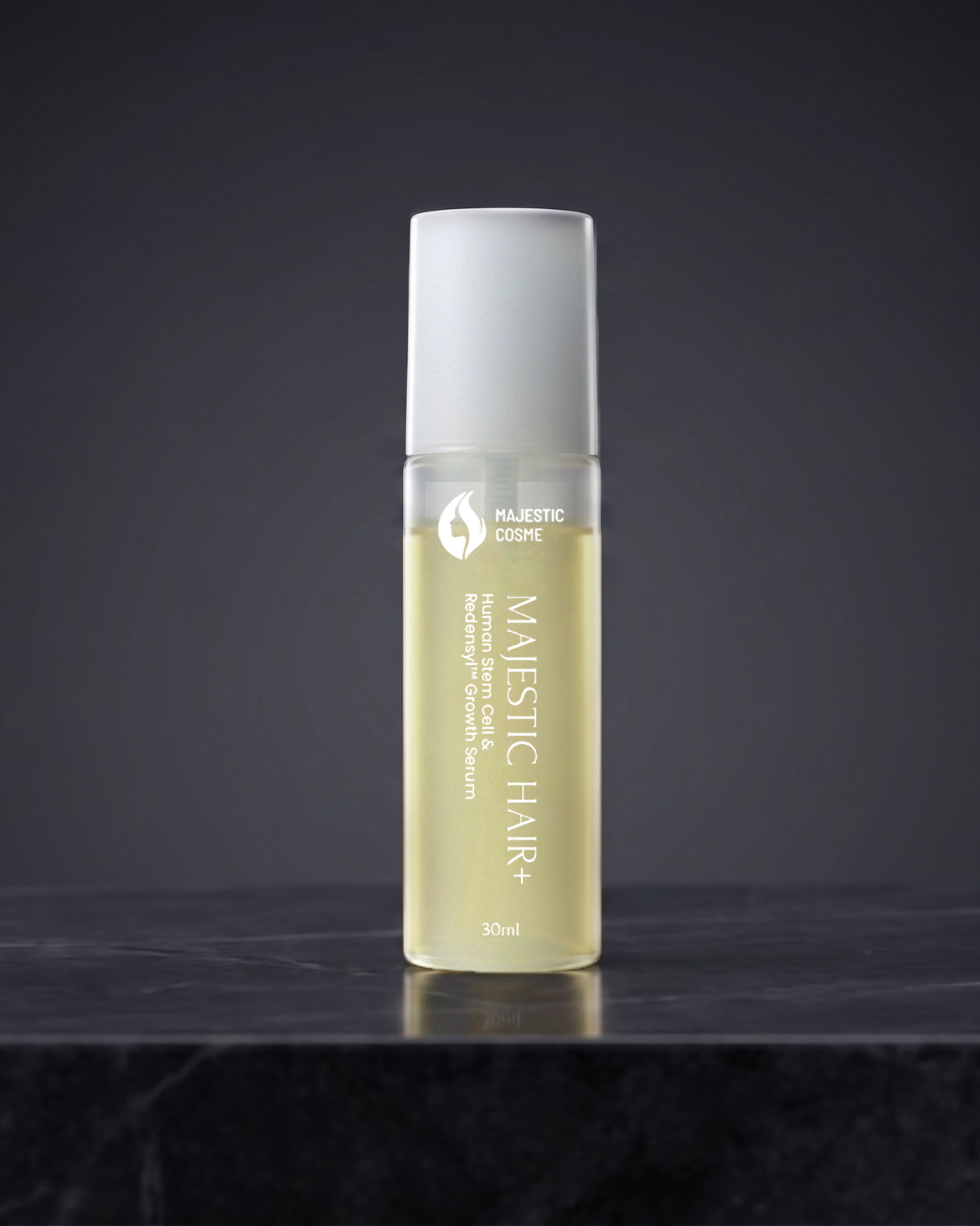
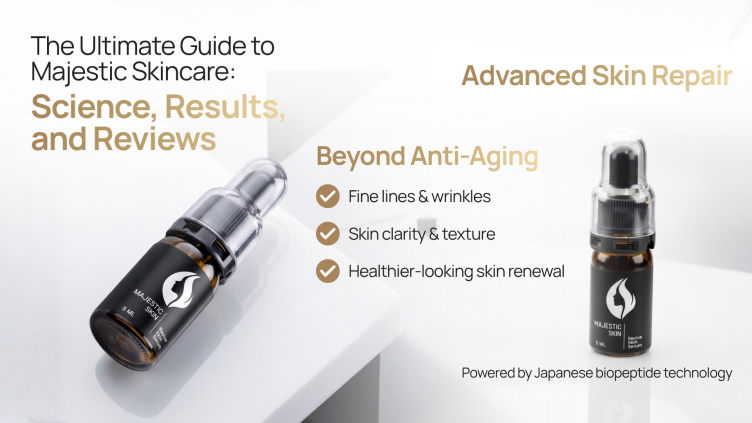
Discover the best anti aging serum for 50s over 60.
Clinical Guide
- Introduction
- Why Your Skin Changes So Dramatically After 50
- The Cellular Engine of Youth: What Are Fibroblasts?
- Majestic Skin: Activating Cellular Regeneration with 150+ Growth Factors
- Skincare Adjustments for Women Over 60
- How Human Stem Cell Serum Compares to In-Clinic Treatments
- The Majestic Skin Difference: A Summary
- Your Questions About Anti-Aging Serums for Mature Skin, Answered
- Scientific References
The best anti aging serum for 50s over 60 is one that works below the surface, using bio-signals to reactivate the skin's own collagen production. Achieving structural repair at this level is essential for addressing the biological realities of post-menopausal skin development. The most effective serum approach for skin over 50 is one that targets dermal fibroblasts, the deep structural manufacturing cells responsible for skin density, bounce, and resilience. A high-concentration human stem cell conditioned media serum, delivering over 150 growth factors via liposome delivery pathways, directly reactivates these dormant structural components to provide a clinical foundation for visibly firmer and more resilient skin.
If you are in your 50s or 60s and feel like your skincare routine has stopped working, you are not imagining it. The skin you have at 55 is biologically different from the skin you had at 35, and the difference is not simply about surface dryness or sun damage. It is about a fundamental shift in how your skin cells communicate, repair, and rebuild themselves.
Most anti-aging serums on the market were not designed for this shift. They were designed for younger skin that still has active collagen-producing cells and just needs encouragement. Mature skin past menopause has a different problem entirely: the cells responsible for producing collagen, elastin, and hyaluronan have become dormant. Encouraging dormant cells is not enough. They need to be reactivated.
This guide explains why that happens, what the science of human stem cell serum does about it, and what practical skincare adjustments make the biggest difference for women over 60.
Why Your Skin Changes So Dramatically After 50
The visible aging that accelerates after 50 has a precise biological explanation. It is not simply the passage of time. It is the withdrawal of oestrogen, the hormone that had been quietly regulating dozens of skin maintenance processes for decades.
Oestrogen decline triggers structural shifts
Oestrogen stimulates fibroblast activity and collagen synthesis. As levels fall, fibroblasts reduce their output significantly. The skin loses approximately 30% of its collagen in the first five years after menopause, with a measurable decline in skin thickness, firmness, and wound healing speed.
Cellular turnover slows to near-half speed
The epidermal renewal cycle that takes approximately 28 days in a 30-year-old extends to 40 to 60 days in women over 55. Surface cells remain longer, accumulate oxidative damage, and contribute to the dull, thickened texture that appears resistant to topical products.
Fibroblast dormancy deepens progressively
By the early 60s, many dermal fibroblasts have entered a senescent state, no longer responding to normal growth factor signals at adequate levels. This is the point at which conventional collagen-stimulating serums begin to underperform, because they rely on fibroblasts that are no longer reliably responsive to indirect stimulation.
Why conventional serums plateau
Retinoids, peptides, and vitamin C all work by stimulating or supporting pathways that rely on fibroblast responsiveness. When fibroblast activity is genuinely suppressed post-menopause, these pathways produce diminishing returns. The serums are not failing. The cellular environment they were designed to work in has fundamentally changed.
The Cellular Engine of Youth: What Are Fibroblasts?
Fibroblasts are the structural manufacturing cells of the dermis, the skin layer that sits beneath the visible surface. Every unit of collagen, elastin, and hyaluronan in your skin was produced by a fibroblast. These are the cells that determine whether your skin is firm or loose, plump or hollow, resilient or fragile.
Think of fibroblasts as the factories of your skin. In youth, they run continuously, producing the proteins that keep skin dense, bouncy, and structurally sound. With age, and particularly after menopause, these factories reduce their output, then go into partial shutdown. The skin visual aggregates not because the factories are gone, but because they have stopped receiving the signals to operate.
This decline is not simply about fibroblasts aging as individual cells. It is primarily a communication failure. The growth factor signaling network that keeps fibroblasts active degrades over time. When growth factor concentrations drop below threshold levels, fibroblasts receive insufficient stimulation to maintain production, and they progressively reduce activity. This is the biological mechanism that human stem cell conditioned media addresses directly.
Majestic Skin: Activating Cellular Regeneration with 150+ Growth Factors
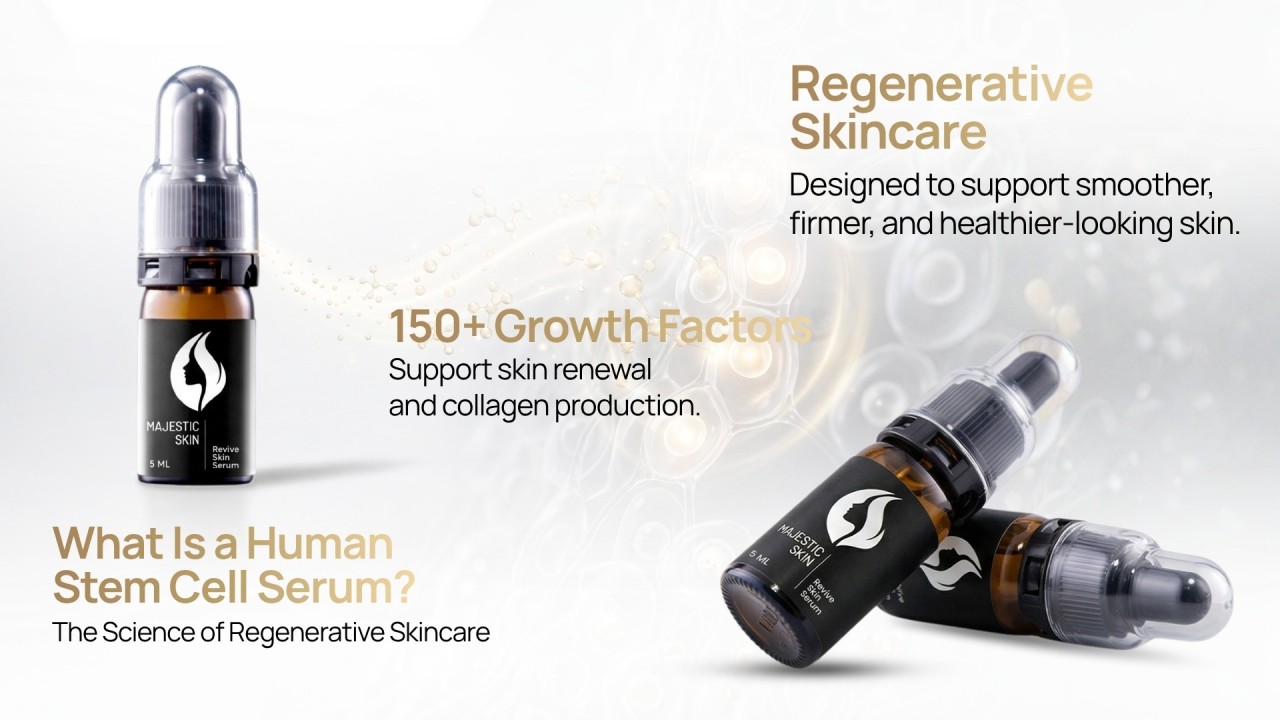
To make the complex science fully clear, the formulation addresses skin health through a systematic logical pathway. First, we establish the underlying concern, which is the slowing of cell-to-cell communication and the deepening of fibroblast dormancy after menopause. Second, we apply the targeted mechanism of action, using human stem cell conditioned media to restore vital instructions directly to the cellular layer. Conditioned media refers to the nutrient-dense, cell-free liquid collected during specialized cultivation that contains only stable signaling molecules left behind after the cells themselves are safely removed. This complex preparation delivers more than 150 individual structural vectors that function as a comprehensive bio-signal network. Third, we produce the intended clinical outcome, which is accelerated tissue repair and protein synthesis, leading straight to visibly firmer and more resilient skin.
This specific technology was researched, tested, and developed entirely within Japan's advanced framework of high-performance cosmetology and regenerative science to ensure maximum clinical authority. The formula deploys complex signaling proteins engineered to bind perfectly with native receptors. This payload contains essential regulatory signals such as growth factors that mimic the instructions youthful skin naturally uses to repair itself. Growth factors act as specialized biological messengers, carrying precise instructions straight to your native cells to promote structural synthesis. These factors travel enclosed within micro-vesicles called exosomes. Exosomes function as protective transport bubbles that carry molecular messages straight past the skin barrier, delivering instructions to skin cells to support their natural functions.
How the Bio-Signals Reach the Dermis
Growth factor proteins are large molecules, ranging from 6,000 to 25,000 daltons in molecular weight. The skin barrier has a passive permeability threshold of approximately 500 daltons. Without a delivery mechanism, even perfectly preserved growth factors remain at the surface, which is why a specialized transmission matrix is required.
1 Liposome encapsulation: Growth factors are enclosed in phospholipid liposome vesicles whose membrane composition is structurally identical to skin cell membranes, giving them biological compatibility with the skin barrier.
2 Barrier fusion and transepidermal passage: Liposomes fuse with the stratum corneum's lipid layers, passing through the epidermis via intercellular channels to reach the dermal fibroblast layer 1 to 4 millimetres below the surface.
3 Receptor binding and cellular activation: Growth factors bind to receptor proteins on dormant fibroblast surfaces, triggering intracellular signaling cascades that restart collagen and hyaluronan gene transcription.
4 Native structural protein production: Reactivated fibroblasts resume producing collagen type I and III, elastin, and hyaluronan using their own cellular machinery. This is not external supplementation. It is the restoration of the skin's own biological manufacturing capacity.
Cold Process manufacturing ensures that all 150+ growth factors retain their native three-dimensional protein folding throughout production. Unlike conventional cosmetic manufacturing that applies heat between 60 and 90 degrees Celsius, Cold Process eliminates thermal denaturation entirely. Every growth factor that appears on the formulation's analysis is biologically active at the point of application.
Skincare Adjustments for Women Over 60
Skin over 60 requires a different protocol approach than younger mature skin. The primary differences are that cellular renewal is slower, the barrier is thinner and more prone to disruption, and the skin has less tolerance for unnecessary chemical load. The goal is to maximise active ingredient delivery while eliminating everything that creates friction with a compromised barrier.
Lead application sequence
Apply 3 to 4 drops immediately after cleansing, while skin is still slightly damp. The hydrated barrier accepts liposome delivery more efficiently than dry skin. Press gently with fingertips rather than rubbing, to preserve liposome structure.
Retire aggressive chemical loads
Post-60 skin has reduced barrier recovery speed. Daily or alternate-day exfoliation disrupts the lipid matrix faster than it can rebuild. Replace frequent acid use with the 14-day renewal cycle produced by EGF-driven keratinocyte turnover in Majestic Skin.
Layer barrier reinforcement
Skin over 60 has reduced ceramide synthesis. After allowing 60 seconds for Majestic Skin to absorb, apply a ceramide-based moisturiser to seal the growth factors and prevent transepidermal water loss, which accelerates at this skin age.
Daily ultraviolet restrictions
Mature skin that is actively producing new collagen via fibroblast reactivation is particularly vulnerable to UV-induced matrix metalloproteinase activity, which degrades newly synthesised collagen. SPF is not optional when using a collagen-stimulating protocol.
Complete cycling commitments
The cellular reset protocol works through cumulative signaling. Inconsistent application interrupts the sustained growth factor stimulus that maintains fibroblast activation. Complete each 14-day cycle before assessing and beginning the next.
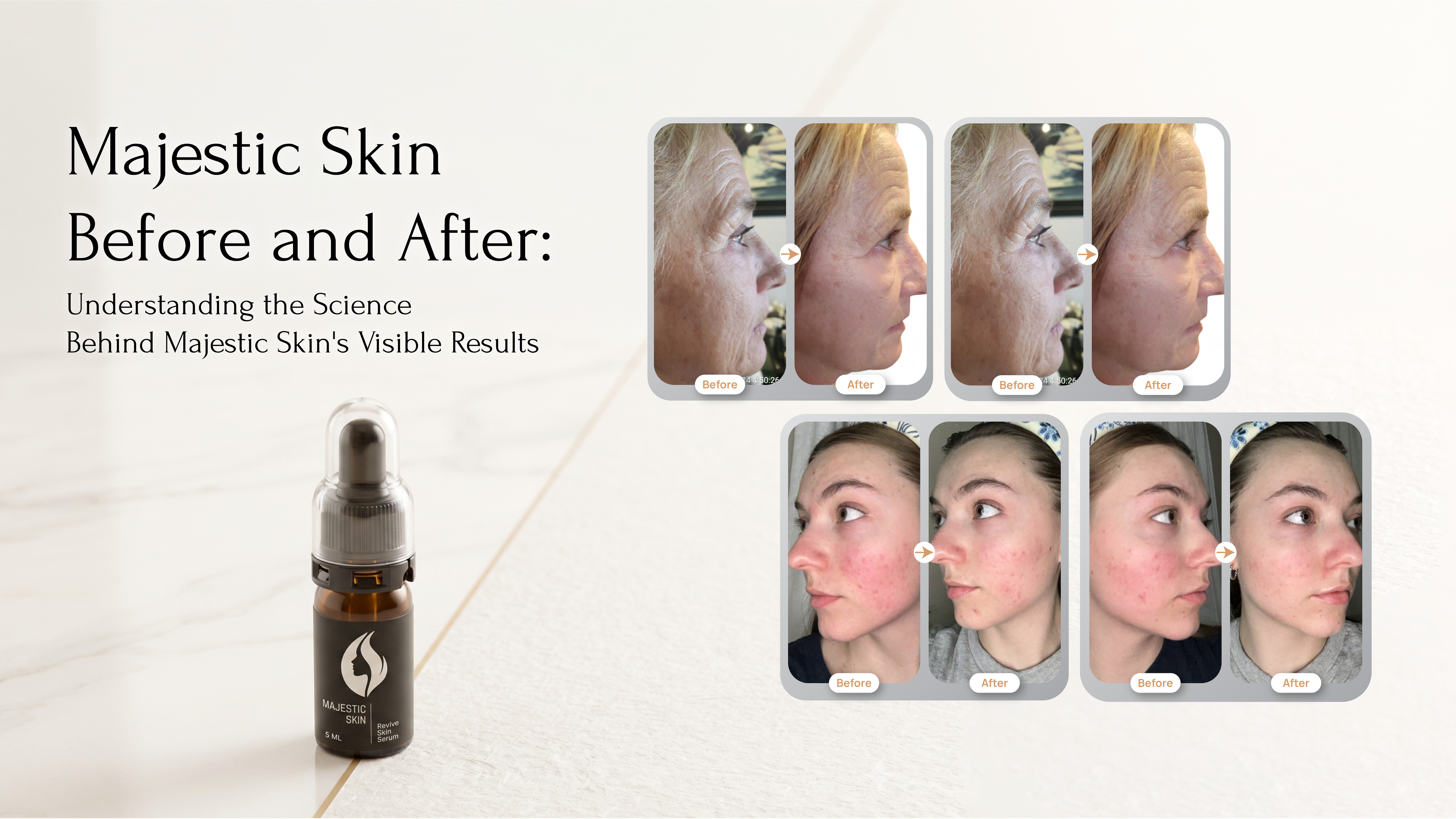
"I am 64 years old, and after menopause, my skin texture grew paper-thin and loose, with stubborn creases around my jaw and mouth that no standard serum could smooth out. I began the protocol with scientific curiosity, but by the end of the first treatment block, the visual differences were undeniable. The crepey texture across my cheeks completely transformed, and my skin developed a dense, firm bounce that makes the deepest furrows look remarkably softened and filled out from within."
— Eleanor V., Age 64 — Los Angeles
How Human Stem Cell Serum Compares to In-Clinic Treatments
For women over 50, the comparison between Majestic Skin and clinical procedures is a practical one. Understanding what each approach can and cannot do helps set realistic expectations and identify where the technologies are complementary.
| Treatment Option | Biological Mechanism | Suitability Parameters for 50s and 60s Skin Layouts |
|---|---|---|
| Majestic Skin (20% ADSC-CM) | Direct fibroblast activation via 150+ growth factors, daily use | Optimal pathways with no recovery downtime requirements |
| Botox / Neuromodulators | Temporary muscle relaxation; reduces dynamic wrinkle line depth | Useful for expression lines with zero structural collagen benefit |
| Fractional laser resurfacing | Controlled wound response to force matrix synthesis during healing | Effective but recovery intensive as mature structures thin with age |
| Microneedling | Physical mechanical collagen induction via targeted micro-injury arrays | Effective options; post protocol application accelerates recovery lines |
| Prescription retinoids | Accelerated turnover via retinoic acid nuclear receptor pathways | High inflammatory irritation risk profiles on thinned mature structures |
| Standard peptide serums | Indirect collagen signaling; limited by declining fibroblast responsiveness | Diminishing returns experienced as cell populations enter dormancy |
The most clinically effective approach for women over 50 combines Majestic Skin as the daily structural foundation with periodic in-clinic procedures for deeper or more targeted concerns. Majestic Skin's post-procedure application also significantly improves recovery speed and outcome quality for laser and microneedling treatments, as documented in published conditioned media post-procedure studies.
The Majestic Skin Difference: A Summary
For readers scanning this guide, here is a concise recap of the core clinical parameters evaluated:
- Post-menopausal skin configuration undergoes an immediate 30% reduction in structural collagen over the first five years due to declining natural stimulus factors.
- Conventional topicals such as basic peptides and traditional retinoids often hit a plateau because they rely on responsive cellular environments that are no longer active in mature skin layouts.
- Human stem cell conditioned media delivers a dense matrix of 150 plus growth factors to directly reactivate dormant structural synthesis engines without provoking inflammation.
- Advanced liposome encapsulation provides a vital protective vector to safely guide large growth factor protein chains past the lipid barrier directly into the dermal layer.
- The rigorous 14-day protocol works cumulatively to yield visibly firmer and more resilient skin structures while supporting thinned post-menopausal barrier architectures.
Your Questions About Anti-Aging Serums for Mature Skin, Answered
Ready to reactivate your skin's youthful potential? Discover the science of Majestic Skin.
Shop Majestic Skin NowSources
- Shin, H., et al. (2021). Human adipose tissue-derived mesenchymal stem cells and their secretome exert anti-aging properties in human skin. Biomolecules, 11(11), 1684.
- Kober, M., & Berto, G. (2022). Adipose-derived stem cell conditioned medium in the treatment of facial skin aging. Journal of Cosmetic Dermatology, 21(4), 1421-1431.
- Li, L., et al. (2019). Conditioned medium from human adipose-derived mesenchymal stem cell culture prevents UVB-induced skin aging. International Journal of Molecular Sciences, 21(1), 49.
- Kim, W. S., et al. (2009). Wound healing effect of adipose-derived stem cells: A critical role of secretory factors on fibroblast collagen synthesis. Journal of Dermatological Science, 55(3), 187-197.
- Alquraisy, A., et al. (2024). A comprehensive review of stem cell conditioned media role for anti-aging on skin. Stem Cells and Cloning: Advances and Applications, 17, 5-19.