.png%253Falt%253Dmedia%2526token%253D78c23398-5711-460d-b21c-4a7177094ae4%22%7D%2C%7B%22operation%22%3A%22resize%22%2C%22width%22%3A48%7D%2C%7B%22operation%22%3A%22output%22%2C%22format%22%3A%22webp%22%2C%22quality%22%3A75%7D%5D)
Quick Takeaways
- Human Stem Cell Technology (20% ADSC-CM): Delivers over 150 bioactive growth factor proteins to instruct dermal fibroblasts to restart collagen, elastin, and hyaluronan synthesis naturally.
- Natural Expression over Muscle Paralyzation: Rather than freezing facial muscles like Botox, topical stem cell conditioned media strengthens dermal structure while preserving natural facial movement.
- Dual-Phase Transformation: Accelerates surface turnover for a visible 14-day epidermal reset, followed by progressive dermal collagen density restoration over 8 to 12 weeks.
For years, Botox injections have been considered the quick fix for erasing wrinkles. However, a growing number of people are starting to ask: "Is constantly immobilizing my facial muscles safe in the long run?" This awareness has sparked a major shift toward Japanese Human Stem Cell technology. Instead of chemically paralyzing facial muscles, stem cell conditioned media rejuvenates skin cells from their deepest layers in a completely natural way.
Why Are People Choosing Human Stem Cells Over Botox?
In a nutshell: Botox works by immobilizing muscles so wrinkles cannot form, whereas Human Stem Cell technology prompts your actual skin cells to produce fresh, new collagen and elastin by delivering direct biological instructions to fibroblast receptors.
Many skin enthusiasts are becoming hesitant about Botox due to fears of frozen face syndrome and the risk of muscle thinning or weakness over time. When muscles are continuously paralyzed, they can undergo structural atrophy.
In contrast, Human Stem Cell technology offers a fundamentally different approach. Derived media from human stem cells (ADSC-CM) are rich in over 150 distinct bioactive growth factors and signaling proteins. Using an advanced wrinkle serum with ADSC-CM technology allows these cellular messengers to wake up aging, sluggish skin cells and rebuild dermal elasticity naturally.
Rather than masking the issue behind immobilized muscles, human stem cells improve the actual quality, elasticity, and structural density of dermal tissue, allowing your face to look visibly younger while retaining its full, natural range of expression.
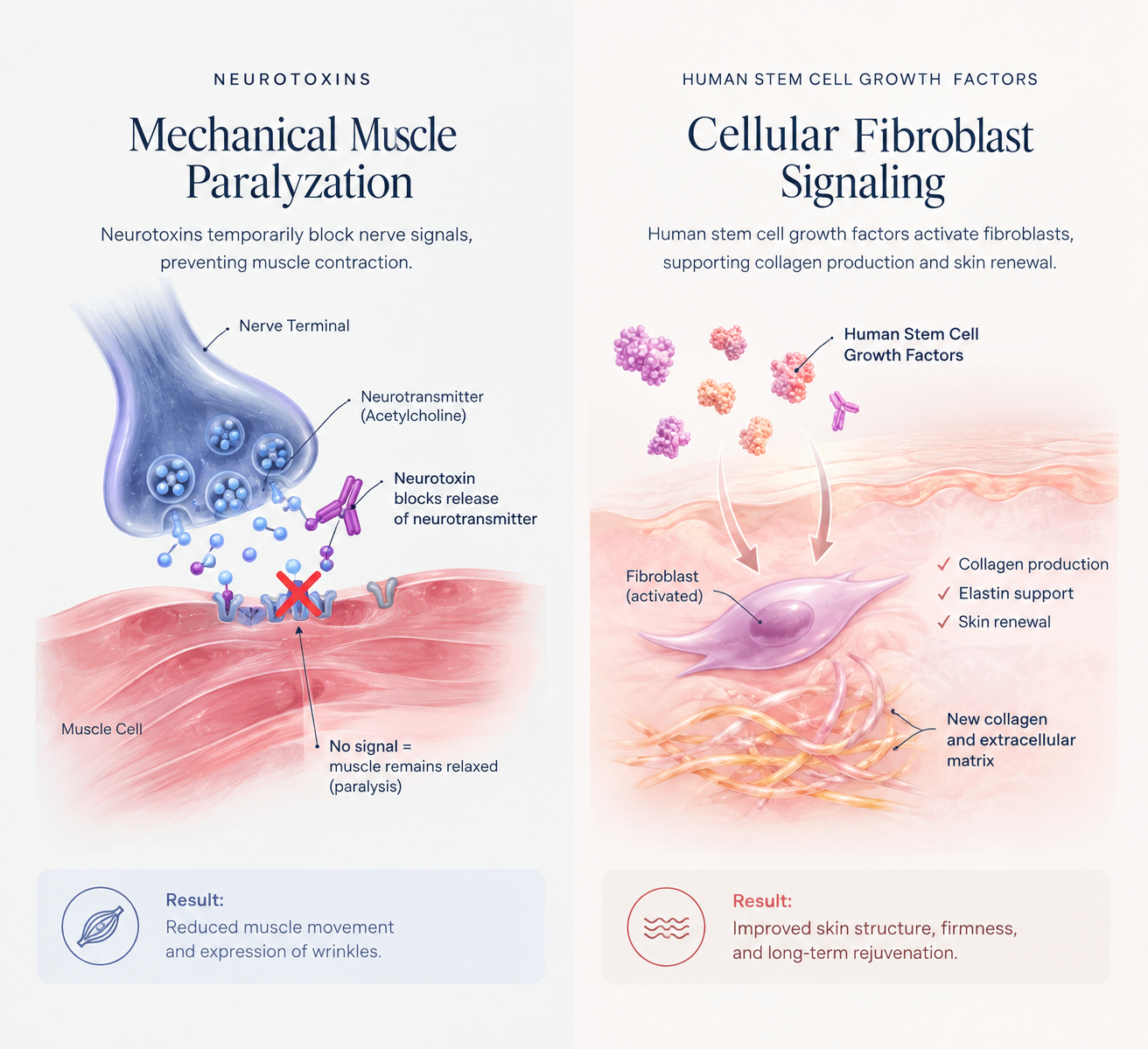
Diagram 1: Structural comparison showing mechanical muscle paralyzation via neurotoxins versus cellular fibroblast signaling through Human Stem Cell Growth Factors.
How Human Stem Cells Power Japanese Anti-Aging Science
In a nutshell: In Japanese regenerative biology, human stem cell conditioned media is used to restore the skin's natural 14-day epidermal renewal cycle, making the dermal structure firm, supple, and radiant over time.
Japanese beauty philosophy embraces teinei: thoughtful, safe, and deep skin nurturing. Pharmaceutical-grade researchers in Japan have successfully harnessed Human Stem Cell Culture Fluid Extract (ADSC-CM).
These biological signals act like a key that fits perfectly into the receptors of fibroblast cells in human dermal tissue. Encapsulated in liposomes for deep dermal penetration, growth factors like EGF, FGF, and TGF-beta instruct skin cells to compress the sluggish renewal cycle back to 14 days and synthesize fresh collagen networks.
Human Stem Cell Therapy vs. Botox Injections: Which Is Better Long-Term?
Here is a direct comparison between mechanical Botox injections and regenerative Human Stem Cell technology:
Injectable Botox
Temporary Muscle Paralyzation
- Mechanism: Blocks nerve signals to muscles (chemical denervation).
- Target: Dynamic lines caused by active facial expressions.
- Longevity: Lasts roughly 3 to 4 months before requiring re-injection.
- Procedure: Invasive needles; requires a licensed practitioner.
- Skin Health Impact: No improvement to underlying skin quality or texture.
- Appearance: Instant smoothing, but facial expressions may feel restricted.
Human Stem Cell Serum (Majestic Skin)
Dermal Cell Regeneration
- Mechanism: 150+ growth factors trigger fibroblast activation and collagen synthesis.
- Target: Dermal density, fine lines, acne scars, pores, and overall skin quality.
- Longevity: Cumulative 14-day surface reset and sustainable 8-12 week structural density.
- Procedure: Non-invasive; simple daily topical application at home.
- Skin Health Impact: Deeply rejuvenates, brightens, and strengthens skin tissue.
- Appearance: Gradual, supple, and fully flexible natural facial expressions.
Medical note: Botox and Human Stem Cell care address different targets. Botox controls muscle movement, while Stem Cell media restores skin tissue density and accelerates cellular turnover. Combining topical stem cell care into your daily routine maintains skin elasticity far more effectively.
The Secret Behind Majestic Skin: Restoring Firmness with 20% ADSC-CM & 150+ Growth Factors
Majestic Skin is crafted around an ultra-high 20% concentration of pharmaceutical-grade Human Stem Cell Culture Fluid Extract (ADSC-CM) from Japan. This secretome delivers over 150 bioactive growth factor proteins directly to dermal tissue.
Because these growth factors (including EGF, FGF, TGF-beta, VEGF, and IGF-1) carry specific biological instructions, your skin receptors easily recognize and utilize them. Encapsulated in deep dermal liposomes, they prompt sluggish fibroblasts to restart collagen, elastin, and hyaluronic acid production.
Unlike generic anti-aging serums that sit on the surface, learning about stem cells vs retinol for skin barrier integrity demonstrates why Majestic Skin's peak 20% biological signal concentration achieves deep skin remodeling with cold-process manufacturing—guaranteeing maximum protein potency with zero skin barrier irritation.
Biotech Advantage: Experience the 14-Day Transformation. Keratinocyte turnover speeds up within 1 to 2 weeks for visible surface luminosity, followed by 8 to 12 weeks of measurable dermal collagen density restoration.
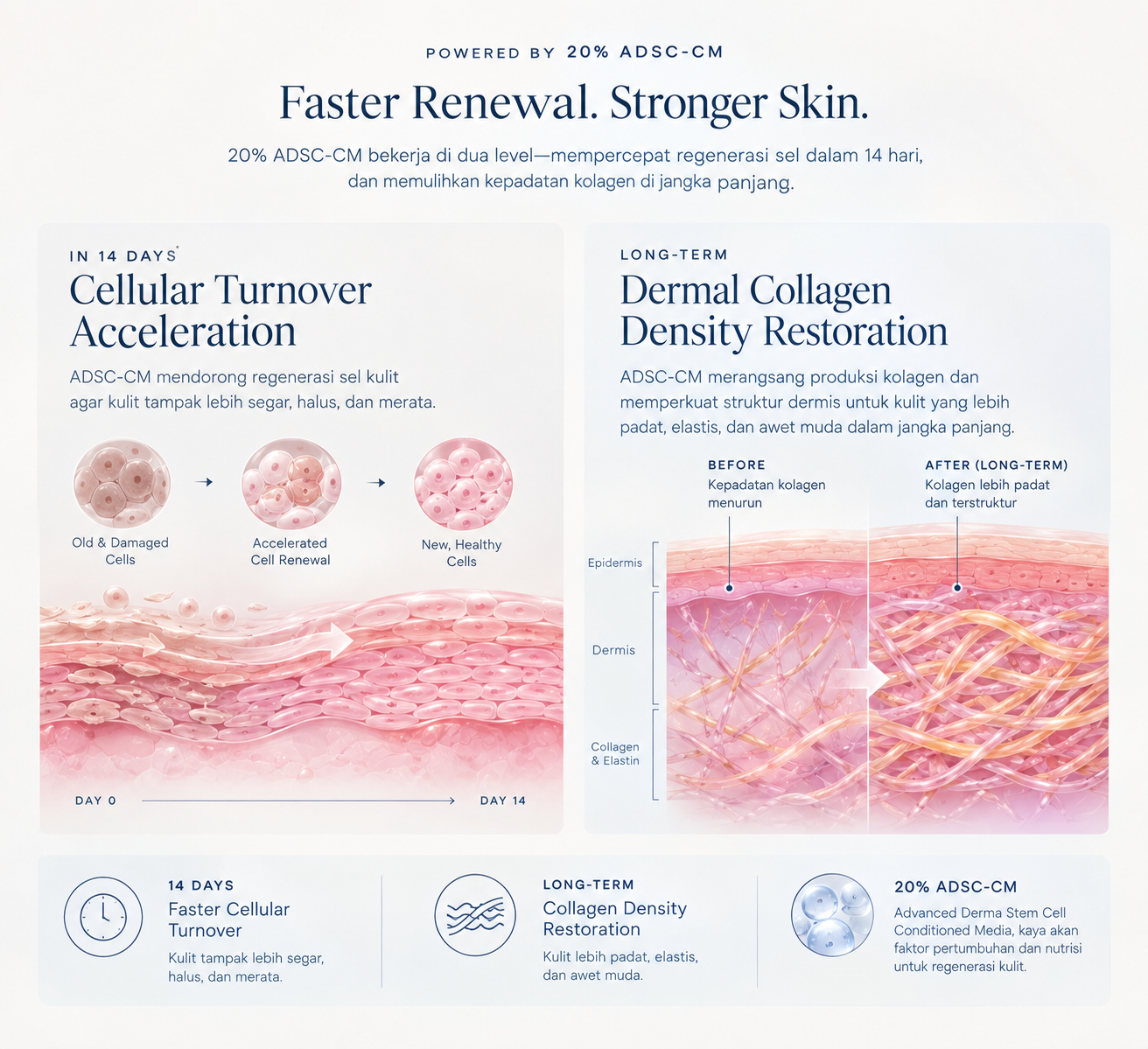
Diagram 2: Infographic outlining the 14-day cellular turnover acceleration and long-term dermal collagen density restoration powered by 20% ADSC-CM.
Non-Invasive Dermal Skin Regeneration
Restore skin density and achieve a youthful, radiant complexion with 20% ADSC-CM and 150+ growth factors in Majestic Skin.
An Easy Guide to Starting Human Stem Cell Care at Home
- Cleanse gently: Ensure skin is clean so liposome-encapsulated growth factors can absorb completely.
- Apply 3–4 drops of Majestic Skin: Smooth evenly over your face, focusing on areas prone to elasticity loss like the forehead, under-eyes, and smile lines.
- Lock in with moisturizer & SPF: Apply moisturizer to seal in hydration and daily broad-spectrum SPF to protect newly formed collagen networks from UV damage.
- Use consistently morning and night: Cellular renewal signals require regular exposure to sustain accelerated 14-day turnover.
- Complement with a healthy lifestyle: Prioritize adequate sleep and hydration to support maximum cellular metabolism from within.
Conclusion: Youthful Skin Powered by Stem Cell Science
Botox offers temporary smoothing by freezing muscle responses. However, if your goal is truly healthy, dense, youthful skin without sacrificing natural expression, Human Stem Cell technology represents the future of non-invasive anti-aging.
This is the core philosophy behind Majestic Skin: rather than immobilizing cells, it nourishes and regenerates stem cell signaling to keep your face looking fresh, firm, and naturally vibrant.
Frequently Asked Questions
Scientific References
- Gorouhi, F., & Maibach, H. I. (2009). "Role of topical peptides in preventing or treating aged skin." International Journal of Cosmetic Science, 31(5), 327–345. https://doi.org/10.1111/j.1468-2494.2009.00490.x
- Resende, D. I. S. P., Ferreira, M. S., Sousa-Lobo, J. M., Sousa, E., & Almeida, I. F. (2021). "Usage of Synthetic Peptides in Cosmetics for Sensitive Skin." Pharmaceuticals, 14(8), 702. https://doi.org/10.3390/ph14080702
- Rostedt Punga, A., Alimohammadi, M., & Liik, M. (2023). "Keeping up appearances: Don't frown upon the effects of botulinum toxin injections in facial muscles." Clinical Neurophysiology Practice, 8, 169–173. https://doi.org/10.1016/j.cnp.2023.05.005 · PMID: 37681120
- Durand, P. D., Couto, R. A., Isakov, R., Yoo, D. B., Azizzadeh, B., Guyuron, B., & Zins, J. E. (2016). "Botulinum Toxin and Muscle Atrophy: A Wanted or Unwanted Effect." Aesthetic Surgery Journal, 36(4), 482–487. https://doi.org/10.1093/asj/sjv208
.jpg%253Falt%253Dmedia%2526token%253Dab1a42a1-288f-4887-93c1-b2f9c85cc882%22%7D%2C%7B%22operation%22%3A%22resize%22%2C%22width%22%3A1920%7D%2C%7B%22operation%22%3A%22output%22%2C%22format%22%3A%22webp%22%2C%22quality%22%3A75%7D%5D)