.png%253Falt%253Dmedia%2526token%253D78c23398-5711-460d-b21c-4a7177094ae4%22%7D%2C%7B%22operation%22%3A%22resize%22%2C%22width%22%3A48%7D%2C%7B%22operation%22%3A%22output%22%2C%22format%22%3A%22webp%22%2C%22quality%22%3A75%7D%5D)
Mochi Skin vs. Glass Skin: Understanding Advanced Japanese Texture Science
The pursuit of ideal skin has given rise to distinct aesthetic goals, each reflecting different cultural priorities and formulation philosophies. Two concepts dominate contemporary skincare discourse: Glass Skin and Mochi skin. While both represent aspirational skin states, they differ fundamentally in texture, appearance, and the biological mechanisms required to achieve them.
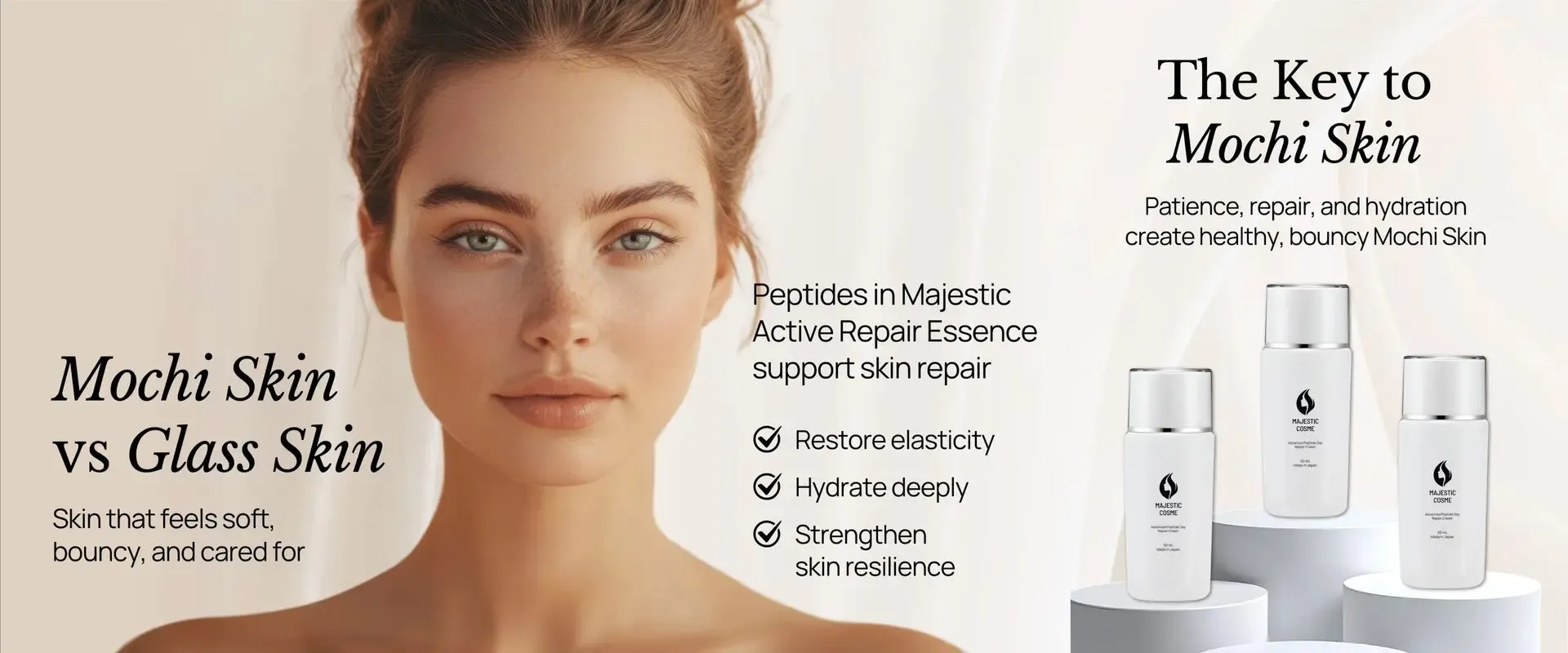
Glass Skin emphasizes a reflective, poreless surface that appears almost translucent, prioritizing visual luminosity above all else. Mochi skin, by contrast, focuses on tactile quality: softness, elasticity, and the resilient bounce associated with well-hydrated, structurally sound tissue. Understanding the mochi skin meaning helps clarify which products and routines will deliver the results you actually seek.
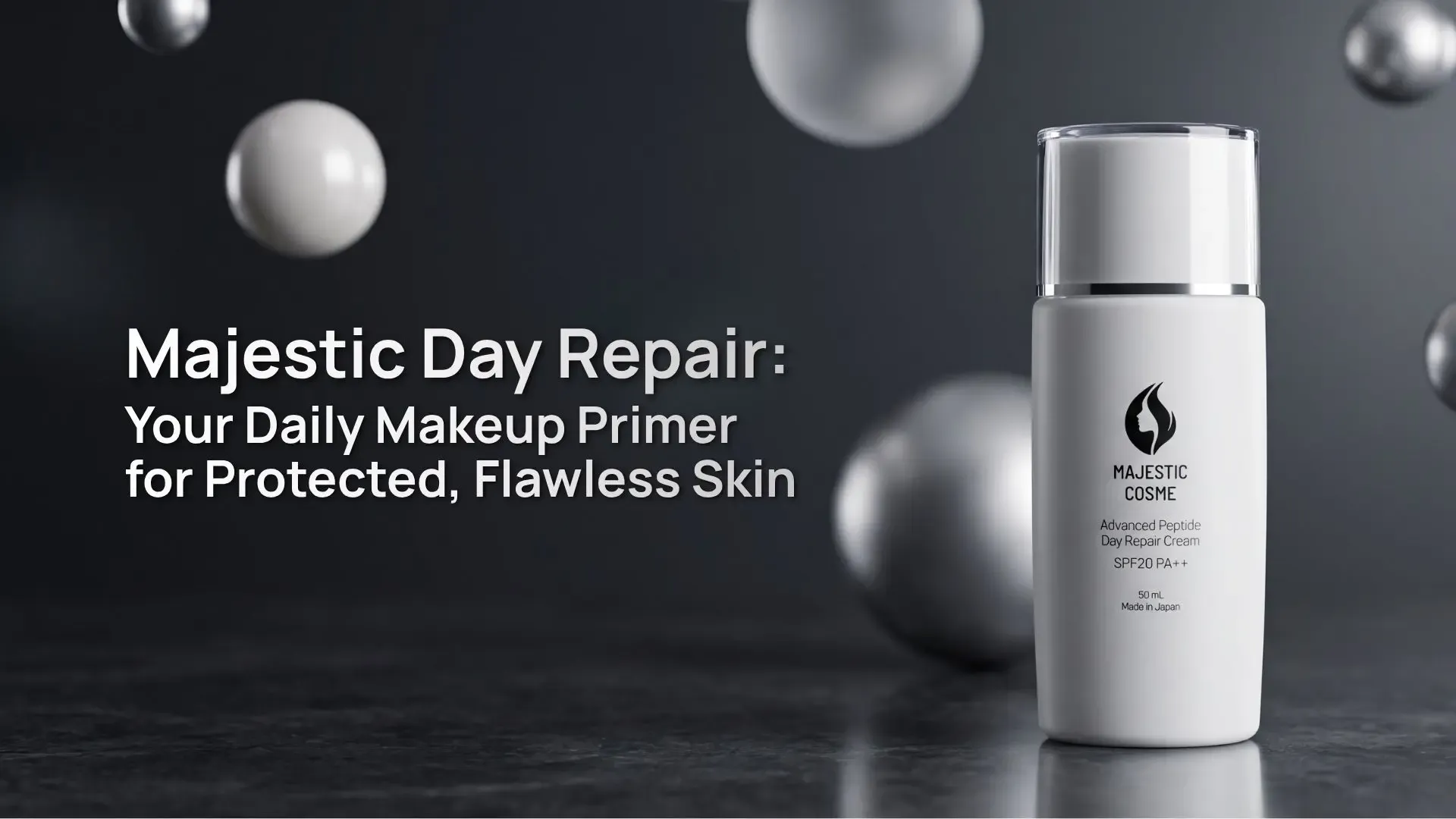
Majestic Day Repair embodies the Mochi skin philosophy by combining mineral UV protection with regenerative skincare technology. Rather than pursuing superficial shine through silicones or light-reflecting particles, this approach supports the internal architecture of skin, building resilience, hydration capacity, and structural integrity from within.
Introduction
The pursuit of ideal skin has given rise to distinct aesthetic goals, each reflecting different cultural priorities and formulation philosophies. Two concepts dominate contemporary skincare discourse: Glass Skin and Mochi skin. While both represent aspirational skin states, they differ fundamentally in texture, appearance, and the biological mechanisms required to achieve them.
Glass Skin emphasizes a reflective, poreless surface that appears almost translucent, prioritizing visual luminosity above all else. Mochi skin, by contrast, focuses on tactile quality: softness, elasticity, and the resilient bounce associated with well-hydrated, structurally sound tissue. Understanding the mochi skin meaning helps clarify which products and routines will deliver the results you actually seek.
Majestic Day Repair embodies the Mochi skin philosophy by combining mineral UV protection with regenerative skincare technology. Rather than pursuing superficial shine through silicones or light-reflecting particles, this approach supports the internal architecture of skin, building resilience, hydration capacity, and structural integrity from within.
What Defines Mochi Skin vs Glass Skin
Glass Skin originated in Korean beauty culture and describes skin so smooth and luminous it resembles polished glass. The aesthetic prioritizes minimal visible texture, high reflectivity, and a dewy finish. Achieving this look often involves intensive exfoliation and multiple layers of hydrating toners.
Mochi skin draws its name from the Japanese rice cake known for its soft, pillowy texture and gentle bounce. This ideal emphasizes how skin feels rather than merely how it looks. The focus is on maintaining optimal hydration levels and preserving the skin barrier so that tissue retains its natural plumpness. This tactile goal is often achieved through a specialized mochi skin treatment that prioritizes tissue health over superficial sheen.
Neither approach is inherently superior, but understanding your priorities helps determine which formulations will serve you best. If tactile softness and long-term resilience matter most, the Mochi skin paradigm aligns more closely with those goals. This is where advanced skincare from Japan demonstrates particular strength, emphasizing formulations that build skin quality rather than simply modifying its appearance.
The Science Behind Peptide-Driven Mochi Skin
Achieving authentic Mochi skin requires supporting the biological processes that create naturally plump, elastic tissue. Peptides play a central role in this approach by functioning as signaling molecules that communicate with skin cells and trigger specific responses. Majestic Day Repair incorporates a calibrated peptide complex designed specifically for daytime use, acting as a powerful mochi skin booster that remains functional throughout sun exposure.
When applied topically, peptides penetrate the stratum corneum and interact with fibroblasts in the dermis. These specialized cells produce collagen, elastin, and hyaluronic acid. The peptide technology also supports barrier function by encouraging ceramide production and optimizing the lipid matrix. A well-maintained barrier prevents transepidermal water loss, the primary cause of dehydration that compromises the bouncy texture characteristic of Mochi skin.
Comparing Approaches to Skin Texture Enhancement
Different active ingredients offer distinct pathways to improved skin quality. Retinoids accelerate cell turnover but can cause irritation, while hyaluronic acid provides surface hydration. However, peptide formulations align particularly well with the Mochi skin philosophy because they address the underlying architecture that creates naturally bouncy tissue.
| Active Ingredient | Primary Benefit | Application Timing | Mochi Skin Relevance |
|---|---|---|---|
| Retinoids | Cell turnover, collagen | Evening only | Moderate (texture focus) |
| Hyaluronic Acid | Surface hydration | Anytime | High (temporary plumping) |
| Vitamin C | Brightening, antioxidant | Morning preferred | Low (tone focus) |
| Peptides | Collagen support, barrier | Flexible, daytime ideal | Very High (structural support) |
When integrated with skincare from japan principles of gentle efficacy and long-term health focus, peptides become foundational to sustainable skin quality.
Why Majestic Day Repair Supports the Mochi Skin Ideal
Majestic Day Repair distinguishes itself by combining protective and regenerative functions in a single daytime formula. The mineral UV filters provide broad-spectrum defense without generating heat, while the peptide complex actively supports the biological processes that maintain plump, elastic skin. Hydration is addressed at multiple levels through hyaluronic acid in various molecular weights, ensuring moisture reaches both surface and deeper layers.
Antioxidants including vitamin E and niacinamide work alongside UV filters to neutralize free radicals and prevent oxidative damage to collagen and elastin fibers. This protective function is essential for maintaining structural integrity over time. Users typically observe visible improvements in skin texture and bounce within four to six weeks of consistent use. For those incorporating regenerative skincare into their routine, it serves as a foundational layer for long-term skin health.
How to Use for Maximum Results
Apply Majestic Day Repair each morning as the final step before makeup. Dispense approximately half a teaspoon for face and neck, spreading evenly. For optimal results, use consistently rather than intermittently. Skipping days interrupts the progressive improvement and delays visible results.
Results follow a predictable timeline. Immediate comfort and smoothness appear within days. Within two weeks, skin typically feels softer and more supple. By the four to six week mark, improvements in elasticity and the characteristic bounce of Mochi skin become evident. Continued use maintains these benefits while providing ongoing environmental protection.
Stop Dark Spots Before They Start
Experience the advanced preventative and reparative power of Majestic Day Repair, and discover what genuinely proactive skin defense looks like in daily practice.
Discover Majestic Day RepairFrequently Asked Questions
Sources
- Ganceviciene R, et al. "Skin anti-aging strategies." Dermatoendocrinol. 2012;4(3):308-319.
- Lupo MP. "Antioxidants and vitamins in cosmetics." Clin Dermatol. 2001;19(4):467-473.
- Gorouhi F, Maibach HI. "Role of topical peptides in preventing aged skin." Int J Cosmet Sci. 2009;31(5):327-345.
- Papakonstantinou E, et al. "Hyaluronic acid: A key molecule in skin aging." Dermatoendocrinol. 2012;4(3):253-258.
- Baumann L. "Skin ageing and its treatment." J Pathol. 2007;211(2):241-251.