.png%253Falt%253Dmedia%2526token%253D78c23398-5711-460d-b21c-4a7177094ae4%22%7D%2C%7B%22operation%22%3A%22resize%22%2C%22width%22%3A48%7D%2C%7B%22operation%22%3A%22output%22%2C%22format%22%3A%22webp%22%2C%22quality%22%3A75%7D%5D)
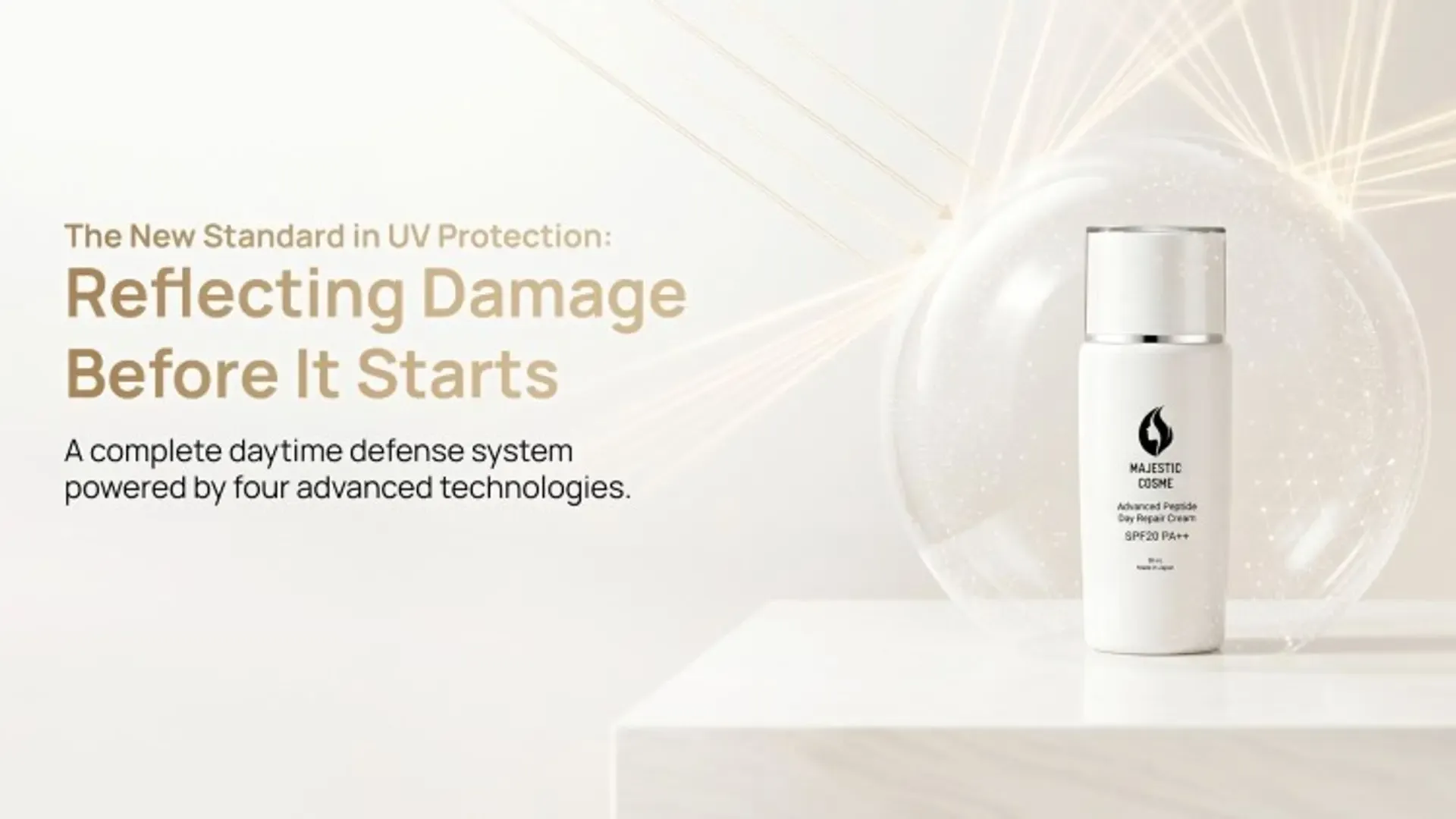
Learn How ASP Signal-Blocking Technology and Mineral Filters Intercept Alpha-MSH Commands Before Hyperpigmentation Forms.
The best type of UV block for daily use is a non-chemical, mineral-based formula that physically reflects harmful rays away from skin rather than absorbing them as heat. When that protection also includes active DNA repair and pigmentation signal blocking, it represents a meaningful advance beyond anything traditional sunscreens offer.
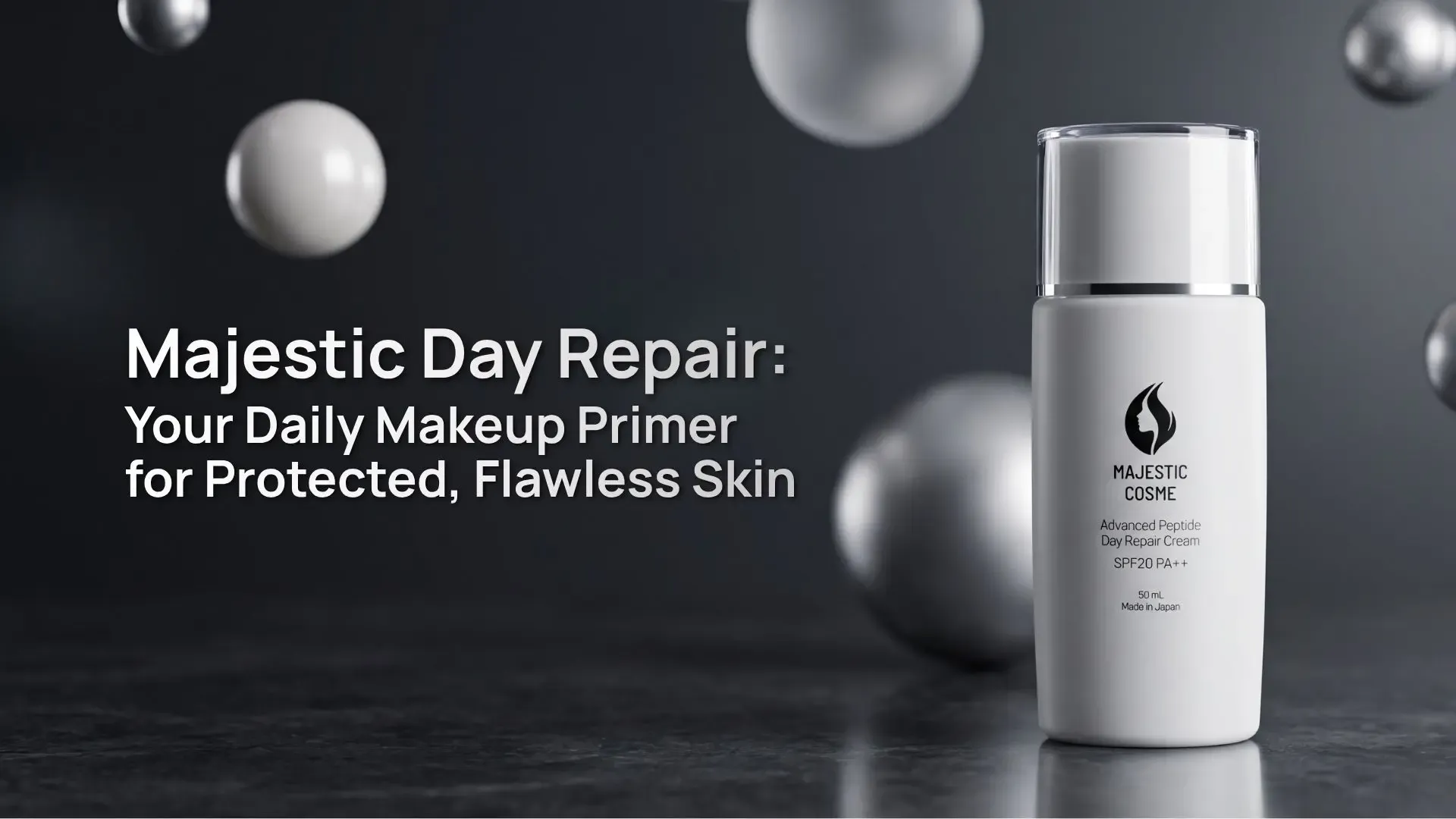
Majestic Day Repair is built around this principle. It combines ultra-fine titanium dioxide and zinc oxide to create a reflective mineral shield, then goes further with HSP technology that repairs cellular damage as it occurs and ASP peptides that intercept the biological signals responsible for dark spots and age spots. What results is a daily product that both defends and actively maintains skin health throughout the day.
What is a UV Block and Why Does Your Skin Need It Daily?
UV radiation from the sun reaches your skin in two primary forms. UVA rays penetrate deeply into the dermis, breaking down collagen and elastin while triggering the pigmentation signals that create dark spots and age spots. UVB rays affect the skin's surface, causing burns and direct DNA damage. Both contribute to photo-aging, which is the cumulative skin deterioration caused by repeated sun exposure over time.
A UV block creates a barrier between these rays and your skin tissue. The critical word here is daily. UV damage accumulates across every exposure, including incidental exposure through windows, during outdoor commutes, or while running errands. Studies consistently show that this low-level, repeated exposure contributes significantly to hyperpigmentation and early aging even when dramatic sun exposure is avoided.
This means effective uv protection is not something reserved for beach days or summer travel. It is a fundamental daily step that determines how quickly or slowly visible signs of photo-aging develop over years and decades.
Chemical vs. Physical UV Block: The Science of Absorbing vs. Reflecting
The distinction between chemical and physical UV protection matters more than many consumers realize. Understanding how each works clarifies why they behave so differently on skin.
Chemical UV filters, such as avobenzone, oxybenzone, and octinoxate, work by absorbing ultraviolet photons and converting their energy into heat. This process occurs within the skin itself, as these molecules must penetrate the outer layers to function. The heat generated can aggravate sensitivity, worsen redness in reactive complexions, and create additional oxidative stress that contributes to the very aging the product is meant to prevent.
Physical UV filters, specifically titanium dioxide and zinc oxide, work through an entirely different mechanism. These mineral particles remain on the surface and act like microscopic mirrors, scattering and reflecting UV rays before they penetrate tissue. No heat is generated. No chemical transformation occurs. The protection is immediate, stable, and completely non-reactive with skin.
| Feature | Chemical Filters | Mineral Filters |
|---|---|---|
| Mechanism | Absorb UV as heat | Reflect and scatter UV |
| Heat on skin | Yes | No |
| Skin penetration | Required | None |
| Photostability | Degrades over time | Completely stable |
| Immediate protection | Requires wait time | Instant upon application |
This comparison makes clear why mineral protection is better suited to daily use, particularly for those with sensitive, reactive, or acne-prone skin who cannot tolerate the thermal and chemical activity of conventional sunscreens. For a deeper look at how mineral UV technology performs against environmental stressors beyond direct sunlight, see our detailed breakdown of multi-spectrum environmental defense.
The Gentle Power of a Mineral UV Block for Sensitive Skin
Sensitive skin responds poorly to ingredients that generate heat, disrupt the skin barrier, or introduce reactive molecules into tissue. Chemical UV filters do all three to varying degrees, which is why many people with sensitive complexions report burning, redness, or breakouts from conventional sunscreens.
Mineral uv protection sidesteps these issues by staying entirely on the surface. Because titanium dioxide and zinc oxide remain inert, they cannot cause the inflammatory responses that penetrating chemicals sometimes trigger. Zinc oxide in particular has a long history of use in dermatology precisely because of its calming, anti-inflammatory properties.
Majestic Day Repair is formulated as a 100% non-chemical sun protection product, meaning it contains no chemical UV absorbers whatsoever. Every aspect of its UV blocking function comes from mineral reflection. This makes it appropriate not only for sensitive skin but also for post-procedure skin recovering from treatments that leave the barrier temporarily compromised.
The formula is also free from synthetic fragrances, parabens, sulfates, and legal dyes, all of which can provoke reactive responses in sensitive complexions. The result is a daily protective product gentle enough for even the most reactive skin types to use consistently.
How Titanium Dioxide and Zinc Oxide Create a Protective Shield
The mineral shield in Majestic Day Repair relies on the complementary properties of two ingredients that have demonstrated reliable, broad-spectrum uv protection across decades of clinical research.
Titanium dioxide is highly effective against UVB radiation. Its molecular structure reflects and scatters short-wave ultraviolet light efficiently, making it one of the most powerful natural UVB blockers available in cosmetic formulation.
Zinc oxide covers a broader spectrum, providing strong protection against both UVA and UVB rays. Its wide coverage range makes it essential for preventing the deep-penetrating UVA exposure responsible for photo-aging, collagen breakdown, and the pigmentation signals that lead to dark spots over time.
In older formulations, these minerals left a white cast because of the size of their particles. Modern micronization technology has resolved this. The ultra-fine particle size used in Majestic Day Repair creates a transparent finish on all skin tones without sacrificing any protective capacity. The result is a true physical uv block that performs invisibly, leaving only a smooth, non-sticky finish suitable as a makeup base.
Because neither mineral degrades under UV exposure, the protection level remains consistent throughout the day without breaking down into potentially irritating byproducts, a key advantage over chemical filters that lose efficacy as they convert photon energy to heat.
Beyond Blocking: How HSP Technology Repairs Existing Sun Damage
Even the most effective mineral shield cannot intercept every photon that contacts skin during a full day of exposure. Some UV always gets through, particularly during outdoor activity or near reflective surfaces like water and glass. This is where HSP technology becomes essential.
HSP stands for Heat Shock Protein. In biological terms, heat shock proteins are cellular molecules that respond to stress by identifying damaged proteins and DNA strands, then facilitating their structural repair. When UV radiation damages collagen molecules, elastin fibers, or genetic material within skin cells, HSP acts as a molecular repair crew, finding these damaged structures and restoring their function.
This repair activity happens continuously throughout the day, addressing micro-damage in real time rather than waiting for sleep to initiate recovery processes. The cumulative effect over weeks and months of consistent use is that skin maintains its structural integrity better, showing fewer signs of photo-aging and recovering more effectively from the daily environmental load it faces.
HSP also supports the skin's natural collagen maintenance pathways, helping preserve firmness and texture alongside its repair functions. This dual activity makes it particularly valuable in a daytime formula where environmental stress is ongoing rather than episodic. For a more detailed explanation of how HSP and ASP work together at the protein level, see our comprehensive guide to HSP and ASP protein repair technology.
Preventing Future Dark Spots by Blocking Melanin Signals with ASP
Most people understand that sun exposure causes dark spots, but few understand the precise biological mechanism behind this process. UV rays do not directly create pigmentation. Instead, they trigger a hormonal signal inside the body that commands skin cells to produce melanin.
The hormone responsible is called alpha-MSH. When UV radiation contacts skin, it stimulates the release of this hormone, which then travels to melanocytes, the cells responsible for producing melanin pigment. Alpha-MSH binds to receptors on melanocyte surfaces and instructs them to increase pigment production. This melanin then transfers to surrounding skin cells, creating the concentrated discoloration visible as a dark spot or age spot.
The critical insight is that this process can be interrupted. ASP, a functional peptide in Majestic Day Repair, is specifically designed to intercept the alpha-MSH signal before it successfully binds to melanocyte receptors. When ASP is present, the hormonal command cannot complete its delivery. Melanocytes never receive the instruction to overproduce pigment, which means dark spots and age spots never form in the first place.
The signal-blocking approach represents a genuine advance over conventional dark spot prevention strategies, which typically either try to reduce UV exposure or slow melanin production after the signal has already been received. By targeting the communication step between UV exposure and melanin production, ASP technology addresses hyperpigmentation at its true biological origin. Our dedicated article on DNA repair and age spot prevention explores this mechanism in greater depth.
Your Daily Defense: Introducing Majestic Day Repair
Majestic Day Repair brings together every layer of this protective and reparative system into a single daily product designed to be the last step in your morning skincare routine.
Ultra-fine mineral filters that create a physical mirror shield on the skin surface, cleanly reflecting and scattering UV rays across the full spectrum before they penetrate.
Monitors and identifies skin cell protein and DNA damage caused by sun exposure in real time, executing structural cellular repair continuously throughout the day.
Intercepts alpha-MSH biological commands before they can bond with melanocyte receptors, preventing future dark spots and age spots at the root.
The bi-layer milk texture shakes to activation before use, ensuring the mineral particles disperse evenly throughout the fluid base. It absorbs without residue, leaves no white cast, and doubles as a primer for makeup worn on top. The waterproof formula resists sweat and sebum, maintaining full protection through movement and varied daily conditions.
Frequently Asked Questions
Majestic Day Repair
Majestic Day Repair Cream combines advanced HSP protein repair, ASP melanin signal blocking, and 3GF growth factors with a Japanese Mineral Shield for unrivaled daily skin health. Secure your position for the next release and begin your journey toward lasting cellular resilience.
Shop Majestic Day RepairSources
- Serpone N, Dondi D, Albini A. Inorganic and organic UV filters: Their role and efficacy in sunscreens and suncare products. Inorganica Chim Acta. 2007;360(3):794-802.
- Burnett ME, Wang SQ. Current sunscreen controversies: a critical review. Photodermatol Photoimmunol Photomed. 2011;27(2):58-67.
- Yamaguchi Y, Hearing VJ. Physiological factors that regulate skin pigmentation. Biofactors. 2009;35(2):193-199.
- Matsumura Y, Ananthaswamy HN. Toxic effects of ultraviolet radiation on the skin. Toxicol Appl Pharmacol. 2004;195(3):298-308.
- Cole C, Shyr T, Ou-Yang H. Metal oxide sunscreens protect skin by absorption, not by reflection or scattering. Photodermatol Photoimmunol Photomed. 2016;32(1):5-10.