.png%253Falt%253Dmedia%2526token%253D78c23398-5711-460d-b21c-4a7177094ae4%22%7D%2C%7B%22operation%22%3A%22resize%22%2C%22width%22%3A48%7D%2C%7B%22operation%22%3A%22output%22%2C%22format%22%3A%22webp%22%2C%22quality%22%3A75%7D%5D)
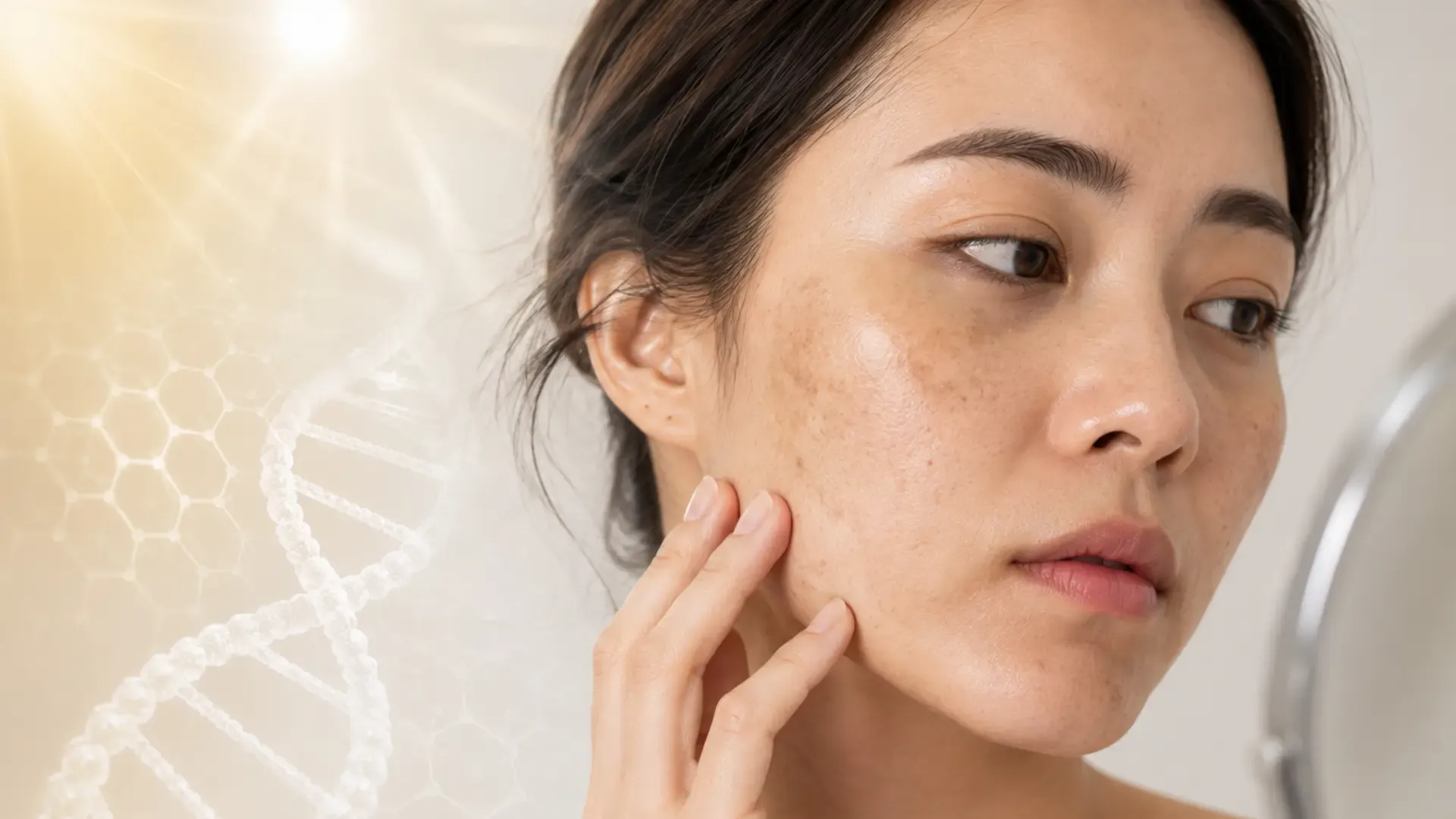
Daily sunscreen application is an essential skincare rule. Yet, many people still ask, "Why is my skin getting darker even though I use sunscreen?" or "Why do I still get sun spots even though I wear sunscreen?" This frustration does not mean sunscreen is useless, rather, it highlights fundamental differences in how different UV filters interact with your skin's biological pathways.
This guide examines the scientific differences between mineral vs chemical sunscreens, explains how heat and sunlight impact cellular DNA, and reveals why the advanced DNA Repair Mineral SPF 20 PA++ formula in Majestic Day Repair is engineered to solve these persistent skin concerns.
Why Do I Still Get Sun Spots and Dullness Even Though I Wear Sunscreen?
Persistent hyperpigmentation occurs because conventional sunscreens only block surface UV rays, leaving deeper cellular pathways untouched. UV exposure triggers alpha-MSH hormones that signal melanocytes to produce melanin. This hyperpigmentation cascade continues internally even after you step indoors.
In warm, humid climates and sun-exposed environments, sun protection involves more than just UV rays. High ambient temperatures cause thermal aging, a process where heat directly damages skin cells independent of direct sunlight. Heat stress destabilizes structural proteins, degrades collagen, and accelerates premature aging.
Furthermore, traditional chemical UV filters convert absorbed radiation into internal heat. In hot, humid weather, this heat conversion adds an extra thermal burden onto already warm dermis layers. This internal warming creates a damaging cycle, making sun spots and uneven skin tone difficult to prevent with ordinary sunscreens alone.
Selecting the correct UV filter goes beyond picking an SPF rating. It requires choosing a formula that respects and protects your skin's underlying cellular biology.
Understanding the Scientific Differences Between Mineral and Chemical Sunscreens
The key difference lies in mechanism: mineral filters reflect UV rays away from the skin surface, whereas chemical filters absorb UV rays and convert them into heat inside the skin layers. This distinction directly impacts cellular health and DNA integrity in warm, sunny environments.
Chemical Sunscreen: UV Absorption and the Risks of Thermal Degradation
Chemical sunscreens rely on organic compounds such as avobenzone, oxybenzone, or octinoxate. These ingredients absorb incoming UV photons and dissipate them through a chemical reaction that releases thermal energy into the epidermis and upper dermis.
In hot climates, this internal heat release increases thermal stress on skin tissue. Heat-stressed cells undergo thermal degradation, leading to broken collagen fibers, loss of elasticity, and subtle DNA strand disruptions. This internal heat build-up also explains why many users ask, "Why do I look dull after applying sunscreen?"
Additionally, certain chemical filters are photo-unstable, meaning they break down and lose effectiveness after prolonged sun exposure. Small chemical molecules may also absorb into deeper skin layers, raising suitability concerns for sensitive or reactive skin types.
Mineral Sunscreen: Reflecting UV Rays with Zinc Oxide and Titanium Dioxide
Mineral or physical sunscreens function on a completely different principle. Active mineral particles such as Zinc Oxide and Titanium Dioxide sit on top of the skin barrier, forming a physical shield that reflects and scatters UV rays away from the body without producing internal heat.
Zinc Oxide offers broad-spectrum defense across UVA and UVB wavelengths, while Titanium Dioxide provides strong protection against UVB radiation. Combined in modern micronized formulas with SPF 20 PA++ ratings, these minerals provide reliable protection without leaving a heavy white cast.
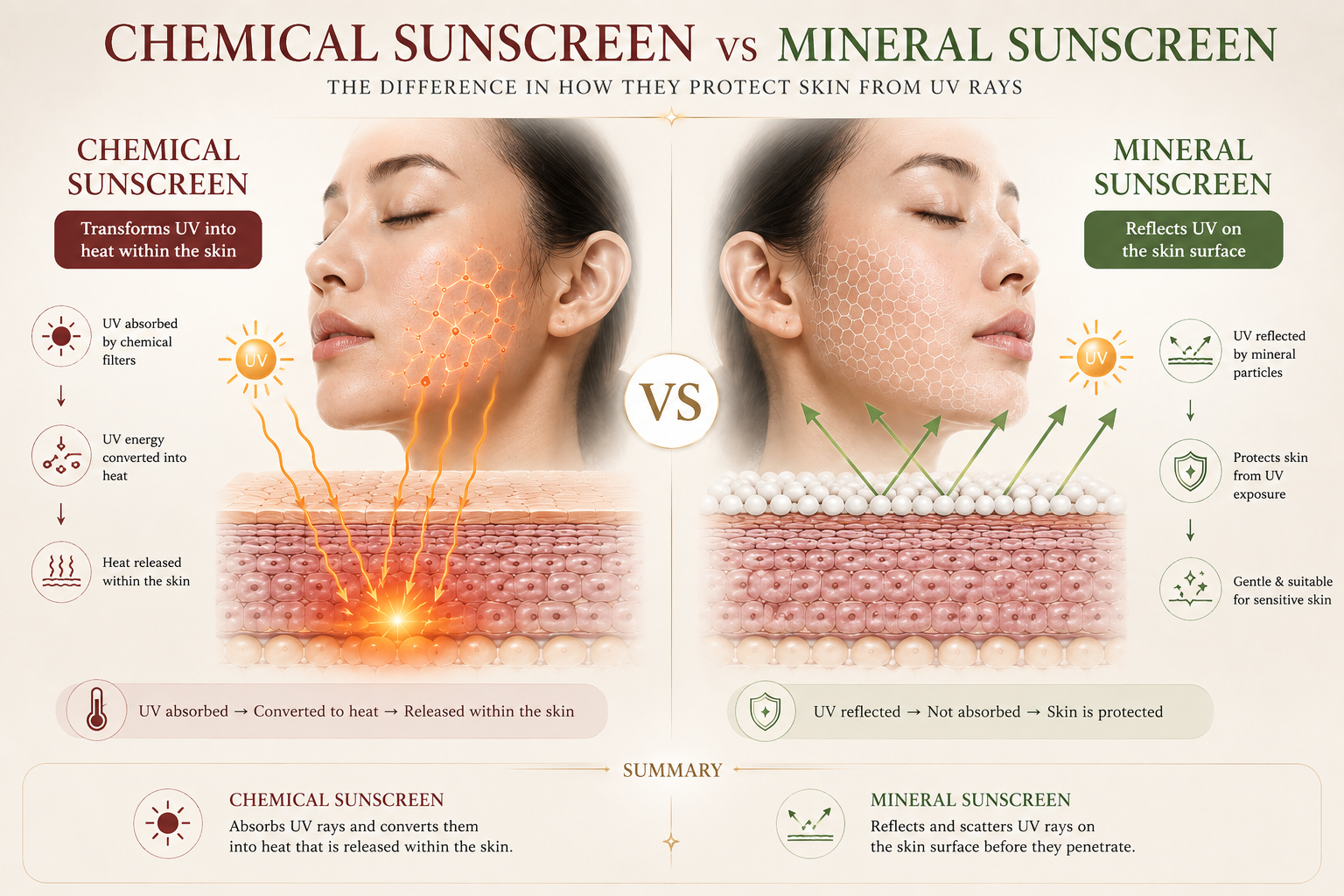
Infographic: Chemical sunscreens absorb UV radiation and release heat internally, whereas Mineral sunscreens reflect UV rays at the skin surface.
| Parameter | Chemical Sunscreen | Mineral Sunscreen |
|---|---|---|
| Operating Mechanism | Absorbs UV, converts energy to internal heat | Reflects and scatters UV off skin surface |
| Thermal Aging Risk | Present due to heat conversion reactions | None (cool surface defense) |
| Dermal Penetration | Yes, absorbed into live epidermal layers | No, remains on top of skin barrier |
| Formula Stability | Can degrade over time in high sunlight | Highly stable, photo-resistant structure |
| Sensitive Skin Safety | Requires caution, potential stinging | Gentle, non-irritating, high compatibility |
| Pregnancy Suitability | Consult physician prior to use | Widely recommended by dermatologists |
How DNA Repair Mineral SPF 20 PA++ Reverses Cellular Damage in Warm Climates
Many individuals wondering, "Is it too late to fix sun damaged skin?" find that surface UV defense is only half the solution. The DNA Repair Mineral SPF 20 PA++ formulation pairs physical Zinc Oxide defense with active cellular restoration: Human-Type HSP to repair DNA strands, ASP Functional Peptide to intercept pigment signals, and 3GF Complex to accelerate tissue renewal.
.JPG?alt=media&token=ba47cc76-b161-4b3b-886d-6f1dbd2e7cb2)
"That is precisely where skin faces free radicals and UV radiation directly. I firmly believe that daily sun protection is a crucial, non-negotiable step in every skincare routine."
dr. Resty Putri, Dipl. CIBTAC, AAAM
Aesthetic Medical Doctor & Collaborator, Majestic Cosme
Human-Type HSP (Heat Shock Protein)
Heat Shock Proteins are specialized cellular chaperones produced naturally in response to thermal stress and structural damage. In warm environments, ambient heat and solar radiation damage structural proteins like collagen and elastin. Human-Type HSP in Majestic Day Repair actively identifies degraded proteins, helps fold them back into shape, and restores DNA integrity throughout daytime wear.
ASP Functional Peptide (Signal Block Technology)
When sunlight contacts the skin, the body releases alpha-MSH hormones that command melanocytes to produce excess pigment, creating dark spots. ASP Functional Peptide intercepts and blocks alpha-MSH signals before they reach target cell receptors. Without these chemical commands, melanocytes stay calm, halting overproduction of melanin at the source.
3GF Complex (EGF + FGF + IGF)
This triple growth factor blend (Epidermal Growth Factor, Fibroblast Growth Factor, Insulin-like Growth Factor) stimulates healthy cell turnover and collagen synthesis. 3GF Complex accelerates the emergence of new, healthy skin cells that exhibit intact DNA and balanced pigment distribution, restoring radiance over time.
This dual strategy of surface reflection and deep cellular repair sets DNA Repair Mineral SPF 20 PA++ from Majestic Day Repair apart from standard formulations. It defends against incoming UV rays while actively repairing prior sun damage at a fundamental level.
Who Should Use Mineral Sunscreen? (Sensitive Skin, Pregnancy Safety, and Regulations)
Mineral sunscreens are suitable for all skin types, including sensitive, oily, acne-prone, and pregnant skin. Mineral filters Zinc Oxide and Titanium Dioxide are non-comedogenic, hypo-allergenic, and naturally stable without requiring harsh chemical stabilizers that can sting delicate skin.
For sensitive skin, mineral shields eliminate the warming sensation and chemical irritation caused by organic filters. For oily or combination skin, micronized mineral particles deliver a smooth, natural matte finish that absorbs excess oil without clogging pores.
For expectant mothers, global dermatological guidelines consistently favor mineral sunscreens. Because Zinc Oxide and Titanium Dioxide remain on the surface without systemic absorption into the bloodstream, they offer a safe, reliable sun protection choice throughout pregnancy.
All Majestic Cosme formulations undergo strict safety evaluation, clinical testing, and regulatory compliance to ensure every product meets high international standards for quality, safety, and performance.
Daily Anti-Aging Skincare Layering Guide with Mineral Sunscreen
Correct product layering ensures active ingredients penetrate effectively. Mineral sunscreen should always be applied as the final step in your morning routine, forming a protective barrier over your treatment serums and moisturizers.
- Gentle Cleanser: Wash your face with a mild, pH-balanced cleanser to remove overnight oil, impurities, and dead skin cells without stripping natural moisture.
- Hydrating Toner or Essence: Rebalance skin pH and hydrate surface layers to enhance absorption of subsequent treatment steps.
- Active Serums (Treatment): Apply targeted treatment serums such as Vitamin C, niacinamide, or growth factor blends to address hyperpigmentation and firming concerns.
- Moisturizer: Apply a lightweight moisturizer if your skin requires extra hydration. Allow 2 to 3 minutes for full absorption.
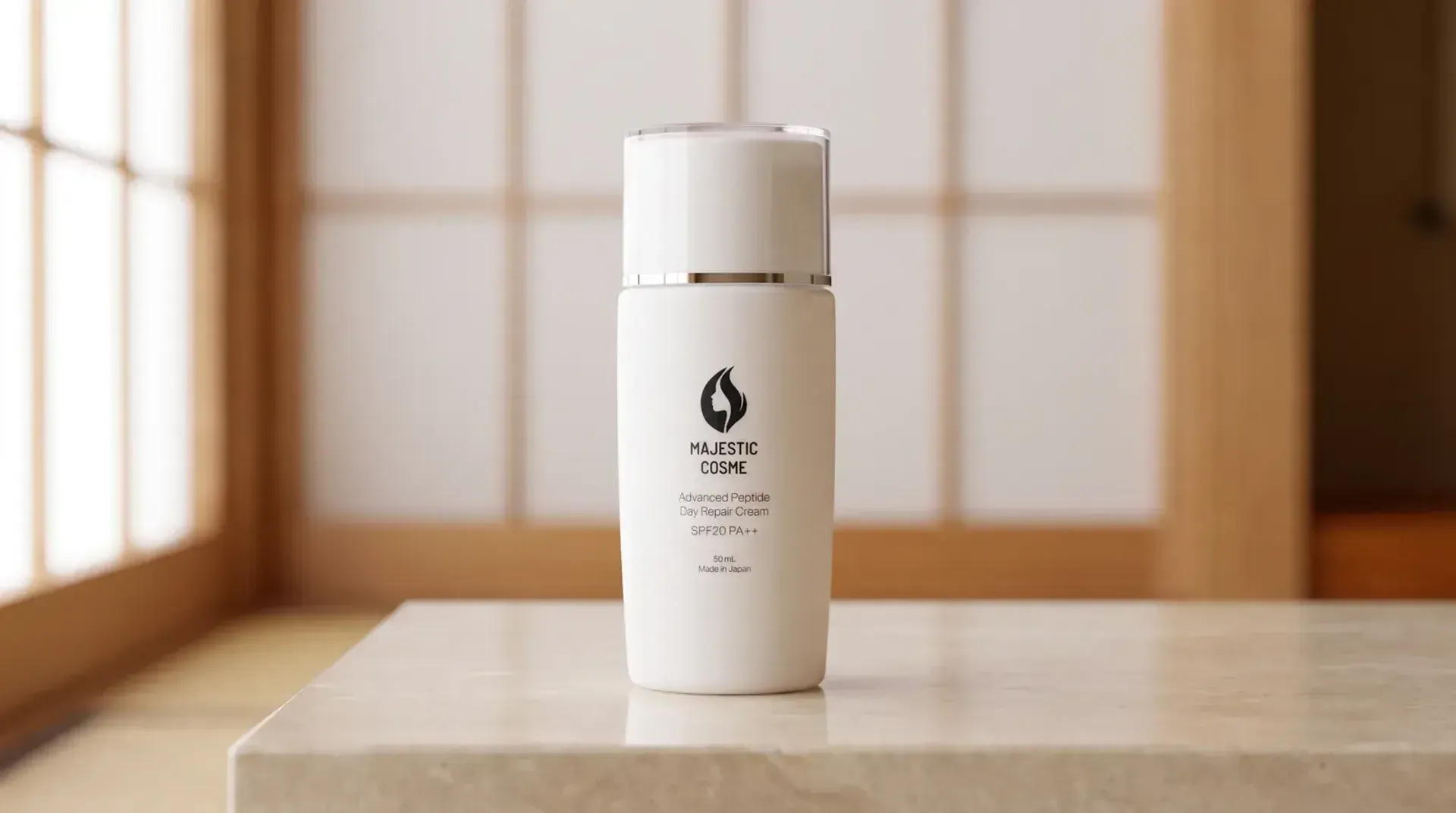
- Majestic Day Repair SPF 20 PA++ (Essential Final Step): Shake the bottle for 5 to 10 seconds. Apply evenly across face and neck using gentle patting motions. Allow 2 to 3 minutes to set before applying makeup. Reapply every 3 to 4 hours during outdoor activities.
For a complete guide on anti-aging skincare routines that prevent photoaging, explore our dedicated guide on incorporating mineral sun care into your daily regimen.
Conclusion: Advanced Cellular Defense to Preserve Collagen in High-UV Climates
If you have experienced persistent dark spots and dullness despite wearing daily sun protection, your sunscreen may only be protecting surface skin without addressing deeper biological pigment triggers.
The choice between mineral vs chemical sunscreen involves more than surface UV blocking, it centers on whether your sunscreen adds heat to your skin cells or reflects it, and whether it actively repairs DNA damage.
In warm, sunny climates, combining physical mineral reflection with DNA repair technology offers a comprehensive strategy to maintain smooth, radiant, and youthful skin.
Stop Sun Damage at the Cellular Level
Protect your cellular DNA with daily mineral defense SPF 20 PA++ from Majestic Day Repair (DNA Repair Mineral SPF).
Discover Majestic Day RepairFrequently Asked Questions
Scientific References
- Draelos, Z. D. (2019). "The science behind skin care: Sunscreens." Journal of Cosmetic Dermatology, 18(5), 1181-1187.
- Papakonstantinou, E., Roth, M., & Karakiulakis, G. (2012). "Hyaluronic acid: A key molecule in skin aging." Dermato-endocrinology, 4(3), 253-258.
- Matsumura, Y., & Ananthaswamy, H. N. (2004). "Toxic effects of ultraviolet radiation on the skin." Toxicology and Applied Pharmacology, 195(3), 298-308.
- Majestic Cosme Research Laboratories. (2026). "Observational 4-Week Dermatologist-Monitored Study: Efficacy of Bio-Identical Peptide Ecosystem on Tropical Skin Barrier Restorations." Majestic Cosme Observational Study Series, Report 2026-09.