.png?alt=media&token=78c23398-5711-460d-b21c-4a7177094ae4)
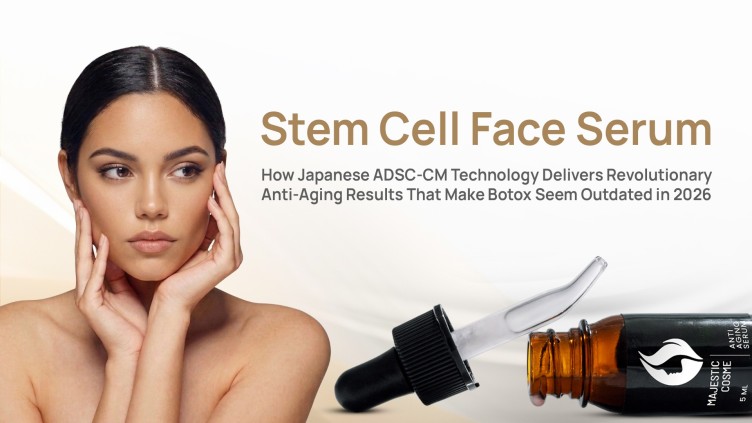
The Stem Cell Face Serum Market: Decoding 20% ADSC-CM Potency and Dermal Absorption
Table of Contents
- Introduction
- The Truth About Most "Stem Cell" Serums
- Japanese ADSC-CM vs. Plant-Based Options
- Clinical Evidence: ADSC-CM vs. Botox
- Cost Comparison: Investment Analysis
- Choosing a Real Stem Cell Face Serum
The stem cell face serum market crossed $2.8 billion in 2026, and most of it is built on a claim that does not hold up to scrutiny. The overwhelming majority of products using stem cell in their marketing contain plant stem cell extracts. These are genuine antioxidant ingredients, but they are not what the term stem cell serum implies to most consumers.
Meanwhile, in Japanese pharmaceutical laboratories, a genuinely different category of technology has been maturing. Adipose derived stem cell conditioned medium (ADSC-CM), produced from human fat tissue stem cells under pharmaceutical grade GMP conditions, delivers over 150 active growth factors directly into the dermis through Liposome Technology. It activates fibroblasts and produces measurable structural improvement without a single needle.
Introduction
The stem cell face serum market crossed $2.8 billion in 2026, and most of it is built on a claim that does not hold up to scrutiny. The overwhelming majority of products using stem cell in their marketing contain plant stem cell extracts. These are genuine antioxidant ingredients, but they are not what the term stem cell serum implies to most consumers.
Meanwhile, in Japanese pharmaceutical laboratories, a genuinely different category of technology has been maturing. Adipose derived stem cell conditioned medium (ADSC-CM), produced from human fat tissue stem cells under pharmaceutical grade GMP conditions, delivers over 150 active growth factors directly into the dermis through Liposome Technology. It activates fibroblasts and produces measurable structural improvement without a single needle.
The Truth About Most "Stem Cell" Serums on the Market Today
Most cosmetic companies advertising stem cells contain stem cell extracts, not live stem cells, and extracts cannot act in the same way as live stem cells. Plant stem cell extracts are botanical cultures that carry no human growth factors. They cannot signal human fibroblasts or stimulate collagen through the pathways that produce structural dermal change.
What the labelling actually means
- "Stem cell extract" or "plant stem cells" indicates a botanical antioxidant with no human growth factor signaling capability.
- "Stem cell conditioned medium" or "ADSC-CM" indicates that human adipose derived stem cells were cultured and their secretory output was collected.
- "Stem cell technology" has no regulated definition; always look for the specific acronym ADSC-CM and a disclosed percentage.
What Makes Japanese ADSC-CM Different from Plant-Based Options
Adipose derived stem cells are harvested from human fat tissue. In the body, these cells function as repair coordinators, releasing signals instructing cells to proliferate, produce collagen, and regenerate tissue. Japanese laboratories culture ADSCs under GMP conditions, harvesting the conditioned medium rich in 150+ active proteins.
Majestic Skin preserves these using Cold Process formulation and Liposome Technology to ensure full biological activity reaches the dermis. This ensures that FGF (the primary driver of collagen) and IGF (cell proliferation) remain viable.
Why source matters: human vs. plant
| Factor | Plant Stem Cell Extract | Human ADSC-CM (20%) |
|---|---|---|
| Growth factors present | None (human-compatible) | 150+ active proteins |
| Fibroblast signaling | None | Direct, via EGF, FGF, TGF-beta |
| Collagen stimulation | None | Measurable increase (+27%) |
| Skin penetration | Epidermal only | Dermal via Liposome Technology |
Clinical Evidence: How ADSC-CM Compares to Botox
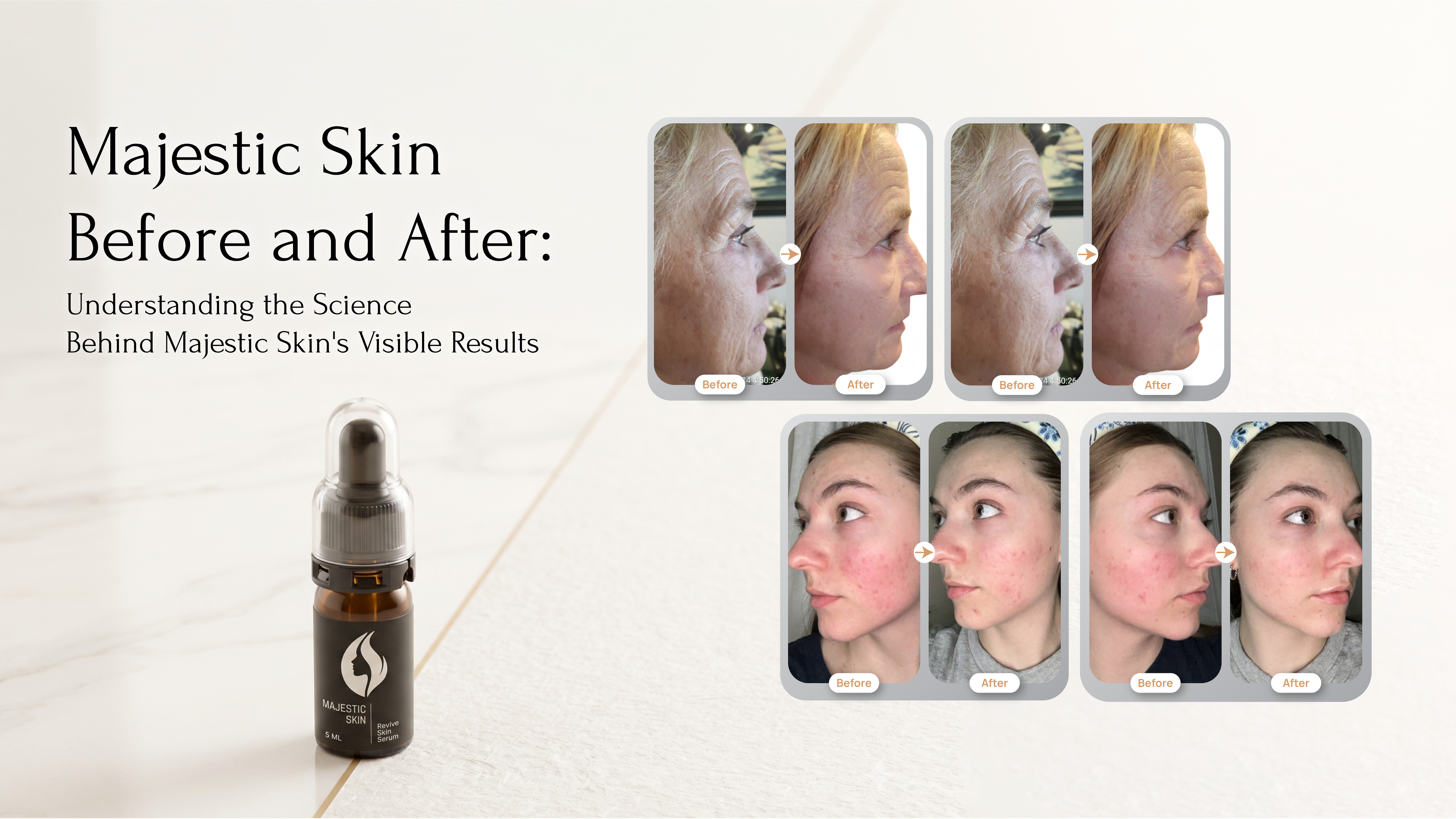
Reduction in periorbital wrinkle depth after 8 weeks
Increase in dermal collagen density after 12 weeks
Accelerated skin renewal cycle with Majestic Skin
Botox produces zero measurable change in collagen density or skin texture. Its effect is muscle paralysis that resets every few months. ADSC-CM addresses the underlying biology. For a full side by side analysis, see our guide on stem cell serum vs Botox.
The Investment Argument: Cost over Time
"I was considering stem cell injections, but the cost and needles made me hesitate. After using Majestic Skin, my skin became firmer and smoother within weeks. I no longer feel the need for injectable procedures."
Anna W., 38, Los Angeles
For more on high performance actives, see the guide to best anti-aging serum for wrinkles in 2026.
How to Choose a Real Stem Cell Face Serum
- Human ADSC-CM explicitly disclosed: Look for the specific acronym and percentage.
- 150+ Growth Factors: Therapeutic power lies in the complexity of the secretory profile.
- Liposome Technology: Essential for delivering large molecules to fibroblasts in the dermis.
- Cold Process formulation: Standard heat processes denature proteins and inactivate the serum.
For manufacturing details, see the guide to human stem cell serum in 2026.
Frequently Asked Questions
Majestic Skin Anti-Aging Serum
20% ADSC-CM. 150+ active growth factors. Liposome deep delivery. Cold Process formulation. JCIA registered. The clinical standard in regenerative skincare.
Discover Majestic Skin NowSources
- Kober, M., & Berto, G. (2022). Adipose derived stem cell conditioned medium in facial skin aging. Journal of Cosmetic Dermatology.
- Shin, H., et al. (2021). Human adipose tissue derived mesenchymal stem cells secretome. Biomolecules.
- Hassan, W. U., et al. (2020). Role of adipose derived stem cells in skin rejuvenation. Skin Pharmacology and Physiology.
- Kim, W. S., et al. (2009). Wound healing effect of adipose derived stem cells. Journal of Dermatological Science.
- El-Domyati, M., et al. (2002). Intrinsic aging vs. photoaging: comparative histopathological study. Experimental Dermatology.