.png%253Falt%253Dmedia%2526token%253D78c23398-5711-460d-b21c-4a7177094ae4%22%7D%2C%7B%22operation%22%3A%22resize%22%2C%22width%22%3A48%7D%2C%7B%22operation%22%3A%22output%22%2C%22format%22%3A%22webp%22%2C%22quality%22%3A75%7D%5D)
Key Takeaways
- Recurring acne on cheeks and chin signals a disruption of the lipid barrier and deep dermal inflammation, rather than a mere issue of surface cleanliness.
- Aggressive drying spot treatments often elevate TEWL levels and trigger rebound breakouts due to compensatory sebum overproduction.
- The Dual Biopeptide Technology approach precisely regulates sebum, dampens pro-inflammatory cytokines, and accelerates barrier regeneration without drying or peeling side effects.
- A 4-week clinical panel perception test recorded that 87% of users experienced reduced inflammation and 92% noted significant barrier moisture improvement.
Breakouts that persistently reappear in the exact same spots are not a sign of poor hygiene. Instead, they indicate an underlying biological imbalance that has not been fully resolved. Addressing root causes rather than temporary surface symptoms is the key to breaking this cycle permanently.
Understanding the Root Triggers of Deep Blind Pimples on Cheeks and Chin
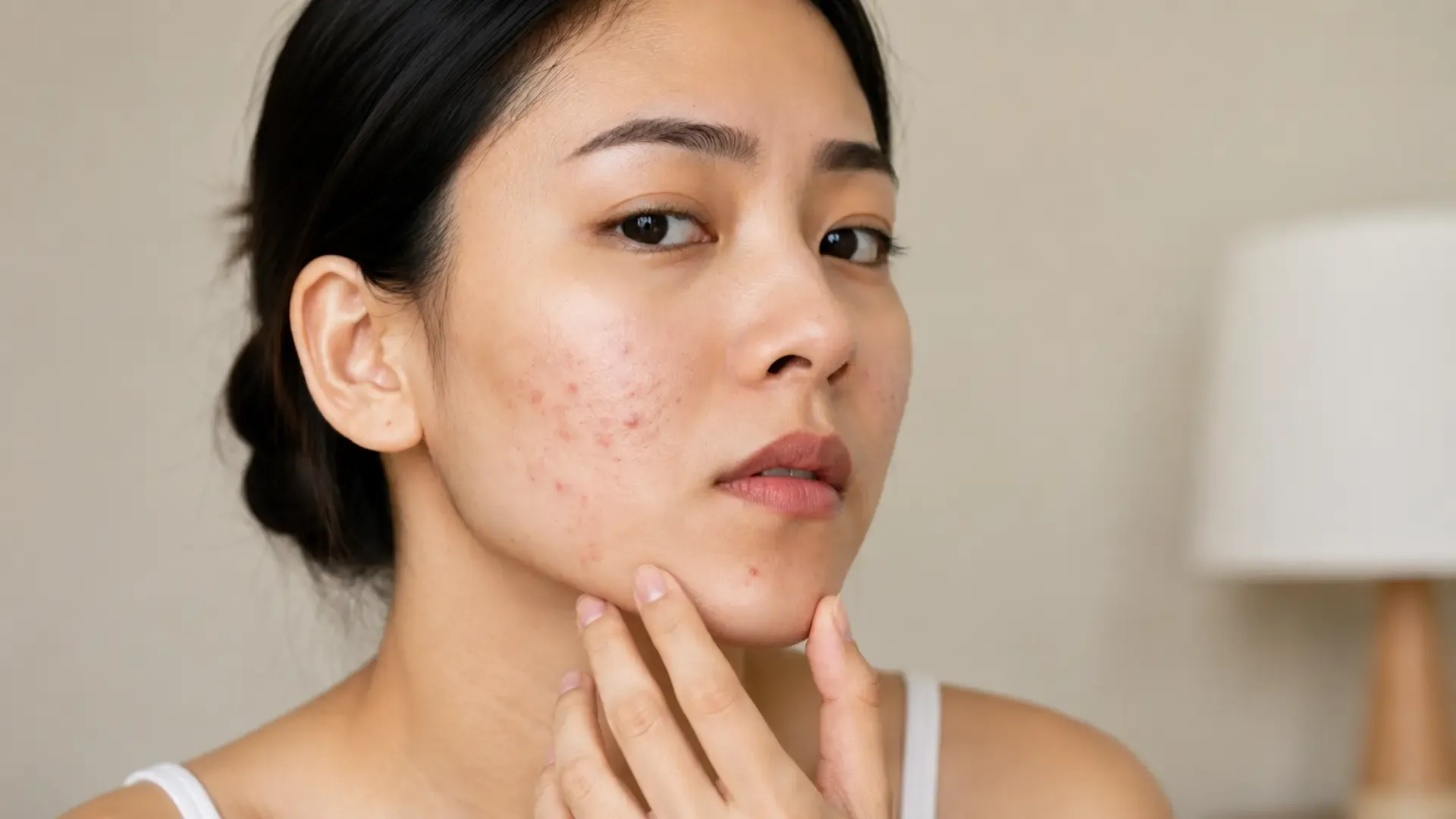
Deep blind pimples, which represent painful subterranean nodules on the cheeks and chin, occur when pilosebaceous follicles become clogged deep within the dermal layer rather than merely at the pore surface. Unlike superficial comedones, deep lesions cannot be extracted easily and frequently leave persistent post-inflammatory marks.
The cheek and chin areas exhibit distinct biological vulnerabilities. Cheeks are highly susceptible to mechanical friction and localized lipid barrier damage, whereas the chin and jawline respond acutely to androgenic fluctuations that stimulate sebaceous glands to produce denser, more viscous sebum. Understanding face mapping for cheek and chin acne helps identify the specific environmental and physiological triggers affecting your skin.
What makes subterranean acne particularly stubborn is the deep dermal immune response involved. Pro-inflammatory cytokines such as interleukin-1 alpha (IL-1α) and tumor necrosis factor alpha (TNF-α) are released by immune cells in response to Cutibacterium acnes colonization within the follicle. This inflammatory cascade can persist long after visible surface swelling subsides.
Scientific Note: Research by Thiboutot et al. (2018) confirms that inflammatory acne involves the activation of the innate immune pathway mediated by toll-like receptor 2 (TLR2) on follicular keratinocytes in response to C. acnes antigens. This explains why deep tissue inflammation continues even after bacterial populations decline.
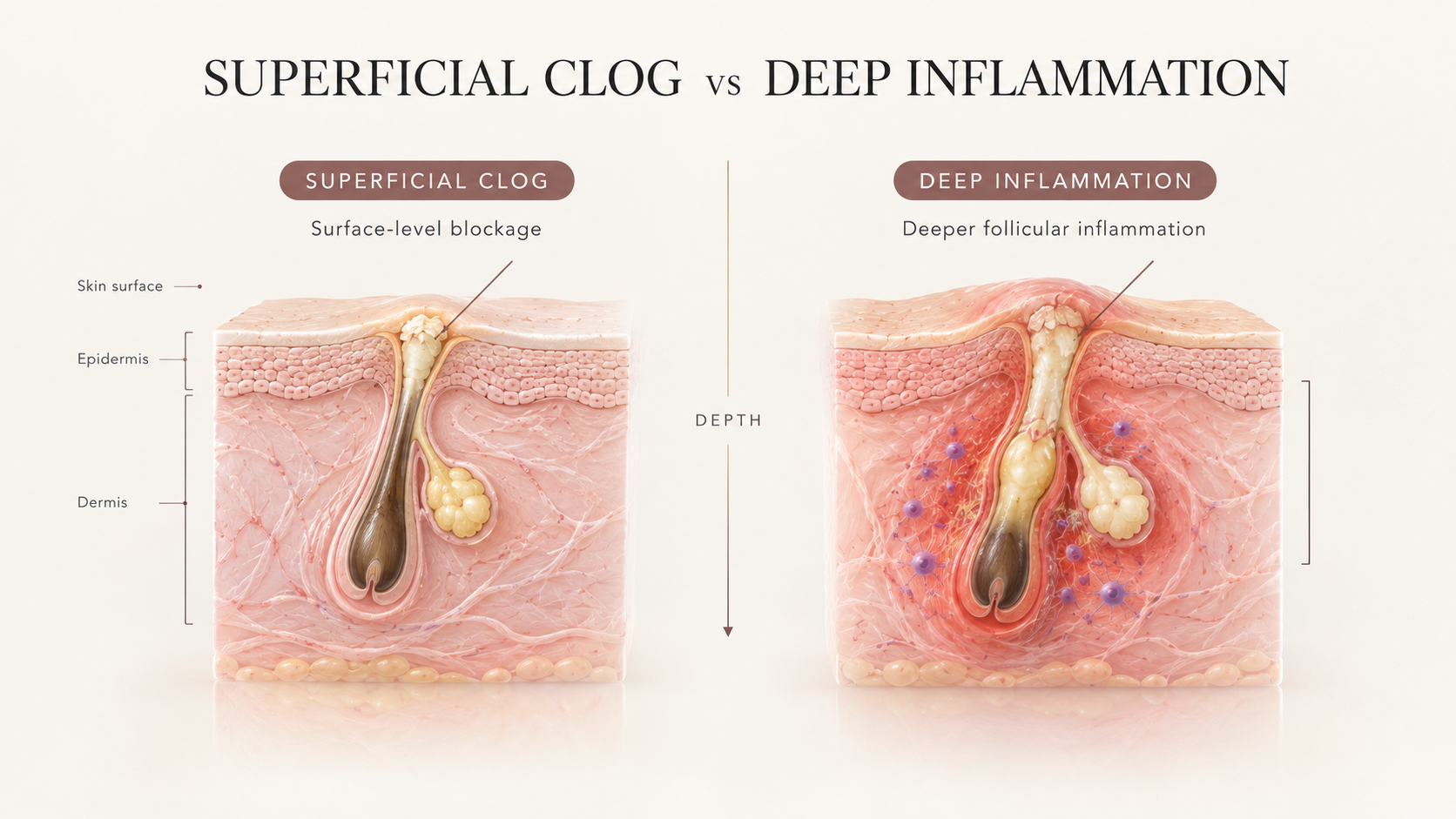
5 Commonly Overlooked Causes of Recurring Acne
Recurring facial breakouts rarely stem from a single factor. The five interrelated drivers detailed below are the most frequently ignored triggers perpetuating the cycle of persistent acne.
1. Lipid Barrier Disruption and Elevated TEWL Rates
A compromised skin barrier creates an open pathway for acne-causing bacteria. When the lipid matrix of the stratum corneum degrades, Trans-Epidermal Water Loss (TEWL) rises, signaling that the skin can no longer retain vital moisture independently.
This leads to a paradoxical state: the surface feels dry and tight, yet deeper layers overcompensate by increasing sebum output. This reactive sebum, produced under barrier stress, exhibits a pro-inflammatory profile and clogs follicles more readily.
2. C. acnes Bacterial Overgrowth and Inflammatory Cascades
Cutibacterium acnes is an anaerobic bacterium naturally residing within pilosebaceous follicles. Under healthy conditions, C. acnes forms part of a balanced skin microbiome. Issues arise when follicular congestion and excess sebum create anaerobic conditions that accelerate bacterial overgrowth.
Overabundant C. acnes secretes lipases and free fatty acids that damage follicular walls, activating TLR2 and TLR4 on keratinocytes to trigger pro-inflammatory cytokines. This manifests as red papules, pustules, or in more severe cases, painful cystic nodules that resist conventional topical treatments.
3. Viscous Sebum Production Driven by Hormonal Fluctuations
Androgen fluctuations, particularly testosterone and dihydrotestosteron (DHT), directly regulate sebaceous gland size and secretion rates. In adult females, perimenstrual androgen surges frequently induce the production of thicker sebum with altered lipid ratios.
Sebum produced under high androgenic stimulation contains elevated squalene levels. When squalene oxidizes via UV exposure or free radicals into squalene peroxide, it directly promotes C. acnes proliferation and hyperkeratinization, explaining why hormonal jawline breakouts tend to be deeper and more persistent.
4. High-Glycemic Diets and Systemic Inflammatory Triggers
Consuming high-glycemic carbohydrates elevates serum insulin and insulin-like growth factor 1 (IGF-1). These signaling pathways stimulate local androgen activity, increase sebum production, and impair normal keratinocyte desquamation, which collectively accelerates microcomedone formation.
To remain objective, scientific consensus regarding diet and acne continues to evolve. Dietary impacts vary by individual; however, controlled trials demonstrate that reducing processed sugars and high-glycemic foods measurably decreases inflammatory lesion counts in predisposed individuals.
5. Overuse of Harsh Spot Treatments That Strip Natural Moisture
High-strength benzoyl peroxide, drying alcohols, and aggressive salicylic acid solutions effectively sterilize surface bacteria in the short term. However, repeated use without adequate barrier restoration cumulatively strips essential stratum corneum lipids.
This raises TEWL, disrupts the native microbiome, and places skin in a state of chronic stress that worsens acne recurrence over time. This mechanism explains the rebound breakout phenomenon experienced by many users of aggressive acne products.
Why Conventional Drying Spot Treatments Trigger Rebound Breakouts
Traditional spot treatments target surface symptoms without repairing underlying barrier impairment. When the barrier remains compromised, skin compensates by increasing sebum production, creating a cycle that perpetuates recurring breakouts.
| Treatment Parameter | Harsh Drying Spot Treatments | Majestic Active Repair Essence |
|---|---|---|
| Primary Mechanism | Chemically strips sebum and kills surface bacteria | Cellular peptide signaling to calm inflammation and restore barrier |
| Lipid Barrier Effect | Degrades stratum corneum lipid matrix, raising TEWL | Supports ceramide synthesis, progressively lowering TEWL |
| Sebum Regulation | Triggers compensatory rebound oil overproduction | Acnobet regulates androgen receptor signaling in sebaceous glands |
| Inflammatory Response | Does not dampen pro-inflammatory cytokines; risks irritation | Hairen modulates IL-1α and TNF-α to accelerate resolution |
| Post-Acne Recovery | No targeting of hyperpigmentation or dermal damage | EGF and Copper Peptide aid re-epithelialization and PIH fading |
| Side Effect Risk | High: dryness, peeling, sensitivity, and rebound acne | Low: works in harmony with skin physiology without stripping |
| Long-Term Outcome | Chronic breakout recurrence due to barrier degradation | Fortified skin barrier, shorter and milder breakout cycles |
Rebound Breakout Phenomenon: Draelos et al. (2006) documented that harsh cleansing agents elevated TEWL values by 15% to 30% after 4 weeks. Increased TEWL directly correlates with epidermal stress pathways that drive compensatory sebum production, providing a physiological explanation for spot-treatment rebound breakouts.
Dual Biopeptide Solution: Healing Acne While Restoring the Skin Barrier
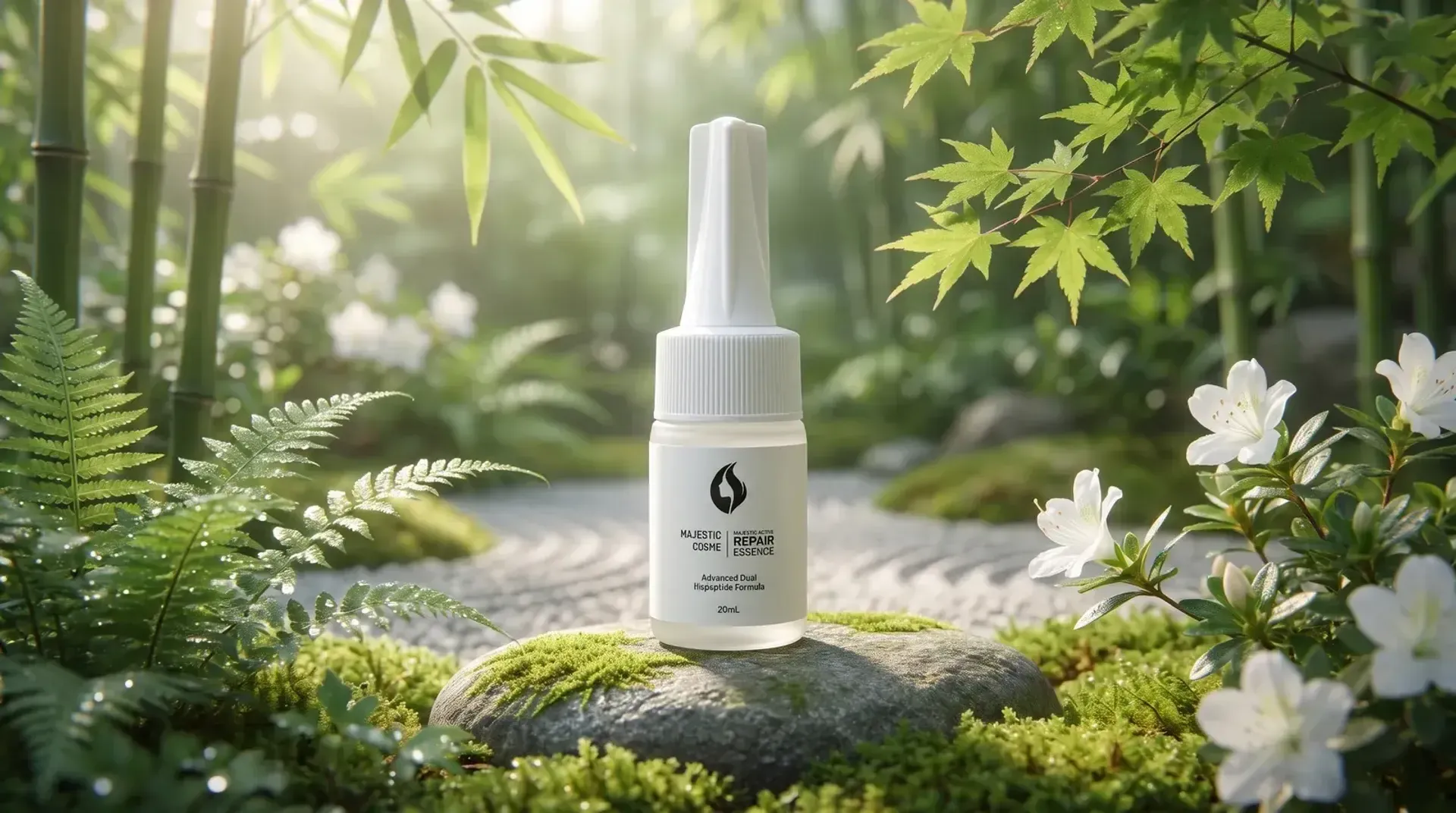
Dual Biopeptide Technology in Majestic Active Repair Essence intercepts the acne cycle across four biological checkpoints simultaneously: sebum regulation, inflammatory modulation, barrier restoration, and post-acne tissue regeneration, all without disrupting the stratum corneum.
This formulation philosophy draws from Japanese biotechnology acne care principles, prioritizing physiological skin recovery over short-term symptom suppression.
Four Active Components of Dual Biopeptide Technology
- Acnobet: A signal peptide that modulates androgen receptor responses in sebaceous glands, reducing excess oil secretion without drying tissue. Acnobet also regulates follicular keratinocyte differentiation to prevent hyperkeratinization and pore clogging.
- Hairen: An anti-inflammatory peptide that modulates pro-inflammatory cytokines (IL-1α and TNF-α). By dampening inflammatory intensity, Hairen accelerates lesion resolution, minimizes dermal collagen damage, and suppresses melanogenic triggers that cause post-inflammatory hyperpigmentation (PIH).
- EGF (Epidermal Growth Factor): A signaling protein that binds to EGFR on keratinocytes and fibroblasts, stimulating cellular migration to accelerate re-epithelialization. EGF also prompts fibroblasts to rebuild extracellular matrix components damaged during acne inflammation.
- Copper Peptide (GHK-Cu): A tripeptide-copper complex that regulates tyrosinase activity to manage excess melanin, neutralizes reactive oxygen species (ROS) via superoxide dismutase upregulation, and supports ceramide synthesis for lipid barrier repair.
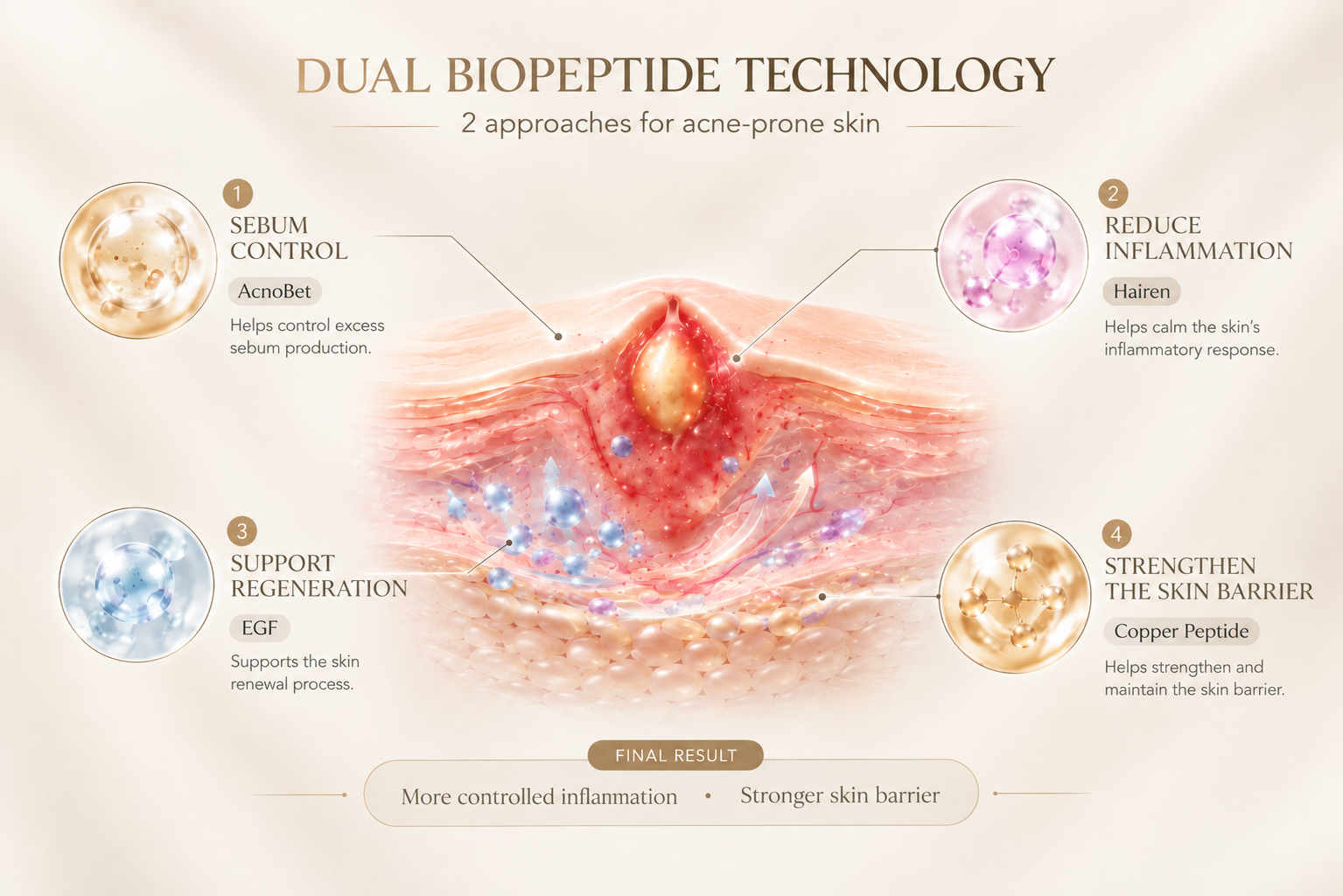
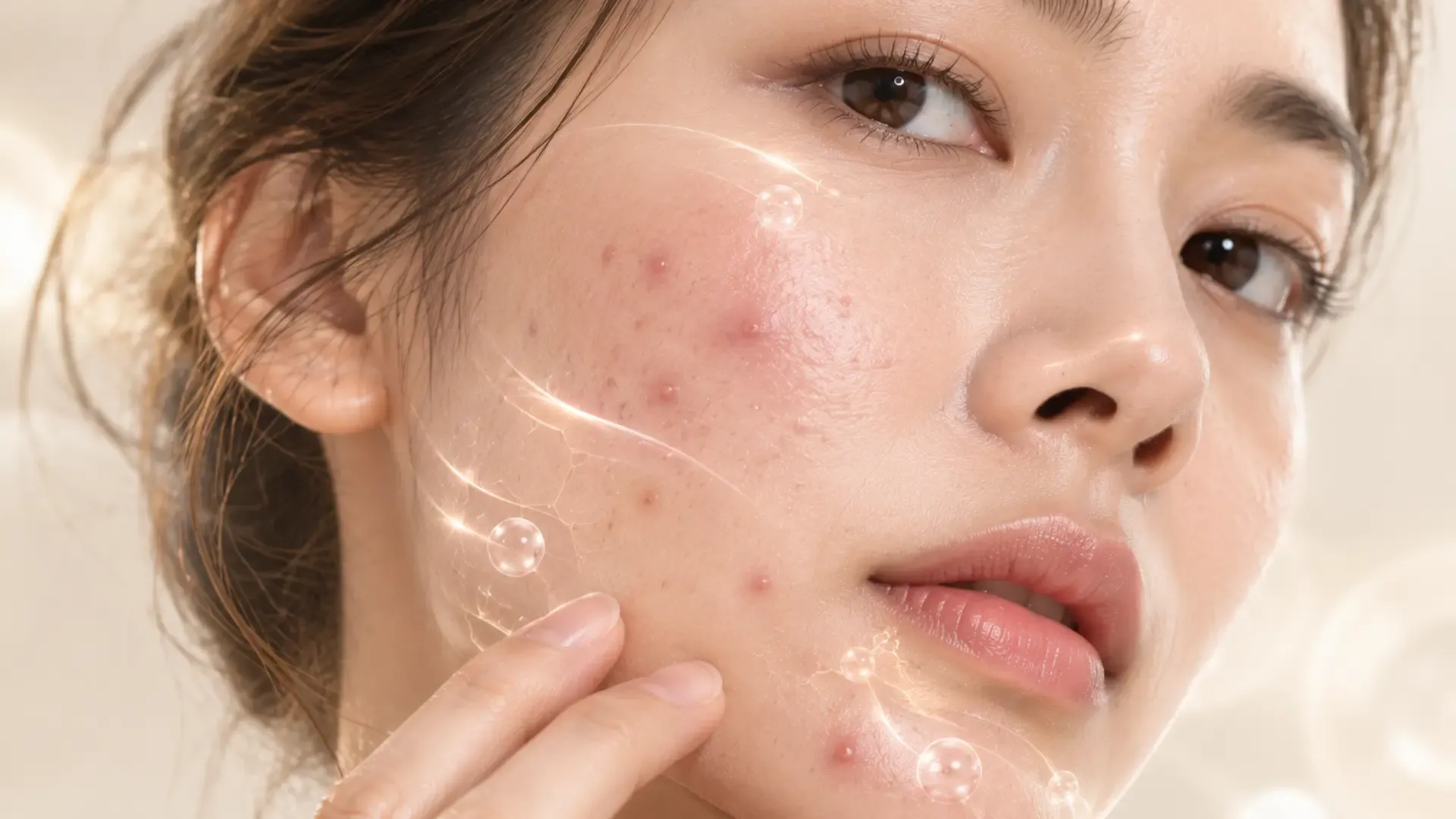
Diagram 2: Four-point intervention mechanism of Dual Biopeptide Technology in resolving acne inflammation and fortifying skin barrier tissue.
Panel Perception Test Results: Majestic Active Repair Essence (4 Weeks)
*Data based on a 4-week internal panel perception trial of 30 subjects (male and female, aged 18–35) with acne-prone skin. Individual results may vary.
Halt Recurring Breakouts Without Stripping Your Skin
Calm deep inflammation and rebuild your barrier with the dual-peptide power of Majestic Active Repair Essence. Non-drying. Non-peeling. Formulated to work with your skin physiology.
J-Beauty Regimen Guide to Interrupting the Cycle of Recurring Breakouts
The J-Beauty approach to acne management prioritizes balancing active lesion control with lipid barrier reinforcement. Follow this recommended daily routine:
- Low-surfactant gentle cleanser, morning and night: Select a cleanser matching natural skin pH (4.5 to 5.5). Avoid high-foaming cleansers that leave a squeaky-tight sensation, which signals lipid degradation.
- Hydrating toner or essence mist on damp skin: Prepares surface moisture to optimize consistent biopeptide absorption.
- Majestic Active Repair Essence (3 to 4 drops patted gently onto face and neck): Concentrate application on cheek and chin areas prone to subterranean pimples. Allow 60 to 90 seconds for complete absorption before layering.
- Lightweight non-comedogenic ceramide moisturizer: Seals biopeptide layers while supplying lipids to reinforce the barrier externally. Choose fragrance-free formulas.
- Broad-spectrum SPF 30+ daily: Essential every morning. UV radiation oxidizes sebum squalene into pro-inflammatory squalene peroxide and exacerbates post-acne hyperpigmentation.
Compatibility with Prescriptions: When using prescription retinoids or tretinoin, apply Majestic Active Repair Essence first to clean skin and allow full absorption before applying retinoids. For high-potency tretinoin, alternate night usage is recommended to avoid barrier overload. Always inform your dermatologist of all concurrent skincare products.
Conclusion: Restoring Skin Health by Fortifying Natural Defenses
The five underlying causes of recurring acne, ranging from lipid barrier breakdown to harsh spot-treatment overconsumption, converge on a single physiological point: skin under chronic biological stress lacks the capacity to heal fully from one breakout cycle before the next begins.
Interrupting this cycle permanently requires a smarter regimen rather than aggressive stripping: calming active dermal inflammation, restoring lipid barrier integrity, and providing biological signals that encourage healthy tissue renewal.
This principle drives Dual Biopeptide Technology in Majestic Active Repair Essence. Far beyond a temporary spot corrector, it functions as a restorative system that empowers your skin to heal, renew, and protect itself sustainably.
For severe hormonal cystic acne that shows no response to topical regimens after 2 to 3 months of consistent use, consulting a dermatologist or endocrinologist remains our sincere recommendation. Topical formulations have clear biological limits, and communicating these boundaries transparently is vital.
Frequently Asked Questions
Scientific References
- Thiboutot, D., et al. (2018). "New insights into the pathogenesis and management of acne." Journal of the American Academy of Dermatology, 78(2), S1-S8. https://doi.org/10.1016/j.jaad.2017.09.078
- Elias, P.M., & Feingold, K.R. (2001). "Skin barrier function." Dermatologic Therapy, 14(2), 143-148. https://doi.org/10.1046/j.1529-8019.2001.014002143.x
- Kim, J., et al. (2015). "Propionibacterium acnes–induced IL-1β secretion requires the NLRP3 inflammasome." British Journal of Dermatology, 173(5), 1140-1151. https://doi.org/10.1111/bjd.13949
- Kwon, H.H., et al. (2012). "Clinical and histological effect of a low glycaemic load diet in treatment of acne vulgaris in Korean patients." Acta Dermato-Venereologica, 92(3), 241-246. https://doi.org/10.2340/00015555-1346
- Draelos, Z.D., et al. (2006). "The effect of two skin care regimens on skin barrier function." Journal of Investigative Dermatology Symposium Proceedings, 11(1), 106-109. https://doi.org/10.1038/sj.jidsymp.5650019
- Haratake, A., et al. (2005). "Epidermal Growth Factor improves skin barrier function." Journal of Investigative Dermatology, 125(4), 732-741. https://doi.org/10.1111/j.0022-202X.2005.23878.x
- Borkow, G. (2014). "Using Copper to Improve the Well-Being of the Skin." Current Chemical Biology, 8(2), 89-102. https://doi.org/10.2174/2212796809666150227223857