.png%253Falt%253Dmedia%2526token%253D78c23398-5711-460d-b21c-4a7177094ae4%22%7D%2C%7B%22operation%22%3A%22resize%22%2C%22width%22%3A48%7D%2C%7B%22operation%22%3A%22output%22%2C%22format%22%3A%22webp%22%2C%22quality%22%3A75%7D%5D)
What is Mochi Skin and Why is it the Goal of Japanese Skincare?
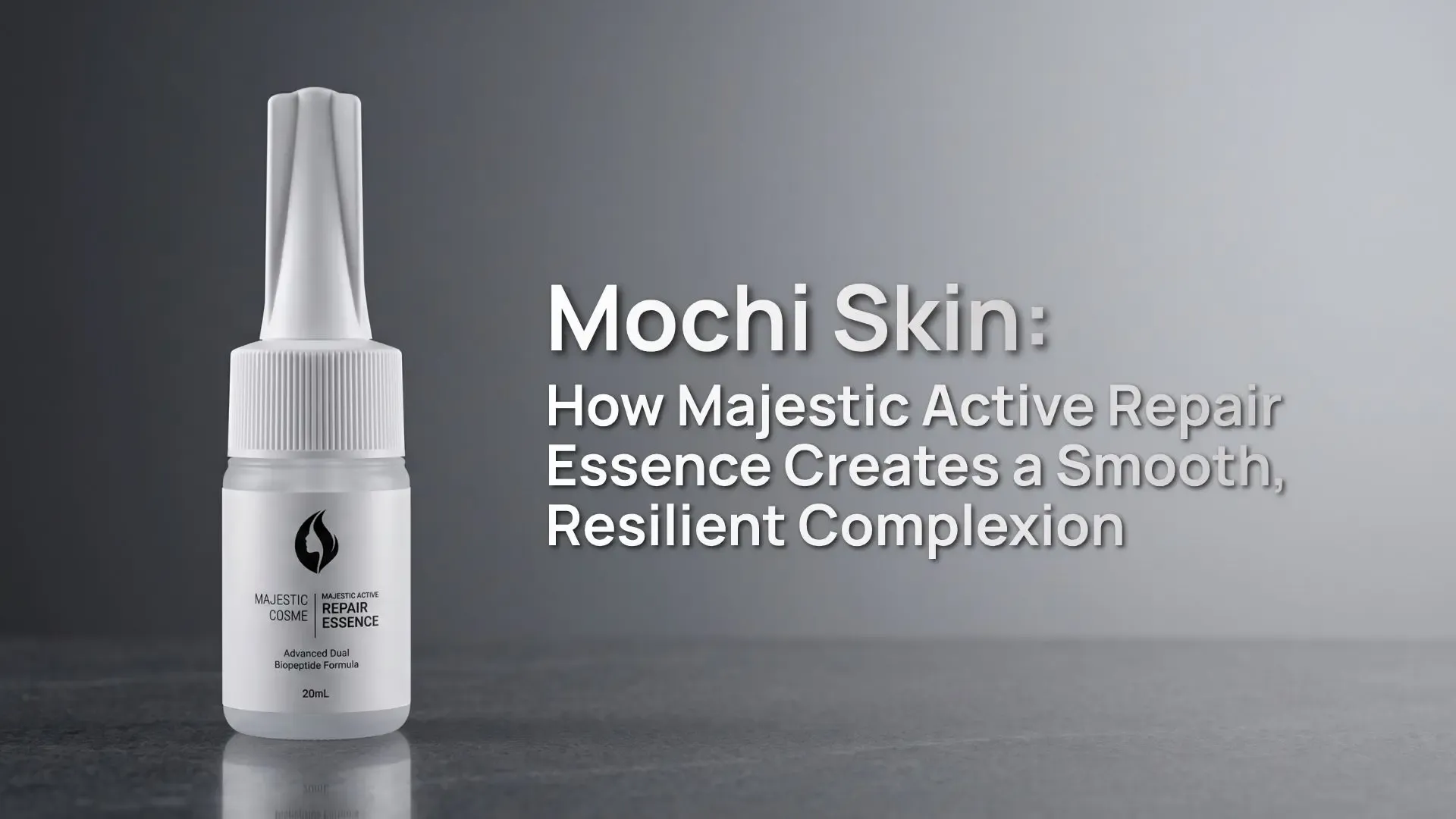
Mochi skin is a Japanese beauty ideal that describes skin which is soft, smooth, plump, and resilient, named after the texture of traditional Japanese rice cake confection. The defining qualities are not surface shine or reflective glow, but genuine tactile bounce and elasticity: skin that yields gently under pressure and springs back immediately. It is the external expression of a dermis with healthy collagen density, intact elastin, and well-regulated moisture. Majestic Active Repair Essence is formulated specifically to build these qualities at the cellular level.
In Japanese skincare philosophy, beautiful skin is skin that functions well, not skin that merely appears beautiful under the right lighting. Mochi skin represents this philosophy at its most tangible: a complexion so structurally healthy that its quality is evident to the touch, not just to the camera.
What separates mochi skin from other skin ideals is that it cannot be faked. A hydrating primer can simulate dewy glass skin for a few hours. A good highlighter can replicate the appearance of luminosity. But the soft, springy resilience of genuinely mochi-quality skin requires biological investment at the level of collagen, elastin, and the cellular systems that maintain them. This is what makes it the most meaningful skincare goal in the Japanese tradition, and it is why achieving it requires more than surface treatment.
The research story behind Majestic Cosme's approach to regenerative skin health is documented in the Majestic Cosme story, where the scientific philosophy that shaped this formula is explained in full.
Beyond Glass Skin: The Unique Qualities of a Mochi-Like Complexion
Glass skin, the reflective and poreless aesthetic popularized by Korean beauty culture, is primarily a visual outcome. It is created through intensive exfoliation and layered surface hydration. At its best, it signals clarity. At its worst, it encourages barrier compromise through the very techniques used to achieve it.
Mochi skin is defined differently, and the difference is meaningful.
| Glass Skin | Mochi Skin |
|---|---|
| Visual reflectivity and surface shine | Tactile bounce and structural resilience |
| Achieved through exfoliation and occlusive hydration | Built through collagen density and elastin integrity |
| Results diminish when routine stops | Results compound progressively with continued biological repair |
| Primarily a surface effect | A genuine structural skin quality |
The three biological systems that determine mochi skin quality are collagen density in the dermis, which provides the firmness and bounce that makes skin spring back after gentle pressure; elastin network integrity, which determines how precisely the skin returns to its original shape; and natural moisturizing factor, the skin's intrinsic moisture-binding system that creates the soft, pliable quality distinct from temporary occlusive hydration.
Mochi skin is not a look you create at the surface. It is a condition you build within the dermis, layer by layer, through consistent biological signaling that instructs the skin to function as it would in its healthiest state.
How Majestic Active Repair Essence Delivers True Mochi Skin
Majestic Active Repair Essence is a 100% Nano-Solution made in Japan that works through four bio-peptides delivered via nano-sized particles. This delivery technology is what allows the active ingredients to pass through the follicle opening and reach the sebaceous glands and dermal layers where collagen, elastin, and oil production are biologically regulated.
The formula addresses the biological conditions that prevent mochi skin from developing, particularly the acne cycle, post-inflammatory damage, and the slower collagen turnover of adult skin, while simultaneously building the structural qualities that define the mochi ideal.
Four stages of the acne and skin damage cycle must be resolved before mochi skin can emerge. The complete clinical model behind this approach is explained in the four-stage acne intervention guide.
- Stage 1: Regulating excess oil Congested, oily skin prevents the smooth, even texture that mochi skin requires. Hairen suppresses sebaceous gland activity at the cellular level, reducing excess sebum at its source before it can accumulate into blockages.
- Stage 2: Clearing pore blockages Blocked pores create surface irregularity, enlarged pore appearance, and the bacterial environment that produces inflammation. Acnobet softens hardened keratin at the follicle opening, clearing the physical obstruction without stripping the barrier.
- Stage 3: Eliminating bacteria Cutibacterium acnes drives the inflammatory response that damages surrounding dermis and disrupts collagen integrity. Both Acnobet and Hairen provide bacteriostatic action, reducing bacterial load without the systemic risks of antibiotic treatment.
- Stage 4: Rebuilding structural quality EGF accelerates cell renewal to replace damaged surface cells. Copper Peptide stimulates collagen and elastin synthesis in the dermis. This stage is where mochi skin qualities, bounce, firmness, and smooth texture, are actively built.
The Bio-Peptide Power: EGF, Copper Peptide, Acnobet, and Hairen Explained
EGF (Human Oligopeptide-1): Epidermal Renewal for Smooth Texture
EGF binds to epidermal growth factor receptors on the surface of keratinocytes and fibroblasts, triggering the cellular proliferation and differentiation responses associated with tissue repair. At the epidermal level, this accelerates the replacement of damaged, textured, or discolored surface cells with healthy new ones. At the dermal level, EGF signals fibroblasts to increase collagen and elastin output, directly building the structural density that makes skin feel firm and plump. EGF achieves this without provoking barrier disruption, making it suitable even for skin that cannot tolerate retinoids.
Copper Peptide (GHK-Cu Complex): Collagen Synthesis and Antioxidant Defense
Copper Peptide is a tripeptide-copper chelate with extensive clinical documentation in wound healing and regenerative dermatology. It stimulates fibroblast activity and collagen and elastin synthesis in the dermis, directly addressing the structural deficit that prevents mochi skin from developing. Its antioxidant mechanism, through its role as a cofactor for superoxide dismutase, protects newly synthesized structural proteins from free radical degradation caused by inflammation and UV exposure. This dual role as builder and protector is what makes Copper Peptide central to sustained mochi skin quality.
Acnobet (Salicyloyl Octapeptide-9): Pore Clearing Without Barrier Compromise
Acnobet fuses salicylic acid with a peptide chain in a configuration that has no prior equivalent in cosmeceutical formulation. This molecular fusion allows Acnobet to clear pore blockages by softening hardened keratin at the follicle opening while simultaneously providing antibacterial and anti-allergy protection at the follicle level. Because the salicylic acid is peptide-fused rather than free acid, the pore-clearing mechanism occurs without the barrier-stripping effect of standalone BHA treatments. Clear, well-functioning pores are a prerequisite for the smooth, even surface texture that defines mochi skin.
Hairen (Azelaoyl Tripeptide-1): Sebum Control and Pigmentation Prevention
Hairen combines medically-proven Azelaic Acid with Copper Peptide in a single molecule used clinically across more than 80 countries. It regulates sebaceous gland activity at the cellular level, reducing excess oil production at its source rather than simply managing surface sebum. Hairen also provides complementary bacteriostatic action against acne-causing bacteria and contains a whitening mechanism that prevents the post-inflammatory melanin deposition that leads to dark spots after a lesion heals. Both actions are essential to the even, clear skin tone that mochi skin requires.
Targeting Acne and Roughness for a Flawless Mochi Texture
Rough skin texture and active acne are the two most common conditions that prevent mochi skin from developing. Both have biological roots that surface treatments cannot adequately address.
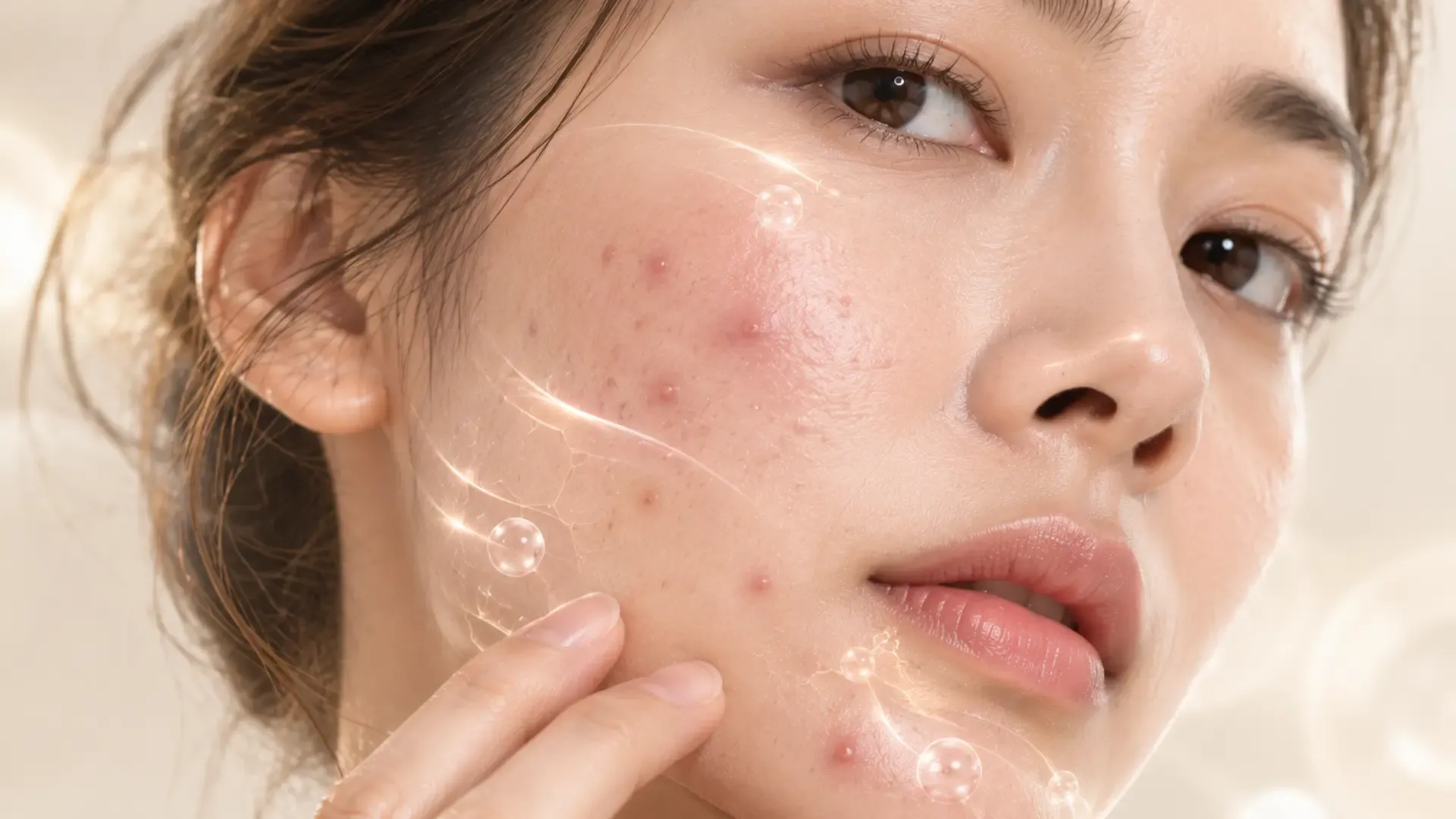
Rough texture typically originates from a combination of slowed keratinocyte renewal, which leaves older, more textured cells at the surface longer, and the follicle congestion that creates the uneven bumps and enlarged pore appearance that disrupt skin smoothness. EGF addresses the renewal side of this equation by accelerating the replacement cycle, while Acnobet addresses the congestion side by clearing the physical blockages that create textural irregularity.
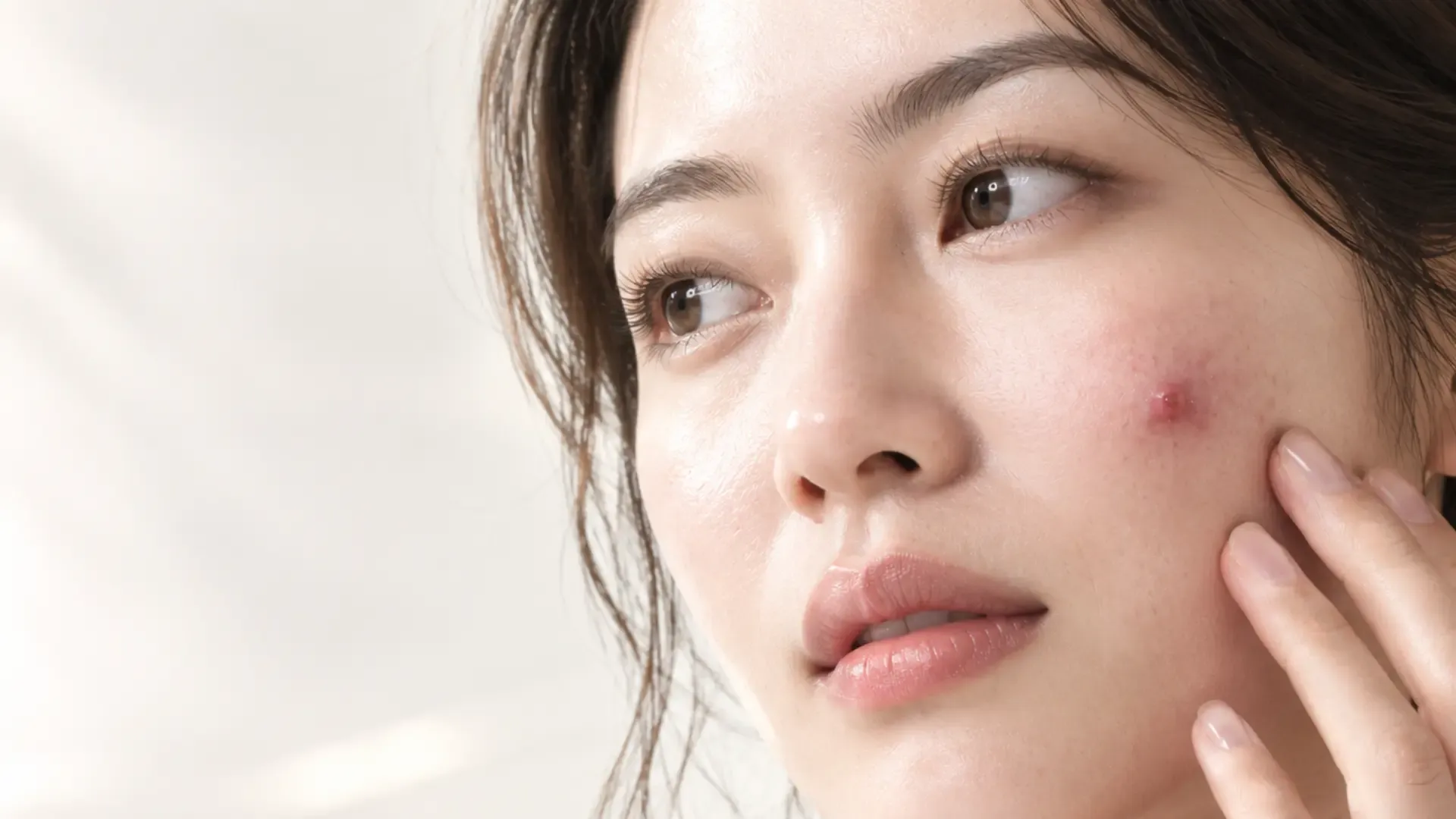
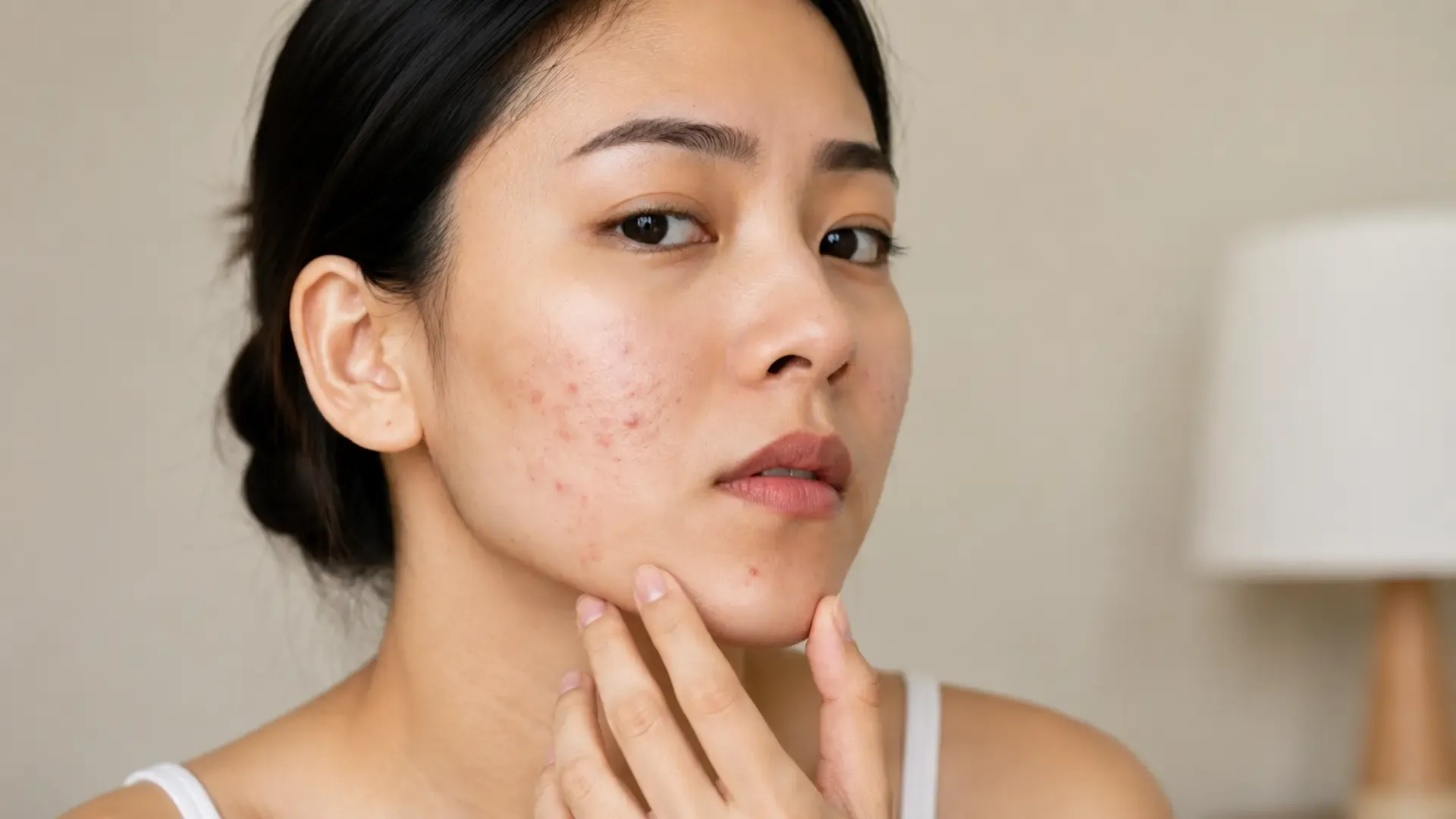
For adult acne specifically, the pattern is particularly relevant. Adult breakouts tend to cluster along the chin and jawline due to hormonal fluctuation and stress, and they are more likely to leave lasting marks because adult skin has lower baseline collagen density and slower recovery. The full biological picture of what happens after adult acne clears is explored in the guide to adult acne aftermath and skincare from Japan.
Clinical results from consistent use confirm the effectiveness of addressing both texture and acne simultaneously:
- Acne-affected area reduced to less than 30% of its original size within 20 days
- Total pimple count dropped by 40% after 30 days
- Acne bacteria counts reduced by approximately 83% with ongoing use
- Progressive improvement in surface texture and evenness as EGF-driven cell renewal replaces textured surface cells
Anti-Aging and Scar Repair: Comprehensive Benefits for Resilient Skin
The mochi skin qualities of bounce and firmness are direct expressions of collagen density and elastin integrity in the dermis. These structural proteins naturally decline from the mid-thirties onward, which is why achieving genuine mochi skin becomes progressively more dependent on active support as skin ages.
EGF and Copper Peptide together address this structural dimension comprehensively. EGF signals fibroblasts to increase their output of collagen, elastin, and glycosaminoglycans, the molecular building blocks of a plump, resilient dermis. Copper Peptide reinforces this work by providing antioxidant defense against the oxidative degradation that breaks down these structural proteins, even as they are being synthesized.
For skin carrying post-acne scarring, the same mechanisms that build mochi skin quality also progressively repair the damage. EGF accelerates the cell renewal that replaces discolored surface cells with normally-pigmented new ones. Hairen's whitening mechanism reduces melanin deposition in healing tissue, preventing new dark spots while existing ones fade. Copper Peptide stimulates collagen synthesis at the former lesion site, gradually filling atrophic indentations over time.
| Mochi Skin Quality | Bio-Peptide Mechanism |
|---|---|
| Smooth, even surface texture | EGF-accelerated keratinocyte renewal; Acnobet pore clearing |
| Plump, firm skin with volume | EGF and Copper Peptide fibroblast signaling and collagen synthesis |
| Springy elasticity and bounce | Copper Peptide elastin support and antioxidant protection |
| Even skin tone without dark spots | Hairen whitening mechanism and EGF cell turnover |
| Clear, uncongested surface | Hairen sebum regulation; Acnobet and Hairen bacteriostatic action |
Your Path to Mochi Skin: Integrating Majestic Active Repair into Your Routine
Because Majestic Active Repair Essence is a 100% Nano-Solution, the application sequence is not a preference but a functional requirement. The nano-particles penetrate the follicle opening on contact with clean, bare skin. Any prior product layer reduces this penetration efficiency and limits how much active ingredient reaches the biological targets in the dermis and sebaceous layers.
- Cleanse thoroughly morning and evening with a gentle, pH-balanced cleanser. Pat skin completely dry before applying the essence.
- Apply the essence immediately to bare, clean skin as the absolute first step in your routine. Dispense a small amount and press gently into the skin across the forehead, cheeks, chin, and jawline. Do not rub.
- Allow 30 to 60 seconds for full absorption, then continue with moisturizer and SPF in the morning.
- Use consistently twice daily. Evening application is particularly valuable as cellular repair activity peaks during the sleep cycle.
The timeline to mochi skin reflects genuine biological change rather than cosmetic effect:
Sebum regulation improves. Pore congestion begins to clear. Acne-affected area reduces to less than 30% of original size. Early texture improvement visible.
Total pimple count drops by 40%. EGF-driven cell renewal replaces damaged surface cells, producing measurably smoother, more even texture.
Bacteria counts reduce by approximately 83% with continued use. Skin begins to feel softer, more pliable, and more responsive to hydration.
EGF and Copper Peptide complete a full collagen synthesis cycle. The characteristic mochi skin bounce becomes perceptible. Post-acne marks and indentations measurably improve. Skin firmness increases.
Key Takeaways
- Mochi skin describes skin that is soft, plump, bouncy, and resilient, a quality determined by collagen density, elastin integrity, and regulated moisture in the dermis, not surface hydration alone.
- Unlike glass skin, which is primarily a visual outcome, mochi skin is a structural biological quality that builds progressively through genuine dermal repair.
- Majestic Active Repair Essence uses four bio-peptides, EGF, Copper Peptide, Acnobet, and Hairen, to address all four stages of the acne and skin damage cycle simultaneously.
- EGF accelerates epidermal cell renewal and signals fibroblasts to increase collagen output. Copper Peptide stimulates structural protein synthesis and provides antioxidant protection for newly formed collagen.
- Acnobet clears pore blockages through a peptide-fused mechanism that does not strip the barrier. Hairen regulates sebum at the glandular level and prevents post-inflammatory dark spots.
- The 100% Nano-Solution delivery system ensures all four actives reach the sebaceous glands and dermal layers where their receptor targets are located.
- Visible surface improvements develop within 20 to 30 days. Genuine mochi skin bounce and firmness develop over 60 to 90 days as collagen synthesis accumulates.
Begin Your Journey to Genuine Mochi Skin
Explore the full benefits of Majestic Active Repair Essence and optimize your routine with targeted cellular-level support. Four distinct bio-peptides combine in one high-performance formula to establish an ideal moisture balance and structural density for lasting, tangible skin bounce.
Discover Majestic Active RepairFrequently Asked Questions
Sources
- Haratake, A., et al. (2005). Epidermal Growth Factor improves skin barrier function and epidermal permeability barrier homeostasis. Journal of Investigative Dermatology, 125(4), 732-741. https://doi.org/10.1111/j.0022-202X.2005.23878.x
- Pickart, L., & Margolina, A. (2018). Regenerative and Protective Actions of the GHK-Cu Peptide in Human Skin. International Journal of Molecular Sciences, 19(7), 1987. https://doi.org/10.3390/ijms19071987
- Varani, J., et al. (2006). Decreased collagen production in chronologically aged skin. American Journal of Pathology, 168(6), 1861-1868. https://doi.org/10.2353/ajpath.2006.051302
- Schagen, S.K. (2017). Topical Peptide Treatments with Effective Anti-Aging Results. Cosmetics, 4(2), 16. https://doi.org/10.3390/cosmetics4020016
- Zouboulis, C.C. (2004). Acne and sebaceous gland function. Clinics in Dermatology, 22(5), 360-366. https://doi.org/10.1016/j.clindermatol.2004.03.004