.png%253Falt%253Dmedia%2526token%253D78c23398-5711-460d-b21c-4a7177094ae4%22%7D%2C%7B%22operation%22%3A%22resize%22%2C%22width%22%3A48%7D%2C%7B%22operation%22%3A%22output%22%2C%22format%22%3A%22webp%22%2C%22quality%22%3A75%7D%5D)
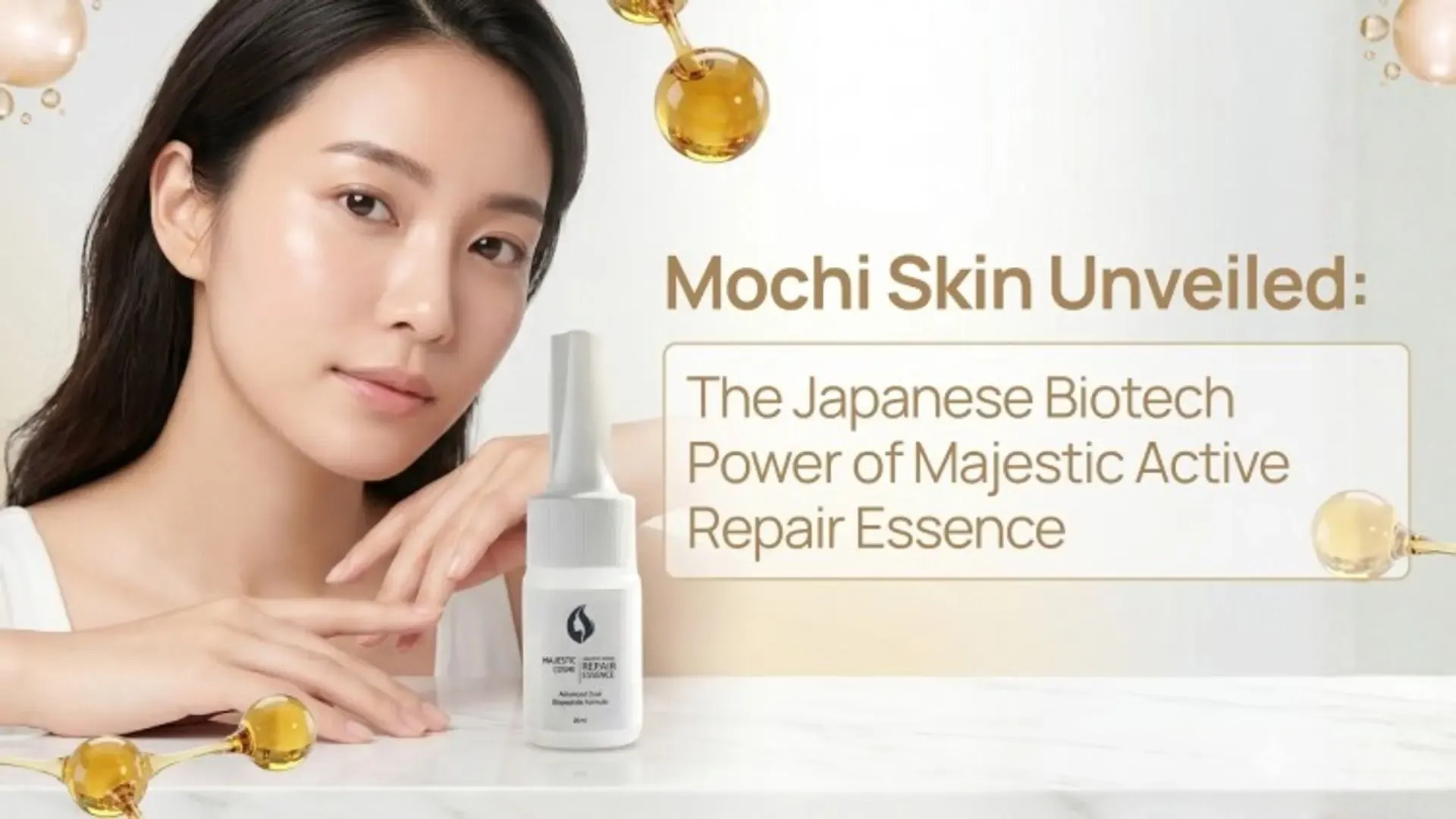
The Mochi Skin Protocol: Rebuilding Dermal Elasticity via Advanced Dual Biopeptides
There is a moment in skincare when a trend stops being a trend and becomes a standard. Mochi skin is at that moment in 2026. Named after the Japanese rice cake prized for its soft, resilient, almost spring like texture, mochi skin describes something that glass skin, for all its cultural dominance, never actually delivered: skin that behaves healthy, not just skin that photographs well.
The shift matters because it reflects a deeper change in what informed skincare consumers are asking for. They are no longer satisfied with surface luminosity achieved through layered serums and strategic lighting. They want structural elasticity. Genuine bounce. Skin that recovers, resists, and renews from within. That quality is not achievable through hydration alone. It requires cellular level intervention, and in 2026, the most precise tool available for that intervention is Japanese biotech peptide technology, specifically the dual biopeptide complex at the heart of Majestic Active Repair Essence.
Introduction
There is a moment in skincare when a trend stops being a trend and becomes a standard. Mochi skin is at that moment in 2026. Named after the Japanese rice cake prized for its soft, resilient, almost spring like texture, mochi skin describes something that glass skin, for all its cultural dominance, never actually delivered: skin that behaves healthy, not just skin that photographs well.
The shift matters because it reflects a deeper change in what informed skincare consumers are asking for. They are no longer satisfied with surface luminosity achieved through layered serums and strategic lighting. They want structural elasticity. Genuine bounce. Skin that recovers, resists, and renews from within. That quality is not achievable through hydration alone. It requires cellular level intervention, and in 2026, the most precise tool available for that intervention is Japanese biotech peptide technology, specifically the dual biopeptide complex at the heart of Majestic Active Repair Essence.
From Glass Skin to Mochi Skin: The 2026 Skincare Revolution
Glass skin captured a generation of skincare enthusiasts with its promise of poreless, reflective perfection. The aesthetic was compelling. The biology behind achieving it, however, was largely cosmetic: surface level hydration, strategic layering, and the right light conditions could produce the look without any meaningful change to skin structure.
Mochi skin asks a different question. Instead of how does my skin look, it asks how does my skin behave. The distinction is fundamental.
| Quality | Glass Skin | Mochi Skin |
|---|---|---|
| Primary goal | Reflective surface luminosity | Structural bounce and resilience |
| Mechanism | Surface hydration and light refraction | Collagen synthesis, elastin integrity, deep hydration |
| Durability | Fades within hours without product | Improves cumulatively with consistent treatment |
| Skin health indicator | Cosmetic appearance only | Reflects genuine dermal density and elasticity |
| Achieved by | Layered toners and surface humectants | Cellular signaling through advanced peptide technology |
The move from glass skin to mochi skin represents the skincare industry finally aligning consumer aspiration with biological reality. You cannot layer your way to elasticity. You cannot hydrate your way to bounce. These qualities live in the dermis, not on the surface, and reaching them requires a formulation approach built for cellular communication rather than cosmetic coating. For a full comparison of how mochi skin principles apply across different skin concerns, the detailed breakdown in Mochi Skin vs Glass Skin in 2026 provides additional context on why this shift is more than aesthetic.
The Science of Bounce: How Dual Biopeptides (Acnobet, Hairen) Transform Skin
Mochi skin defining characteristic is its physical resilience: the way skin springs back when pressed, maintains volume across expressions, and retains its structural integrity throughout the day. This quality is determined almost entirely by what is happening in the dermis: the density of the collagen network, the integrity of elastin fibers, and the hydration capacity of the extracellular matrix. Majestic Active Repair Essence addresses all three through its dual biopeptide complex, built around two clinically active peptide ingredients: Acnobet and Hairen.
Acnobet: The Collagen Architecture Activator
Acnobet is a signal peptide engineered to bind to receptors on dermal fibroblasts, the cells responsible for producing the structural proteins that give skin its firmness and density. By activating fibroblast output, Acnobet upregulates collagen type I and III synthesis, directly increasing the density of the collagen network that determines whether skin feels taut and resilient or loose and depleted.
Hairen: The Elasticity and Barrier Integrator
Hairen works in complementary fashion, targeting the elastin and barrier components of skin resilience. Elastin is the protein responsible for skin ability to return to its original position after being stretched. As elastin integrity declines, skin loses its spring quality. Hairen mechanism supports elastin network maintenance while simultaneously reinforcing barrier lipid organization, the structural arrangement of ceramides and fatty acids that determines how effectively the skin retains moisture.
Why Dual Peptide Technology Outperforms Single Peptide Formulas
The pairing of Acnobet and Hairen reflects a clinical understanding that mochi skin quality depends on multiple structural variables operating together. Increasing collagen synthesis without maintaining elastin integrity produces firmness without flexibility. Supporting elastin without building collagen density produces bounce without substance. The dual biopeptide approach addresses both simultaneously, producing a net structural improvement that neither peptide could achieve independently.
Beyond Surface Shine: Achieving True Regenerative Elasticity with Japanese Peptides
Regenerative skincare is a term used with increasing frequency in 2026, but it has a specific meaning. A regenerative approach does not simply slow the visible signs of aging. It actively restores the biological conditions under which younger behaving skin is possible. Japanese biotech peptide formulation is particularly well suited to this goal because it operates through signaling rather than supplementation.
The distinction has significant implications for the quality and durability of results:
- Endogenous collagen produced in response to Acnobet signaling integrates into the existing extracellular matrix, contributing to structural density that persists and compounds.
- Elastin integrity maintained through Hairen mechanism produces a genuine improvement in skin mechanical behavior: the spring quality that makes mochi skin feel categorically different.
- Barrier reinforcement improves the skin ability to retain the hydration that gives mochi skin its characteristic plumpness, producing results that hold across different environments.
For context on how this cellular approach compares to procedural alternatives, the analysis in Stem Cell vs Botox: The Ultimate Guide to Informed Skincare Choices examines where biotech formulation fits alongside professional interventions.
Your Mochi Skin Ritual: Integrating Majestic Active Repair Essence for Lasting Results
Achieving mochi skin quality through dual biopeptide technology requires consistent application and intelligent sequencing. The following ritual is designed to maximize the cellular activity of Acnobet and Hairen.
Morning Ritual
- Gentle cleanser: Use a low surfactant, pH balanced formula. Barrier disruption at this step undermines everything that follows.
- Hydrating toner or mist: Apply to a slightly damp face before the essence. Water soluble peptides penetrate more consistently into a hydrated skin surface.
- Majestic Active Repair Essence: Apply three to four drops. Pat gently rather than rubbing. Allow 60 to 90 seconds for absorption. This absorption window is when the peptide signals are most actively being received.
- Moisturizer with ceramides: Seal the peptide layer and reinforce barrier lipid organization.
- Broad spectrum SPF 30 or higher: UV exposure activates enzymes that degrade collagen and elastin. Daily SPF is not optional.
Evening Ritual
- Double cleanse: An oil based first cleanse followed by a gentle water based cleanser removes sunscreen and environmental residue.
- Majestic Active Repair Essence: Evening application takes advantage of the skin natural overnight repair cycle, during which cellular activity and protein synthesis peak.
- Richer barrier moisturizer: A slightly more occlusive formula locks in moisture through the night.
Frequently Asked Questions
Majestic Active Repair Essence
Japanese dual biopeptide technology with Acnobet and Hairen. Clinically formulated for the bounce, resilience, and regenerative elasticity that defines mochi skin in 2026.
Shop Majestic Active Repair Essence NowSources
- Schagen, S. K. (2017). "Topical Peptide Treatments with Effective Anti-Aging Results." Cosmetics.
- Gorouhi, F., & Maibach, H. I. (2009). "Role of topical peptides in preventing or treating aged skin." International Journal of Cosmetic Science.
- Errante, F., et al. (2020). "Cosmeceutical Peptides in the Framework of Wellness Economy." Frontiers in Chemistry.
- Varani, J., et al. (2006). "Decreased collagen production in chronologically aged skin." American Journal of Pathology.
- Baumann, L. (2018). "How to use the Cosmeceutical Approach in Anti-Aging Medicine." Clinics in Dermatology.