.png%253Falt%253Dmedia%2526token%253D78c23398-5711-460d-b21c-4a7177094ae4%22%7D%2C%7B%22operation%22%3A%22resize%22%2C%22width%22%3A48%7D%2C%7B%22operation%22%3A%22output%22%2C%22format%22%3A%22webp%22%2C%22quality%22%3A75%7D%5D)
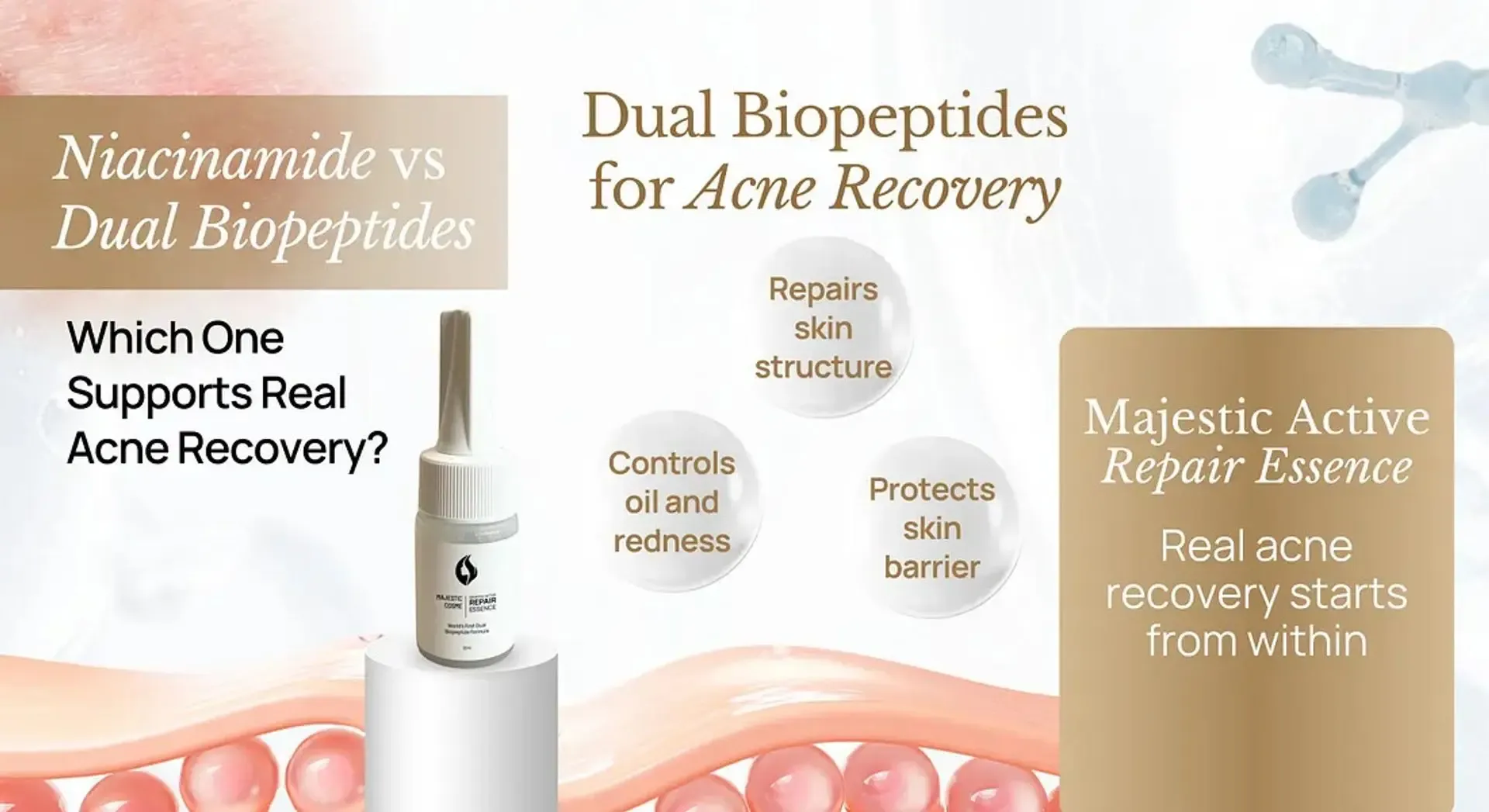
Niacinamide vs. Dual Biopeptides: Surface Management vs. Structural Acne Recovery
Niacinamide has become ubiquitous in acne-focused skincare, praised for its ability to manage oil production, reduce redness, and calm surface inflammation. While these benefits prove valuable for symptom management, they address acne as a surface problem rather than supporting the deeper recovery that prevents recurrence and eliminates lasting damage. The distinction between managing symptoms and facilitating genuine tissue repair becomes crucial for those seeking not just fewer breakouts but healthier, more resilient skin that resists future acne formation.
Advanced skincare from japan has pioneered a different approach through dual biopeptide technology, exemplified by Majestic Active Repair Essence. Rather than simply controlling visible symptoms, this formulation works at the cellular level to repair damaged skin architecture, accelerate regenerative processes, and strengthen barrier function. By addressing the structural compromises that perpetuate acne cycles, dual biopeptides support authentic recovery that transforms acne-prone skin into healthy, resilient tissue capable of maintaining clarity long-term.
Introduction
Niacinamide has become ubiquitous in acne-focused skincare, praised for its ability to manage oil production, reduce redness, and calm surface inflammation. While these benefits prove valuable for symptom management, they address acne as a surface problem rather than supporting the deeper recovery that prevents recurrence and eliminates lasting damage. The distinction between managing symptoms and facilitating genuine tissue repair becomes crucial for those seeking not just fewer breakouts but healthier, more resilient skin that resists future acne formation.
Advanced skincare from japan has pioneered a different approach through dual biopeptide technology, exemplified by Majestic Active Repair Essence. Rather than simply controlling visible symptoms, this formulation works at the cellular level to repair damaged skin architecture, accelerate regenerative processes, and strengthen barrier function. By addressing the structural compromises that perpetuate acne cycles, dual biopeptides support authentic recovery that transforms acne-prone skin into healthy, resilient tissue capable of maintaining clarity long-term.
Understanding Dual Biopeptide Technology
The dual biopeptide system in Majestic Active Repair Essence combines Acnobet and Hairen, two Japan-first innovations that represent significant advances in acne treatment methodology. Unlike conventional actives that work through single mechanisms, these biopeptides function as sophisticated signaling molecules that instruct skin cells to execute multiple coordinated responses simultaneously.
Acnobet addresses the fundamental issue of pore congestion not through aggressive exfoliation but by combining salicylic acid derivatives with peptide technology. This fusion creates a keratolytic agent that dissolves the keratinized material blocking pores while simultaneously delivering peptide signals that regulate keratinization processes. The result is pore clearance without the barrier disruption and compensatory oil production that harsh exfoliants trigger. By stopping oil accumulation and unclogging pores at the source, Acnobet creates an environment where acne-causing bacteria cannot thrive.
Hairen complements this by fusing azelaic acid with copper peptides to create a multifunctional compound that regulates sebum production, eliminates Cutibacterium acnes bacteria, and prevents post-inflammatory hyperpigmentation through a single optimized molecule. Rather than simply absorbing surface oil or applying harsh antimicrobials, Hairen modulates sebum synthesis at the cellular level while its copper peptide component stimulates the repair processes that prevent scarring. This dual action kills the bacteria responsible for inflammatory acne while ensuring that healed lesions leave minimal trace.
The regenerative components, EGF and Copper Peptide, complete the system by actively repairing the structural damage that acne inflicts. EGF accelerates cellular turnover, shortening the visible duration of breakouts while ensuring newly formed tissue develops properly rather than emerging compromised. Copper Peptide stimulates collagen and elastin synthesis in deeper layers, repairing the indentations and textural irregularities that create lasting reminders of past inflammation. Together, these four components address every stage of acne pathology while simultaneously rebuilding healthy tissue architecture.
Surface Management vs Structural Recovery
| Approach | Primary Mechanism | Scope of Action | Long-Term Impact |
|---|---|---|---|
| Niacinamide | Reduces sebum, calms inflammation, brightens | Surface and epidermis only | Symptom control; requires continuous use |
| Salicylic Acid Alone | Exfoliates pore lining, mild antibacterial | Pore level, no repair function | Clears congestion but may compromise barrier |
| Benzoyl Peroxide | Kills bacteria through oxidation | Bacterial target only | Controls active breakouts; can cause dryness |
| Dual Biopeptides | Regulates sebum, clears pores, eliminates bacteria, repairs tissue | Epidermis and dermis; comprehensive | Structural repair creates lasting resilience |
Why Dual Biopeptides Deliver Superior Recovery
The distinction between niacinamide's surface management and dual biopeptide recovery becomes clear when examining outcomes beyond simple breakout frequency. Niacinamide effectively reduces visible inflammation and helps regulate oil production, making it valuable for immediate symptom relief. However, its mechanisms operate primarily at the epidermal level and do not address the dermal damage, impaired healing responses, or structural weaknesses that perpetuate acne vulnerability.
The dual biopeptide approach works differently by targeting the underlying conditions that allow acne to persist. The nano-encapsulation technology employed in the formulation ensures that bioactive peptides penetrate to dermal layers where they can influence fibroblast activity, collagen synthesis, and tissue remodeling. This depth of action proves essential for genuine recovery, as surface treatments cannot repair the structural compromises created by repeated inflammatory episodes.
Clinical observations demonstrate this difference in practice. Users of niacinamide-based products typically report reduced oiliness and calmer-looking skin within days to weeks, benefits that persist only with continued application. Users of Majestic Active Repair Essence initially experience similar surface improvements but then notice progressive changes that indicate structural healing: reduced pore size that persists even between applications, decreased frequency of new breakouts as skin becomes genuinely less acne-prone rather than simply suppressed, and marked reduction in post-inflammatory hyperpigmentation and scarring as the regenerative peptides ensure clean healing throughout treatment.
The formulation reflects principles common in skincare from japan, where long-term skin health takes precedence over quick symptom suppression. The precision manufacturing ensures consistent peptide concentrations and stability, while the synergistic combination allows moderate doses of multiple actives to achieve superior results compared to high doses of isolated ingredients. This philosophy recognizes that sustainable acne resolution requires rebuilding healthy tissue rather than continuously fighting symptoms. The essence integrates seamlessly into comprehensive regenerative protocols designed to support overall skin resilience.
Implementing a Recovery-Focused Routine
Transitioning from symptom management to genuine recovery requires adjusting both product choices and expectations. Apply Majestic Active Repair Essence twice daily to freshly cleansed, slightly damp skin. The aqueous environment enhances peptide penetration while the nano-encapsulation protects bioactive ingredients during application. Dispense two to three drops onto fingertips and press gently into the entire face and neck, not just areas with active breakouts, as the regenerative benefits support overall skin health.
Allow 30 to 60 seconds for complete absorption before applying subsequent products. The lightweight texture absorbs rapidly without leaving residue, making it compatible with other treatments. Morning application should conclude with broad-spectrum sun protection rated SPF 30 or higher, as the accelerated cellular renewal increases the importance of protecting newly formed tissue from UV damage.
Evening application proves particularly valuable, as the peptides work synergistically with the skin's natural repair mechanisms that peak during sleep. Pair with gentle cleansing that removes impurities without stripping protective lipids, and follow with appropriate moisturization to support barrier function. For comprehensive transformation, explore the complete advanced skincare collection designed around regenerative principles.
Results manifest progressively as tissue health improves. Initial improvements in oil balance and comfort typically appear within one to two weeks. Reduction in new breakout frequency becomes noticeable by week three to four as sebum regulation normalizes and pore function optimizes. The most significant distinction from niacinamide emerges between weeks six to twelve, when the regenerative effects become evident: improved skin texture as collagen remodeling progresses, reduced appearance of existing scarring and hyperpigmentation, and increased resilience where skin becomes genuinely less reactive and acne-prone rather than simply appearing calmer while actively suppressed.
Rebuild Matrix Density and Elasticity
Go beyond surface oil suppression. Restore, clear, and remodel post-inflammatory compromised skin via Majestic Active Repair Essence.
Discover Majestic Active Repair EssenceFrequently Asked Questions
Clinical Sources
- Draelos, Z. D., Matsubara, A., & Smiles, K. (2006). The effect of 2% niacinamide on facial sebum production. Journal of Cosmetic and Laser Therapy, 8(2), 96-101.
- Gehring, W. (2004). Nicotinic acid/niacinamide and the skin. Journal of Cosmetic Dermatology, 3(2), 88-93.
- Pickart, L., & Margolina, A. (2018). Regenerative and protective actions of the GHK-Cu peptide in the light of the new gene data. International Journal of Molecular Sciences, 19(7), 1987.
- Gorouhi, F., & Maibach, H. I. (2009). Role of topical peptides in preventing or treating aged skin. International Journal of Cosmetic Science, 31(5), 327-345.
- Ganceviciene, R., et al. (2012). Skin anti-aging strategies. Dermato-Endocrinology, 4(3), 308-319.