.png%253Falt%253Dmedia%2526token%253D78c23398-5711-460d-b21c-4a7177094ae4%22%7D%2C%7B%22operation%22%3A%22resize%22%2C%22width%22%3A48%7D%2C%7B%22operation%22%3A%22output%22%2C%22format%22%3A%22webp%22%2C%22quality%22%3A75%7D%5D)
Peptide Signaling: Restoring Cellular Communication for Dermal Repair
The ability of skin to repair itself diminishes with age, environmental exposure, and cumulative cellular stress. While the body naturally produces signaling molecules that trigger repair processes, this communication system becomes less efficient over time. The result is slower healing, reduced collagen production, and visible changes in texture, firmness, and resilience.
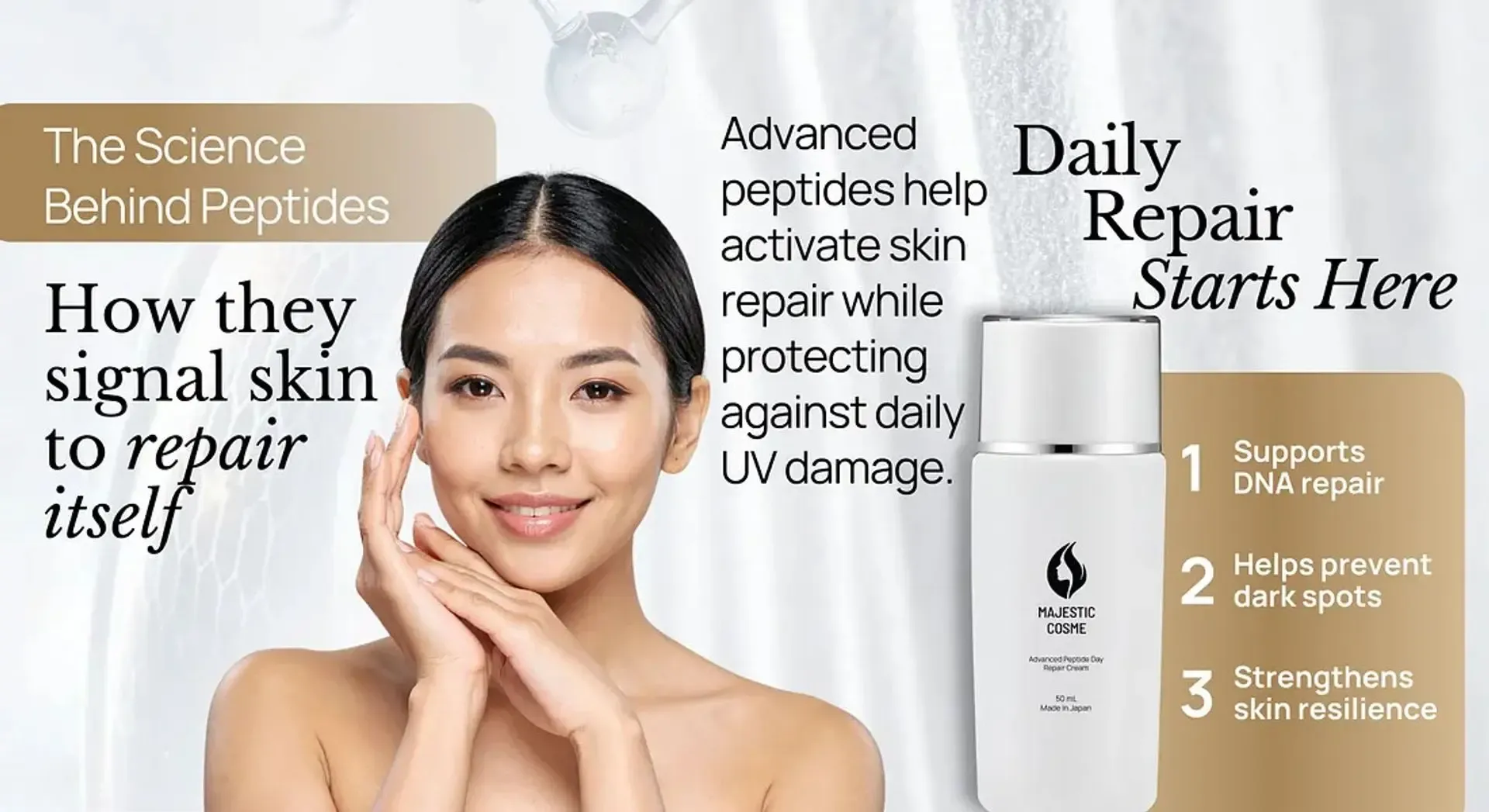
Peptide technology offers a scientifically grounded approach to restoring this cellular dialogue. These short chains of amino acids function as messengers, instructing skin cells to initiate specific biological responses including collagen synthesis, barrier reinforcement, and inflammation modulation. Unlike topical ingredients that simply hydrate or protect the surface, peptides work at the cellular level to influence how skin functions and repairs itself.
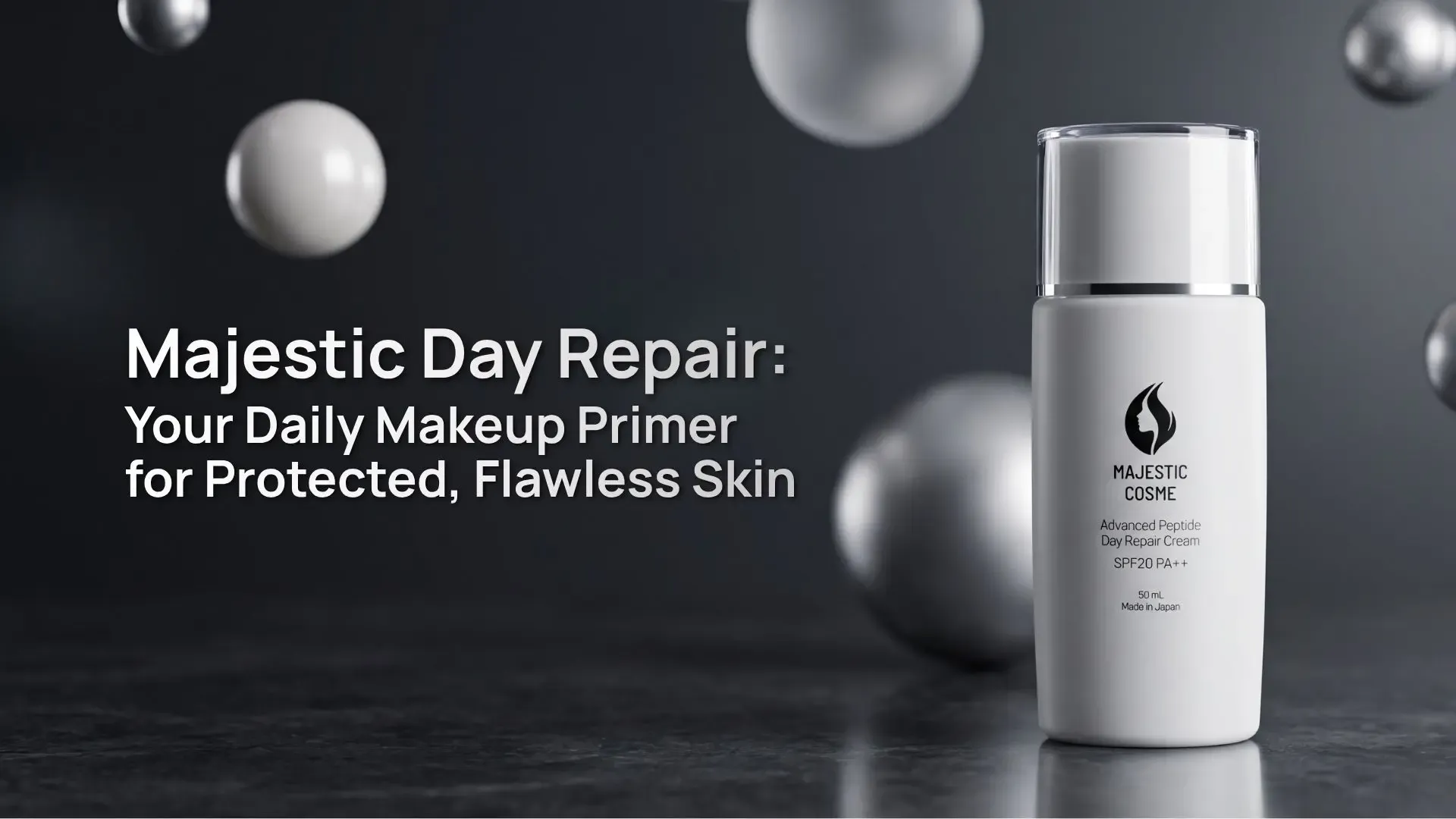
Majestic Day Repair incorporates advanced skincare peptide complexes designed to support skin's natural repair mechanisms during daytime hours when environmental stressors are most intense. By combining these signaling molecules with mineral UV protection and hydration support, the formulation addresses both immediate defense needs and long-term regenerative capacity. Understanding how peptides communicate with skin cells illuminates why this approach represents a meaningful evolution in daily skin care strategy.
Introduction
The ability of skin to repair itself diminishes with age, environmental exposure, and cumulative cellular stress. While the body naturally produces signaling molecules that trigger repair processes, this communication system becomes less efficient over time. The result is slower healing, reduced collagen production, and visible changes in texture, firmness, and resilience.
Peptide technology offers a scientifically grounded approach to restoring this cellular dialogue. These short chains of amino acids function as messengers, instructing skin cells to initiate specific biological responses including collagen synthesis, barrier reinforcement, and inflammation modulation. Unlike topical ingredients that simply hydrate or protect the surface, peptides work at the cellular level to influence how skin functions and repairs itself.
Majestic Day Repair incorporates advanced skincare peptide complexes designed to support skin's natural repair mechanisms during daytime hours when environmental stressors are most intense. By combining these signaling molecules with mineral UV protection and hydration support, the formulation addresses both immediate defense needs and long-term regenerative capacity. Understanding how peptides communicate with skin cells illuminates why this approach represents a meaningful evolution in daily skin care strategy.
How Peptides Signal Cellular Repair
Peptides are composed of amino acids linked in specific sequences, with each arrangement determining the biological message it conveys. When applied topically, certain peptides can penetrate the stratum corneum and interact with receptors on fibroblasts, the cells responsible for producing collagen, elastin, and other structural proteins that maintain skin integrity.
This interaction triggers a cascade of cellular activities. Signal peptides, for instance, mimic the body's natural communication molecules that activate when tissue damage occurs. By presenting these signals to fibroblasts, the peptides essentially inform cells that repair is needed, prompting increased production of collagen and glycosaminoglycans that support dermal structure and hydration.
Carrier peptides facilitate the delivery of essential minerals like copper and manganese to enzymes involved in collagen synthesis and wound healing. These trace elements serve as cofactors that enable enzymatic processes critical to tissue repair. By stabilizing and transporting these minerals to where they are needed, carrier peptides enhance the efficiency of natural regenerative processes.
Neurotransmitter-inhibiting peptides work through a different mechanism, reducing the release of chemicals that cause muscle contraction. While this application is often associated with expression line reduction, the relaxation of facial muscles can also decrease mechanical stress on skin, allowing repair processes to proceed more efficiently.
The sophistication of peptide technology lies in its specificity. Different peptide sequences target distinct cellular pathways, allowing formulations to address multiple aspects of skin aging and repair simultaneously. This targeted approach aligns with principles of regenerative skincare that prioritize supporting the skin's own repair capabilities rather than simply masking visible concerns.
Comparing Peptides to Other Active Ingredients
The landscape of anti-aging and repair-focused skincare includes numerous active ingredients, each working through distinct mechanisms. Understanding ini differences helps clarify why peptides occupy a unique position in comprehensive skin health strategies.
Retinoids, derivatives of vitamin A, accelerate cell turnover and stimulate collagen production by binding to nuclear receptors that regulate gene expression. While highly effective, they require evening application due to photosensitivity and can cause irritation, dryness, and increased sun sensitivity during the adjustment period.
Vitamin C functions primarily as an antioxidant while also serving as a cofactor for enzymes involved in collagen synthesis. However, it oxidizes readily when exposed to light and air, requiring careful formulation and storage. Its acidic nature can also irritate sensitive skin.
PDRN (polydeoxyribonucleotide) supports tissue regeneration through nucleotide delivery that promotes cellular metabolism and wound healing. It excels in targeted treatment of specific concerns but works best in concentrated serum formats rather than daily protective formulations.
| Active Ingredient | Primary Mechanism | Best Application Time | Key Consideration |
|---|---|---|---|
| Retinoids | Gene expression modulation | Evening only | Photosensitive, potential irritation |
| Vitamin C | Antioxidant, collagen cofactor | Morning preferred | Stability concerns, pH sensitivity |
| PDRN | Nucleotide delivery | Evening preferred | Best for targeted treatment |
| Peptides | Cellular signaling | Flexible, daytime ideal | Photostable, well-tolerated |
Peptides distinguish themselves through stability and tolerance. Unlike retinoids, they do not cause photosensitivity. Unlike vitamin C, they remain stable in various formulation environments. This makes them particularly suitable for daytime products that must perform under UV exposure and environmental stress. When integrated with skincare from japan formulation principles, peptides become foundational to products that protect while actively supporting repair.
Why Peptide-Based Formulations Excel in Daily Care
The integration of peptides into daily protective formulations represents a strategic approach to skin health maintenance. Rather than separating protection from treatment, this method recognizes that skin faces its greatest challenges during daytime hours when UV radiation, pollution, and oxidative stress are most intense.
Majestic Day Repair exemplifies this integrated approach by combining peptide technology with mineral UV filters and multi-level hydration. The peptides work continuously throughout the day, signaling repair processes even as the mineral filters deflect harmful radiation. This simultaneous defense and regeneration prevents damage accumulation while supporting the cellular activities that maintain skin structure.
The peptide complex specifically targets collagen synthesis, barrier reinforcement, and inflammation control. By addressing these three pillars of skin health, the formulation supports not just superficial appearance but fundamental tissue quality. Improved collagen networks enhance firmness and reduce fine lines. Stronger barriers retain moisture more effectively and resist irritant penetration.
The formulation reflects japanese skincare products philosophy where each ingredient serves multiple purposes within a harmonious system. Hyaluronic acid in various molecular weights provides immediate surface hydration while deeper penetration supports dermal plumpness. Antioxidants neutralize free radicals that would otherwise interfere with peptide signaling and cellular repair processes. The mineral UV filters prevent new photodamage that would counteract the peptides' regenerative effects.
How to Use for Maximum Results
Apply Majestic Day Repair each morning as the final step in your skincare routine. If using additional serums or treatments, allow them to absorb for one to two minutes before application. This layering sequence ensures each product can penetrate effectively without interference.
Dispense approximately half a teaspoon for face and neck, spreading evenly across all areas that will receive daylight exposure. The peptides require consistent contact with skin to maintain signaling activity, so thorough, even application matters more than the exact quantity.
Peptide technology works cumulatively rather than providing instant transformation. The signaling process initiates immediately, but visible results from increased collagen production and barrier reinforcement develop over weeks as cellular changes accumulate. Consistency proves more important than intensity when working with ingredients that support rather than force cellular processes.
Pairing peptide-based daytime protection with appropriate evening treatments maximizes overall results. While peptides support repair during vulnerable daytime hours, nighttime presents opportunities for deeper intervention through advanced skincare treatments that would be photosensitive or incompatible with sun exposure. This day-night strategy addresses skin health comprehensively across the full circadian cycle.
Restore Your Skin's Native Dialogue
Experience the future of proactive daytime rejuvenation. Secure, balance, and repair the skin matrix seamlessly via Majestic Day Repair.
Discover Majestic Day RepairFrequently Asked Questions
Sources
- Gorouhi F, Maibach HI. "Role of topical peptides in preventing or treating aged skin." Int J Cosmet Sci. 2009;31(5):327-345.
- Lupo MP, Cole AL. "Cosmeceutical peptides." Dermatol Ther. 2007;20(5):343-349.
- Schagen SK. "Topical peptide treatments with effective anti-aging results." Cosmetics. 2017;4(2):16.
- Robinson LR, et al. "Topical palmitoyl pentapeptide provides improvement in photoaged human facial skin." Int J Cosmet Sci. 2005;27(3):155-160.
- Katayama K, et al. "A pentapeptide from type I procollagen promotes extracellular matrix production." J Biol Chem. 1993;268(14):9941-9944.