.png%253Falt%253Dmedia%2526token%253D78c23398-5711-460d-b21c-4a7177094ae4%22%7D%2C%7B%22operation%22%3A%22resize%22%2C%22width%22%3A48%7D%2C%7B%22operation%22%3A%22output%22%2C%22format%22%3A%22webp%22%2C%22quality%22%3A75%7D%5D)
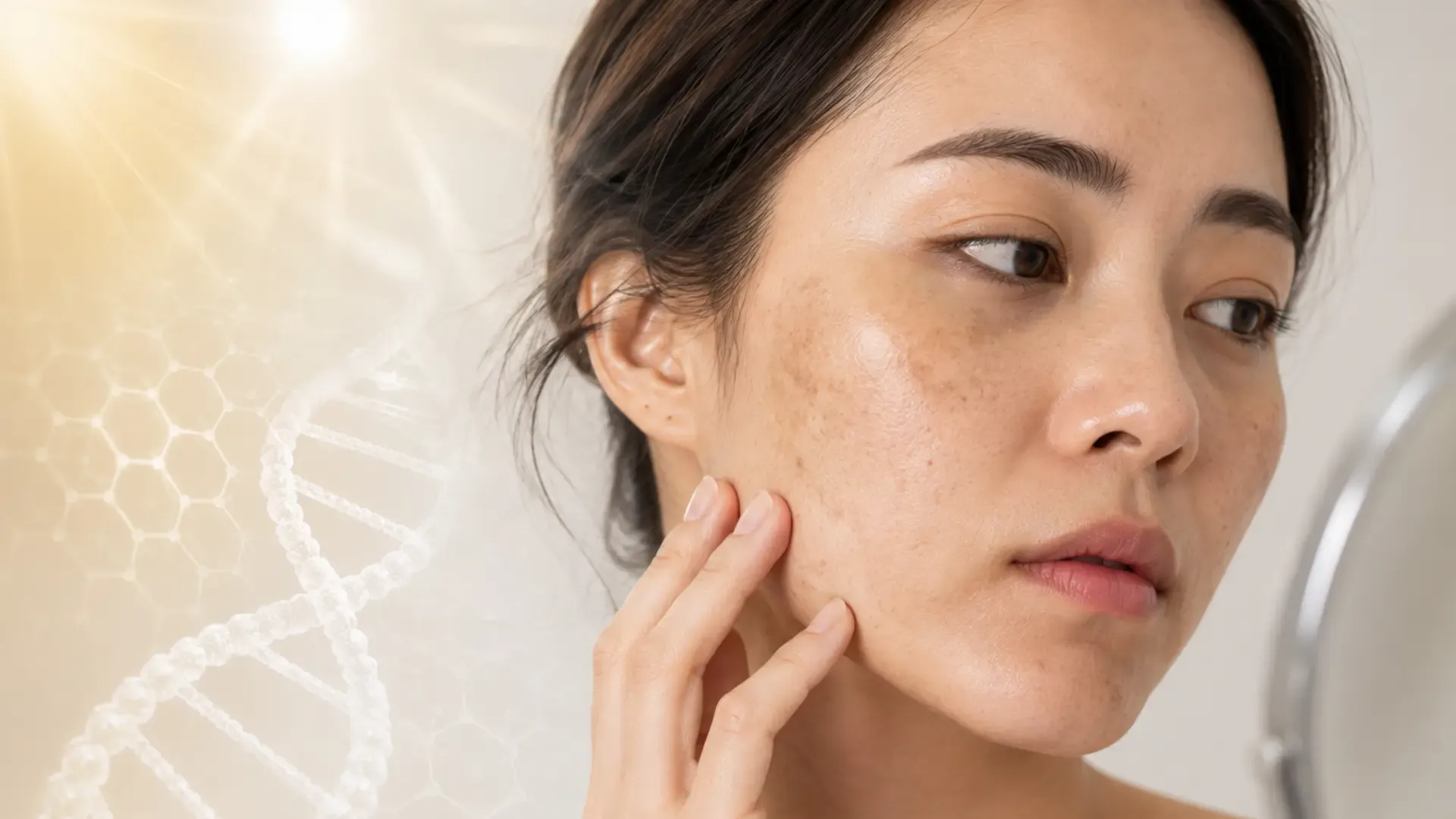
Sun Does More Than Burn, It Damages Your Skin's DNA.
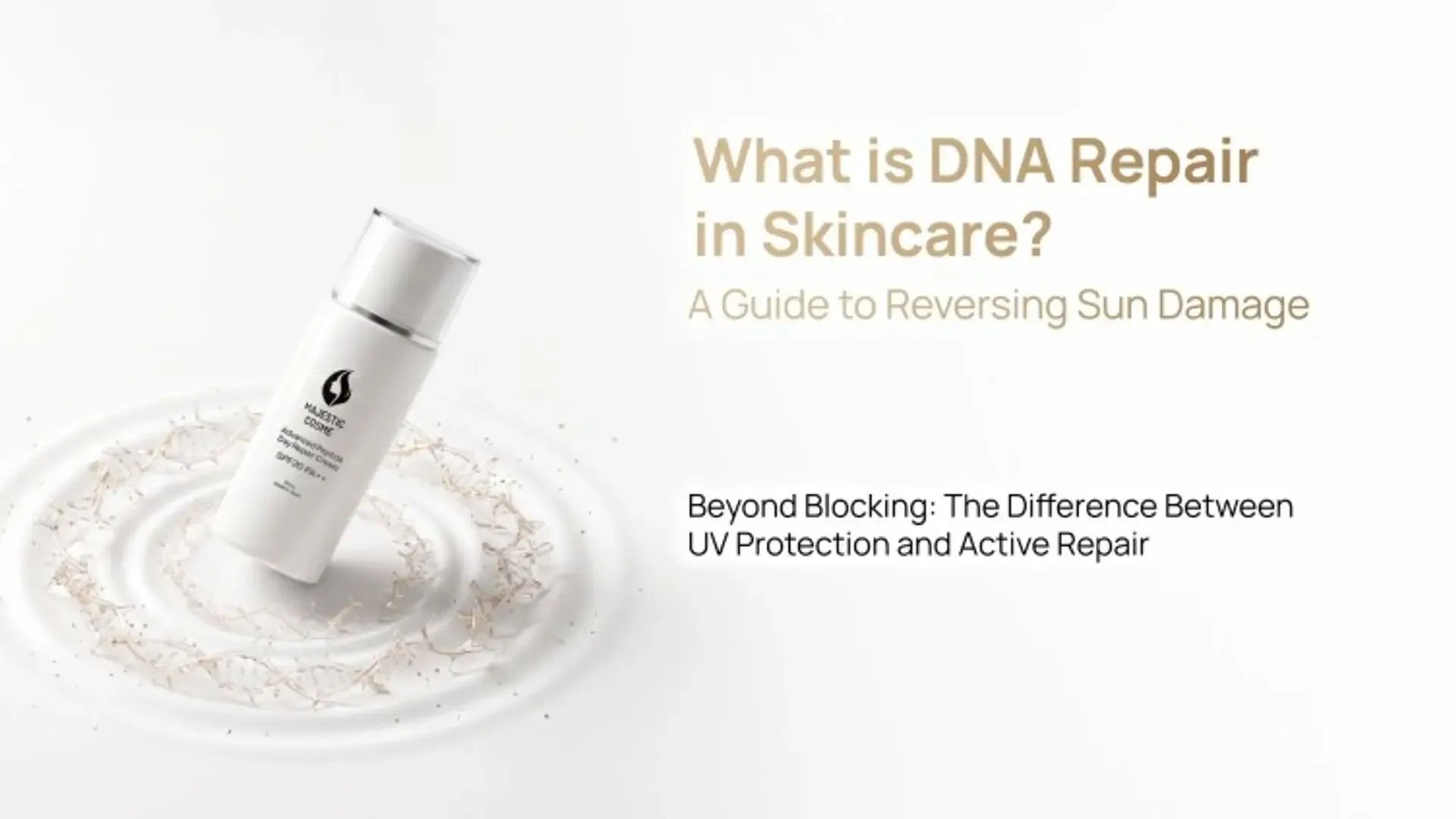
DNA repair in skincare refers to the process of supporting the skin's own cellular mechanisms to identify, correct, and clear the structural damage that UV radiation causes to DNA and proteins within skin cells. It is not a metaphor for general skin recovery. It is a specific biological function, well-documented in photobiology research, that can be supported and enhanced through topically applied bioactive compounds.
The relevance of this function increases significantly with age. Younger skin repairs UV-induced cellular damage quickly and efficiently. As the efficiency of these repair systems declines, unrepaired damage accumulates, and the visible consequences, wrinkles, loss of firmness, age spots, and uneven tone, appear and worsen more rapidly with each passing year of UV exposure.
Understanding what UV damage actually does inside a skin cell, and how the repair process works, is the foundation for understanding why active DNA repair technology represents a meaningful advance over daily UV protection alone.
Why 80% of Skin Aging Is Caused by the Sun
Photo-aging is the clinical term for premature skin aging caused by cumulative UV radiation exposure. It is distinguished from intrinsic aging, which occurs as a natural consequence of biological time, by both its mechanisms and its preventability. Intrinsic aging proceeds at a rate determined largely by genetics. Photo-aging is driven by an external, cumulative, and largely controllable input: daily UV exposure.
A 2013 study published in Clinical, Cosmetic and Investigational Dermatology estimated that approximately 80 percent of visible facial aging is attributable to UV radiation. This includes the fine lines that radiate outward from the corners of the eyes, the uneven pigmentation that concentrates on the cheeks and forehead, the loss of density and firmness in the mid-face, and the texture changes that make skin appear rougher over time. All of these are substantially driven by the same underlying process: UV-induced cellular damage that has accumulated across decades of daily exposure.
The accumulation is not dramatic. It does not announce itself. On any given day, the UV received during a morning commute, an hour near a window, or a walk to lunch is negligible in isolation. Across years and decades, the sum of those negligible exposures is what creates the difference between skin that ages in line with its biological clock and skin that ages significantly ahead of it.
This is why the daily morning routine matters more for long-term skin appearance than any other single skincare decision. And it is why what that daily product does, or does not do, at the cellular level determines outcomes that are not visible for years.
Deeper Than a Sunburn: How UV Rays Damage Your Cellular DNA
The most visible effect of UV exposure is a sunburn. But the cellular damage that UV causes extends far below the level of visible redness, into the molecular architecture of skin cells themselves.
When UV photons penetrate skin and reach a cell, they interact directly with the DNA double helix. This interaction creates structural distortions called cyclobutane pyrimidine dimers (CPDs), points where adjacent bases in the DNA strand fuse together abnormally. CPDs distort the DNA structure, disrupting the normal reading and replication of the genetic code. If enough of these accumulate without correction, the cell either dies, malfunctions, or replicates with errors.
UV radiation also damages the proteins within skin cells. Heat, UV energy, and oxidative stress from UV-generated free radicals cause proteins to misfold, losing the three-dimensional structure that allows them to perform their biological functions. In collagen-producing fibroblasts, this protein damage translates directly to reduced collagen synthesis and accelerated structural breakdown.
Simultaneously, UV exposure triggers the release of alpha-MSH, a hormone that commands melanocytes to produce melanin in response to cellular stress. Under chronic daily UV exposure, this command is issued repeatedly in the same skin areas, producing the concentrated melanin deposits visible as age spots and hyperpigmentation.
What connects all of these consequences is unrepaired cellular damage. The skin has systems designed to correct each of these problems. When those systems work efficiently, the consequences are minimized. When they are overwhelmed or degraded by age and accumulated UV burden, the consequences become permanent and visible.
Beyond Blocking: The Difference Between UV Protection and Active Repair
UV protection addresses the beginning of the damage chain. Active DNA repair addresses what happens after UV exposure has already caused cellular damage, including both current exposure and the backlog accumulated over years.
Standard sunscreen, whether chemical or mineral, works at the skin surface to reduce how much UV reaches the cellular layers below. This is valuable and necessary. But it is a one-dimensional strategy with a ceiling: no sunscreen provides 100 percent UV interception, and no sunscreen addresses the existing cellular damage that continues to drive the visible consequences of photo-aging even on days when UV exposure is minimal.
Active repair works at a different point in the cascade entirely. Rather than reducing the input, it supports the biological systems that process and correct the damage that occurs despite the best UV protection in place. These are the same endogenous systems the skin has always used, but whose efficiency has declined through age and through the very UV stress they are designed to manage.
The combination of these two strategies addresses the full scope of the photo-aging problem: UV protection limits new damage while active repair support helps the skin process the existing cellular damage backlog that drives ongoing visible aging.
For a detailed look at how this combined approach applies to age spot prevention specifically, this guide on daytime DNA repair and age spots explains how blocking, signaling interception, and cellular repair address dark spot formation from multiple angles simultaneously.
Introducing HSP: Your Skin's Natural Protein Repair Crew
Heat Shock Proteins, known in scientific literature as HSPs, are a family of proteins produced by virtually all living cells in response to environmental stress. The name comes from their original discovery in cells exposed to elevated temperatures, but they are activated by a wide range of stressors including UV radiation, oxidative damage, chemical stress, and mechanical injury.
In the context of UV-stressed skin, HSPs function as an intelligent molecular repair crew. Here is how the process works:
- UV radiation causes proteins within skin cells to misfold, losing their functional three-dimensional structure. These misfolded proteins are non-functional and potentially harmful to the cell if they accumulate.
- HSPs detect these misfolded proteins through specific molecular recognition sequences. They bind to the damaged protein, effectively catching it before it can aggregate with other damaged proteins or trigger cell death.
- Once bound, HSPs attempt to guide the misfolded protein back to its correct functional structure through a process called refolding. If refolding is not possible, HSPs route the irreparably damaged protein toward the cell's degradation systems for clearance, preventing it from causing further dysfunction.
- HSPs simultaneously support the integrity of the DNA repair systems within the cell, helping to ensure that the nucleotide excision repair process that corrects CPD distortions in the DNA strand operates as efficiently as possible.
HSP70 is the primary generalist chaperone in this process, handling a broad range of damaged protein clients across different cell types. HSP27 plays a more specific role in maintaining cytoskeletal structure under stress and preventing the protein aggregation that leads to cell death in UV-damaged skin cells. Together, they constitute the skin's principal rapid-response system for managing the cellular aftermath of UV exposure.
Research published in the Journal of Photochemistry and Photobiology B confirmed that HSP expression following UV exposure is a direct and measurable indicator of how effectively skin cells recover from UV-induced damage. Higher HSP activity correlates with lower post-UV inflammatory signaling, better preservation of collagen-producing fibroblast function, and more complete structural recovery from each UV insult.
| HSP | Primary Role in UV-Stressed Skin |
|---|---|
| HSP70 | Identifies and refolds or clears misfolded proteins across cell types |
| HSP27 | Maintains cytoskeletal integrity, prevents protein aggregation and cell death |
| HSP system collectively | Supports nucleotide excision repair of UV-induced DNA strand distortions |
How Repairing DNA Prevents the Formation of Wrinkles and Dark Spots
The connection between cellular DNA and protein damage and the visible signs of skin aging is not theoretical. It runs through a series of specific biological pathways, each of which produces a visible consequence when left unaddressed.
Unrepaired DNA damage in fibroblasts, the cells responsible for producing collagen and elastin, disrupts those cells' ability to synthesize structural proteins correctly. Over time, the cumulative deficit in collagen synthesis, combined with the active collagen breakdown driven by UV-activated matrix metalloproteinases, produces the loss of skin density and firmness that appears visually as wrinkles and sagging.
Unrepaired cellular damage also sustains the alpha-MSH signaling cascade. UV-damaged cells that have not fully corrected their DNA distortions continue to send stress signals. Those signals continue to activate melanocytes. And melanocytes continue to overproduce melanin in response, maintaining and deepening existing age spots while creating conditions for new ones.
When HSP activity is robust and supported, these downstream processes are reduced at their source. Fibroblasts that recover more completely from UV stress produce more collagen. Skin cells that correct their DNA damage more efficiently generate fewer ongoing stress signals. The alpha-MSH cascade is triggered less frequently. The visible consequences accumulate more slowly.
This is why DNA repair support compounds with measurable effects on skin texture, pigmentation, and firmness after weeks of consistent use. The surface change reflects a genuine shift in the underlying cellular behavior, not a cosmetic illusion.
The broader spectrum of environmental stressors that compound UV-induced cellular damage, including pollution, blue light, and heat stress, each of which can independently activate stress cascades that deplete HSP repair capacity, is covered in detail in this guide on multi-spectrum environmental defense.
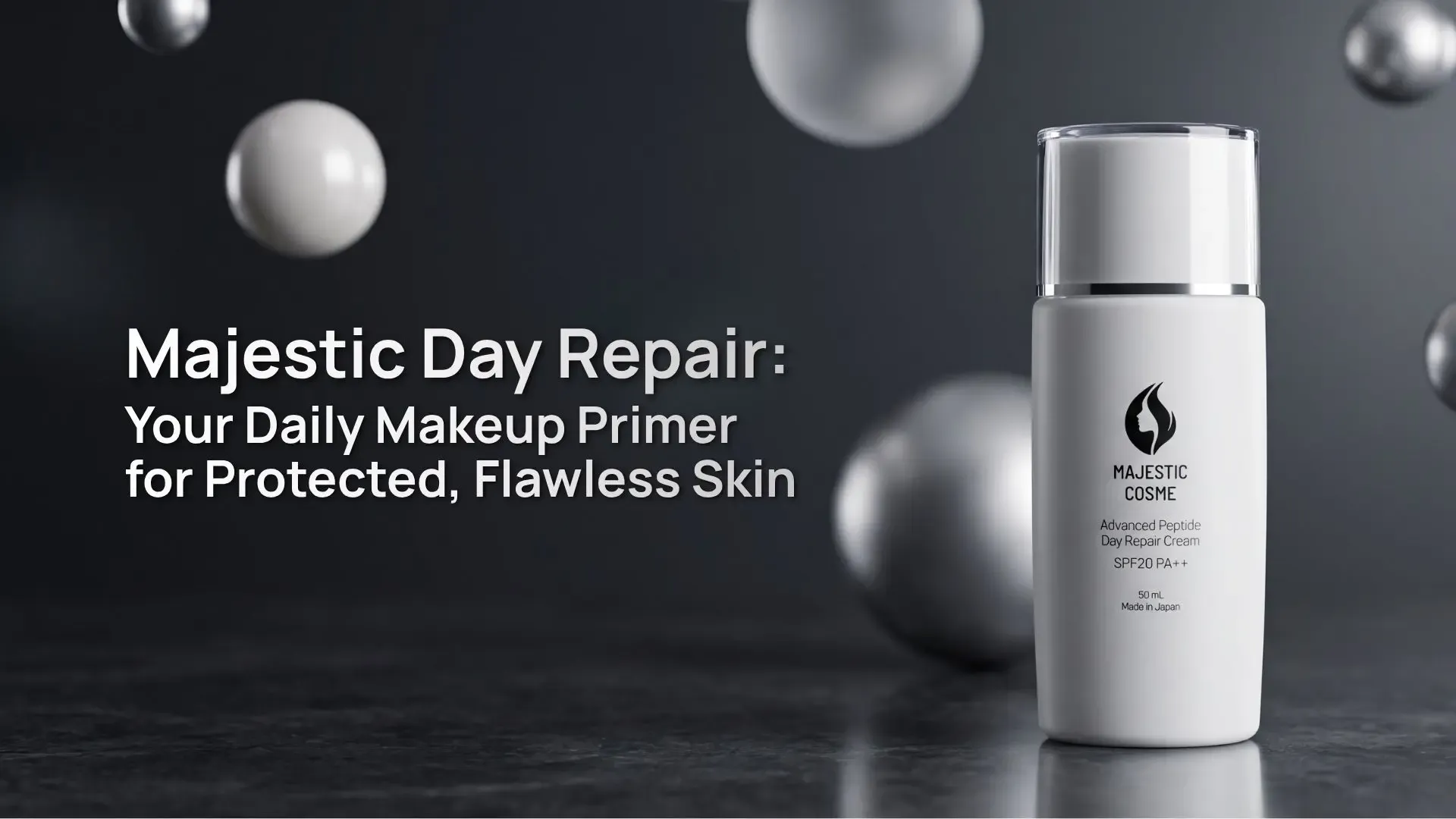
Majestic Day Repair: Your Daily Strategy for Cellular Defense and Repair
Majestic Day Repair Cream integrates the mechanisms described in this guide into a single morning application designed to function as the complete foundation of a daily anti-aging routine.
Its Mineral Shield, composed of ultra-fine zinc oxide and titanium dioxide, provides the physical UV interception layer. Unlike chemical UV filters that absorb UV energy through a chemical reaction and degrade over hours of sun exposure, mineral filters physically reflect UV at the skin surface without degradation. The same SPF 20 PA++ protection present at morning application is present at the end of the workday, without reapplication in ordinary daily conditions. The ultra-fine particle engineering produces an invisible, primer-smooth finish with no white cast, making it practical for daily wear under makeup for all skin tones.
Its Human-Type HSP complex provides the active cellular repair layer. By supporting sustained HSP70 and HSP27 activity throughout the day, the formulation helps skin cells manage the UV damage that occurs despite the Mineral Shield, and work through the existing cellular damage backlog that accumulates from years of prior UV exposure. The result is a measurable improvement in the efficiency of the skin's own cellular repair systems, the same systems whose decline over time is responsible for the accelerating rate of visible photo-aging in older skin.
Its ASP Functional Peptide intercepts the alpha-MSH hormone signal before it reaches melanocytes, preventing the melanin overproduction command from being issued in response to UV-induced cellular stress. This mechanism prevents new age spots and dark spots from forming at their biochemical origin, addressing the pigmentation component of photo-aging through the signal that creates it rather than the pigment it produces.
For a comprehensive explanation of how these three mechanisms work together as a system, including the role of the antioxidant blend in addressing oxidative damage alongside UV and signaling stressors, this article on protein repair and cellular resilience covers the complete formulation science.
The practical protocol is simple: apply one pea-sized amount to the face, jaw, and neck as the final skincare step each morning. Wait 60 seconds before makeup. Apply every morning, including cloudy days and days spent primarily indoors, because UVA, the wavelength most responsible for photo-aging and DNA damage, penetrates window glass and remains active regardless of visible sunlight.
Conclusion
Sun damage does not stop at the skin surface. It reaches into the molecular architecture of skin cells, creating distortions in DNA, damaging the proteins that maintain skin structure, and triggering the signaling cascades that produce the visible signs of photo-aging over decades of daily cumulative exposure. Understanding this process is what makes clear why UV protection, while necessary, is not sufficient on its own.
DNA repair support, specifically the active, intelligent chaperone function of Heat Shock Protein technology, closes the gap that UV filtering leaves open. Together with physical mineral UV reflection and melanin signal blocking, it constitutes a daily skin defense strategy that addresses photo-aging at every level where it occurs.
Frequently Asked Questions
Don't just block the sun. Repair the damage. Experience the cellular science of Majestic Day Repair.
Deploy a triple-action defense strategy that guards the skin surface, intercepts melanin signaling pathways, and systematically reinforces structural DNA repair chaperone networks.
Discover Majestic Day RepairSources
- Flament, F., et al. "Effect of the sun on visible clinical signs of aging in Caucasian skin." Clinical, Cosmetic and Investigational Dermatology, 2013.
- Trautinger, F. "Heat shock proteins in the photobiology of human skin." Journal of Photochemistry and Photobiology B: Biology, 2001.
- Schuch, A. P., et al. "DNA damage as a biological sensor of UV exposure." Photochemical and Photobiological Sciences, 2017.
- Stege, H., et al. "Enzyme plus sunscreen versus either sunscreen or enzyme alone for the UV-induced DNA damage in skin." Journal of Investigative Dermatology, 2000.
- Budden, T., and Bowden, N. A. "The role of altered nucleotide excision repair and UVB-induced DNA damage in melanoma development." International Journal of Molecular Sciences, 2013.